
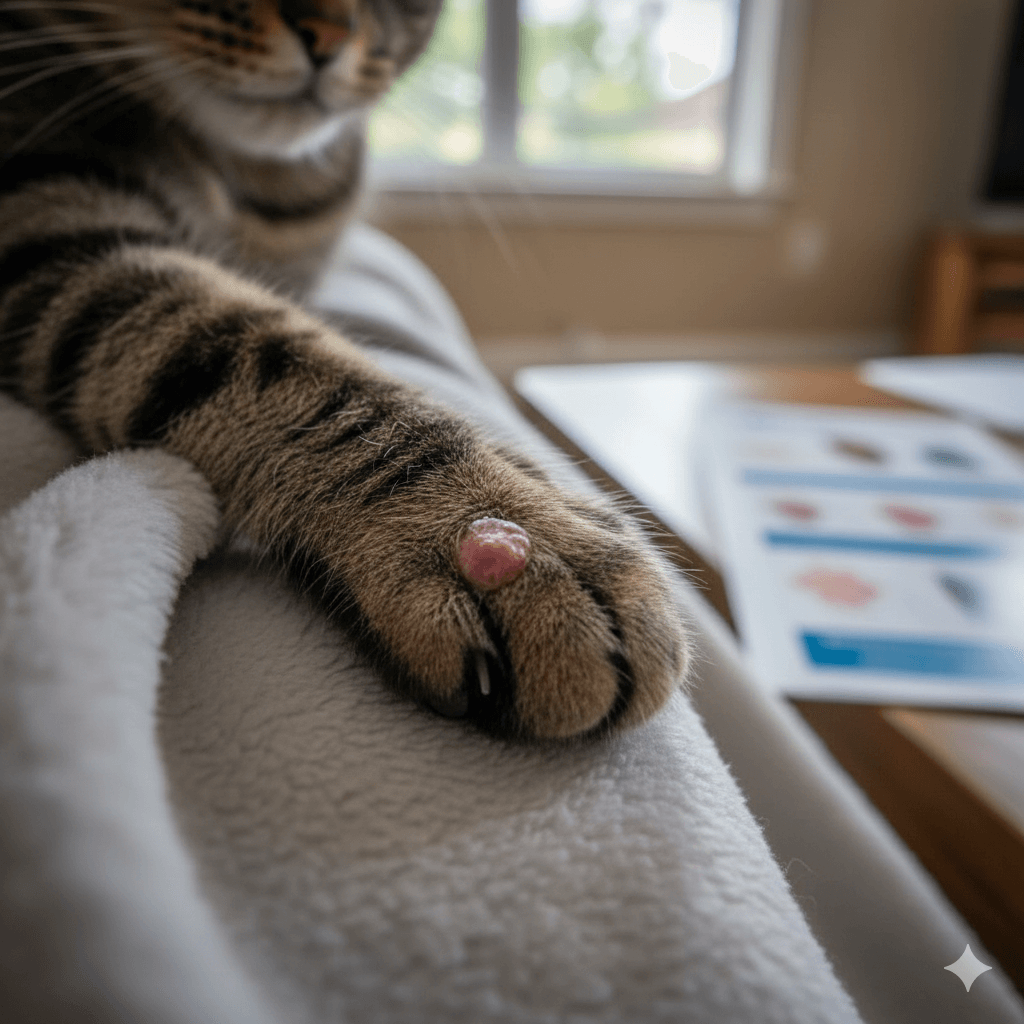

Mast Cell Tumor in Cat Paws: Best 7 Expert Tips!

Mast Cell Tumor in Cat Paws: Best 7 Expert Tips!

Understanding Mast Cell Tumor in Cat Paws

Mast cell tumors (MCTs) are among the more concerning skin growths that can appear in cats—especially when they develop on the paw, where they’re easily irritated or mistaken for minor wounds. While less common in felines than dogs, these tumors can range from benign to aggressive, depending on their location and cellular behavior. Early detection, accurate diagnosis, and prompt veterinary care are crucial for the best outcome. If you’ve noticed a lump, swelling, or unusual sore on your cat’s paw, understanding mast cell tumors is the first step toward protecting your pet’s health and comfort.

Common Signs of Mast Cell Tumor in a Cat’s Paw

Mast cell tumors on the paw often mimic other skin issues like insect bites, abscesses, or minor trauma, making them easy to overlook. However, certain patterns can raise suspicion—particularly if the lesion doesn’t heal or changes over time:

 
  • Visible Lump or Nodule:
    A small, firm bump on the paw pad or between the toes may appear suddenly and grow slowly or erratically.
     
  • Ulceration or Crusting:
    The tumor may break open, forming a scab or non-healing sore that bleeds intermittently or oozes clear fluid.
     
  • Swelling or Warmth:
    Localized inflammation can cause the paw to look puffy, feel warm to the touch, or appear redder than usual.
     
  • Licking or Limping:
    Your cat may lick the area obsessively due to itchiness or discomfort, or show subtle limping if the tumor affects weight-bearing.
     
  • Intermittent Disappearance and Return:
    Some mast cell tumors temporarily shrink due to histamine release, then reappear—a misleading cycle that delays diagnosis.
 

While not all paw lumps are cancerous, any persistent or changing growth warrants veterinary evaluation to rule out mast cell disease.

Mast Cell Tumor in Cat Paws: Best 7 Expert Tips!

Why Mast Cell Tumors on the Paw Are Particularly Concerning

Tumors on the paw present unique challenges due to anatomy, function, and diagnostic accessibility. Unlike tumors on the trunk or head, paw-based MCTs are constantly exposed to pressure, friction, and licking—factors that can worsen irritation or accelerate spread:

 
  • High Friction Environment:
    Walking, scratching, and grooming constantly traumatize the area, potentially triggering histamine release and inflammation.
     
  • Delayed Detection:
    Paw pads are thick and pigmented, so small tumors may go unnoticed until they ulcerate or cause lameness.
     
  • Risk of Local Invasion:
    Tumors in this location can infiltrate tendons, joints, or bone, complicating surgical removal and recovery.
     
  • Histamine-Related Complications:
    Mast cells release histamine; large or irritated tumors may cause systemic effects like vomiting, low blood pressure, or stomach ulcers.
     
  • Higher Recurrence Potential:
    Complete surgical margins are harder to achieve on the paw, increasing the chance the tumor returns if not fully excised.
 

Because of these risks, mast cell tumors on the paw require prompt, thorough assessment—even if they seem minor at first glance.

Benign Features to Note
Warning Signs Requiring Urgent Care
Small, slow-growing lump
Rapid increase in size over days
Smooth, non-painful nodule
Ulceration, bleeding, or discharge
No change in cat’s behavior
Limping, reluctance to walk, or paw guarding
Single isolated lesion
Multiple lumps or swollen lymph nodes nearby
Stable appearance for weeks
Intermittent swelling followed by sudden flare-up

Diagnostic Process for Mast Cell Tumors in Cats

Accurate diagnosis is essential, as treatment and prognosis depend heavily on tumor grade, location, and whether it’s cutaneous (skin-based) or visceral (internal). Your vet will likely follow a step-by-step approach:

 
  • Fine Needle Aspiration (FNA):
    A quick, minimally invasive test where cells are extracted with a thin needle and examined under a microscope for mast cells.
     
  • Biopsy for Grading:
    If FNA confirms mast cells, a full biopsy determines tumor grade (I = benign, III = aggressive), guiding treatment decisions.
     
  • Imaging Studies:
    X-rays or ultrasound may check for spread to lymph nodes, spleen, or liver—especially if your cat shows systemic symptoms.
     
  • Blood Work and Urinalysis:
    These assess overall health and screen for secondary issues like anemia or elevated white blood cells.
     
  • Staging the Disease:
    For high-grade tumors, additional tests help determine the cancer stage and whether surgery alone will suffice.
 

Early and complete diagnostics not only clarify the nature of the growth but also give your cat the best shot at full recovery.

Treatment Options Based on Tumor Type and Location

Treatment varies widely depending on whether the tumor is low-grade (benign) or high-grade (malignant). Paw tumors often require more aggressive intervention due to anatomical constraints:

 
  • Surgical Removal:
    The primary treatment for localized tumors; wide margins are ideal but challenging on the paw due to limited tissue.
     
  • Amputation (in Severe Cases):
    If the tumor involves deep structures or recurs after surgery, toe or partial paw amputation may be recommended.
     
  • Radiation Therapy:
    Used when clean margins aren’t possible, radiation can target residual cells and reduce recurrence risk.
     
  • Medications for Symptom Control:
    Antihistamines (e.g., famotidine) or steroids may manage itching, inflammation, or histamine-related stomach issues.
     
  • Monitoring for Low-Grade Tumors:
    Some benign cutaneous MCTs in cats regress spontaneously and may only need watchful waiting with regular check-ups.
 

Your vet will tailor the plan to your cat’s age, overall health, and tumor behavior—always prioritizing quality of life.

Prognosis and Long-Term Outlook for Cats with Paw MCTs

The good news? Most mast cell tumors in cats are cutaneous and low-grade, especially in younger or otherwise healthy felines. These often carry an excellent prognosis after complete removal:

 
  • Low-Grade Tumors:
    Over 90% of cats with fully excised benign MCTs live normal lifespans with no recurrence.
     
  • High-Grade or Visceral Forms:
    Rare but serious; these require aggressive treatment and have a guarded prognosis, though early action improves outcomes.
     
  • Recurrence Risk:
    Higher on paws due to surgical limitations—follow-up exams every 3–6 months are often advised.
     
  • Metastasis Potential:
    Uncommon in feline cutaneous MCTs, but possible if the tumor is high-grade or located near lymphatic drainage.
     
  • Quality of Life Focus:
    Even in advanced cases, palliative care can keep your cat comfortable, happy, and active for months or years.
 

With timely care, many cats recover fully and never experience another issue—making vigilance truly worthwhile.


Preventive Care and Monitoring for At-Risk Cats

While mast cell tumors can’t always be prevented, proactive habits help catch them early—when treatment is simplest and most effective:

 
  • Weekly Paw Checks:
    Gently inspect between toes, pads, and nail beds during grooming or cuddle time to spot new lumps early.
     
  • Avoid Chronic Irritation:
    Keep nails trimmed and paws clean to reduce micro-injuries that could theoretically trigger abnormal cell growth.
     
  • Know Your Cat’s Baseline:
    Familiarity with your cat’s normal skin texture and behavior helps you notice subtle changes quickly.
     
  • Regular Vet Wellness Visits:
    Annual (or biannual for seniors) exams include full-body skin checks that may reveal hidden issues.
     
  • Document Skin Changes:
    Take photos of any suspicious spots with a date stamp to track growth or changes over time.
 

Prevention here isn’t about eliminating risk—it’s about empowering yourself to act fast if something unusual appears.


Special Considerations for Senior Cats or Multi-Cat Households

Older cats or those living with other pets may face added complexities when dealing with mast cell tumors on the paw:

 
  • Senior Cats:
    Weaker immune systems may allow tumors to progress faster; however, many still tolerate surgery well with proper support.
     
  • Multi-Cat Grooming:
    Allogrooming can irritate paw tumors, leading to faster ulceration—monitor interactions if one cat licks another’s paws.
     
  • Underlying Illness Masking Symptoms:
    Conditions like kidney disease or hyperthyroidism can dull a cat’s response to pain, delaying owner awareness.
     
  • Stress and Immune Function:
    Household tension or changes may suppress immunity; maintaining calm routines supports overall health during treatment.
     
  • Medication Interactions:
    If your cat is on chronic meds, discuss potential interactions with antihistamines or pain relief used during MCT care.
 

Tailoring care to your cat’s life stage and environment ensures the most compassionate and effective response.

Frequently Asked Questions About Mast Cell Tumor in Cat Paws

Are mast cell tumors in cats always cancerous?

No—most feline cutaneous mast cell tumors are benign, especially in younger cats, and often resolve with surgery alone.

Yes, some low-grade tumors in cats can regress spontaneously due to immune activity, but veterinary confirmation is still essential.

It’s considered when wide surgical margins aren’t possible; most cats adapt quickly and walk normally afterward.

Not always—but ulcerated or inflamed tumors can be itchy or sore, leading to licking or limping.

No—never apply anything without veterinary guidance, as some substances can worsen irritation or mask symptoms.

Supporting Your Cat Through Diagnosis and Healing

A mast cell tumor on your cat’s paw can feel alarming, but knowledge and calm action turn uncertainty into empowerment. Most cats face this diagnosis with resilience—and thanks to modern veterinary care, many go on to live long, pain-free lives. Your role as an observant, proactive guardian makes all the difference: from noticing that tiny lump to ensuring gentle aftercare, you’re your cat’s strongest advocate. Trust your instincts, lean on your vet as a partner, and remember that even small paws carry mighty spirits. With love, attention, and timely care, your feline friend can step confidently forward—toward healing and many more quiet, purring evenings by your side.

 
Understanding Cryptosporidium in Cats: Best 7 Expert Tips!

Understanding Cryptosporidium in Cats: Best 7 Expert Tips! – Spot symptoms, treat safely, and stop parasite spread in your home.

Understanding Cryptosporidium in Dogs: Best 7 Expert Tips!

Understanding Cryptosporidium in Dogs: Best 7 Expert Tips! – Learn symptoms, treatment & prevention for this stubborn gut parasite.

Understanding Syringomyelia in Cats: Best 7 Expert Tips!

Understanding Syringomyelia in Cats: Best 7 Expert Tips! – Recognize signs, manage pain, and support your cat’s neurological health with vet-backed guidance.

Understanding Syringomyelia in Dogs: Best 7 Expert Tips!

Understanding Syringomyelia in Dogs: Best 7 Expert Tips! – Expert insights on symptoms, MRI diagnosis, pain management & quality of life.

Leave a Reply

Your email address will not be published. Required fields are marked *


