
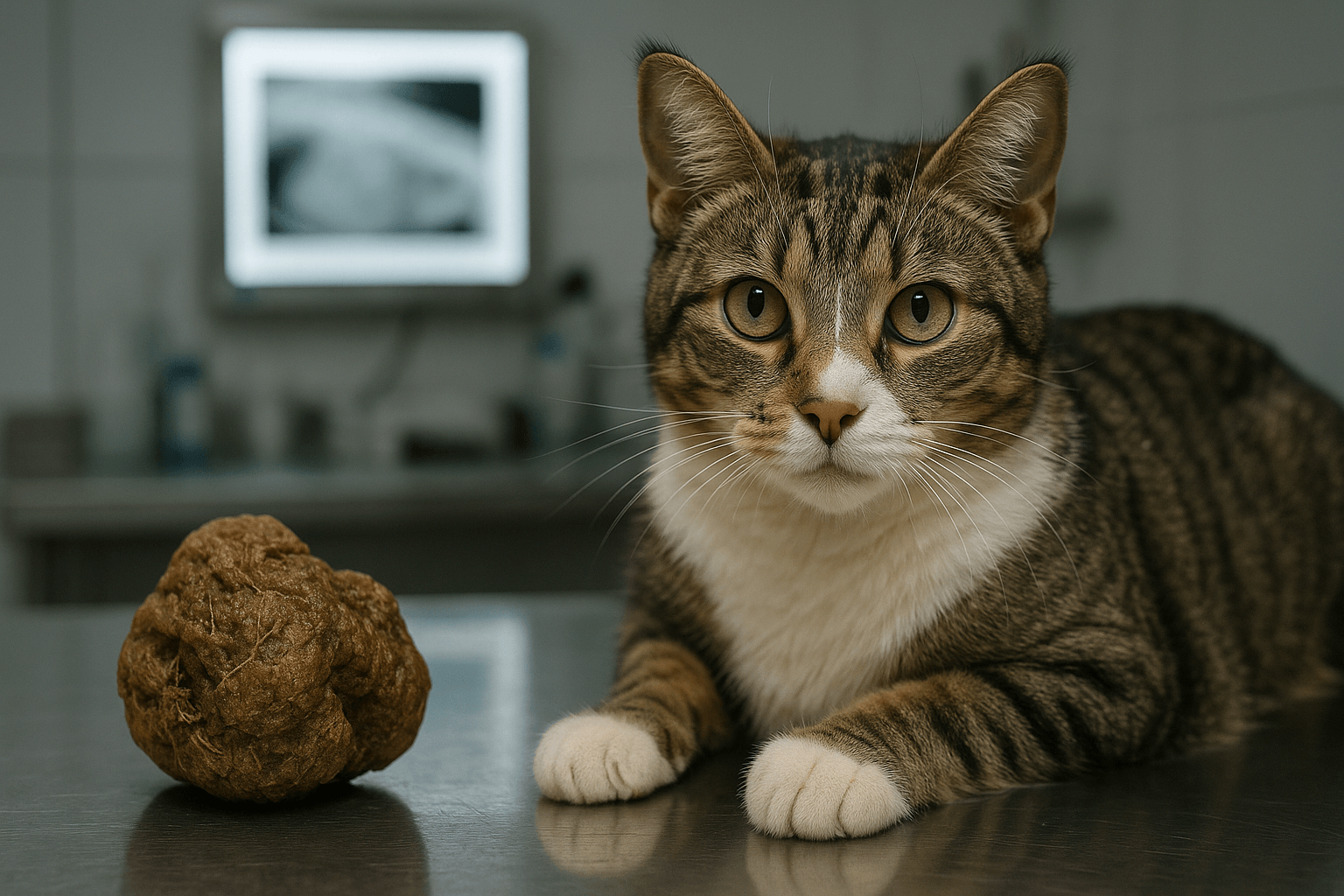
Gastric Foreign Body in Cats: A Silent Emergency Hiding in Plain Sight
Cats are natural hunters, endlessly curious, and often irresistibly drawn to objects they shouldn’t touch—let alone swallow. A gastric foreign body occurs when something non-food-related becomes lodged in your cat’s stomach, potentially triggering a cascade of serious health issues. While it might seem like a distant risk, it’s more common than many pet owners realize, especially in playful kittens or senior cats with declining judgment. Left undetected, this condition can escalate rapidly, turning a quiet evening at home into a veterinary emergency. Understanding the signs, risks, and responses could be the difference between a simple recovery and a life-threatening crisis.
What Is a Gastric Foreign Body—and Why It Matters
A gastric foreign body refers to any object that a cat ingests and cannot pass through its digestive tract, becoming stuck in the stomach. Unlike dogs, cats are less likely to gulp down toys whole—but their love for string, hair ties, rubber bands, and plant matter can still land them in trouble. Early awareness is critical, as complications like obstruction, perforation, or toxicity can develop within hours. Below are key insights into what commonly ends up in feline stomachs and why it’s dangerous.
- Linear Foreign Bodies:
String, yarn, dental floss, or ribbon can stretch through the intestines and cause “linear foreign body obstruction,” where the gut bunches up around the material—leading to tissue death. - Small Household Items:
Hair ties, rubber bands, buttons, and plastic wrappers are frequent culprits, especially in homes with children or craft supplies within paw’s reach. - Plant Material and Grass:
While cats often eat grass intentionally, some houseplants (like lilies or philodendrons) can cause both foreign body impaction and poisoning. - Toys and Catnip Fillers:
Worn plush toys, loose stuffing, or broken plastic parts can be swallowed during vigorous play or chewing. - Hairballs vs. True Obstructions:
While hairballs are normal, a large or unusually persistent one may act like a foreign body—especially in long-haired breeds or cats with grooming disorders.
Though many foreign objects pass harmlessly, others demand urgent care. Never assume it’s “just a hairball” without veterinary confirmation.
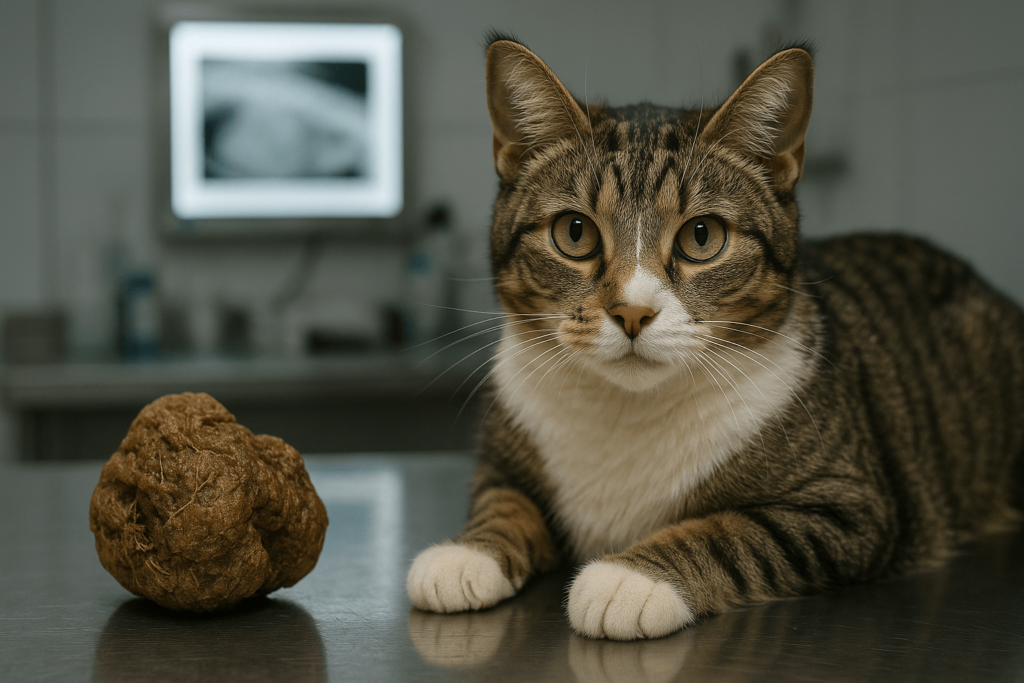
Common Signs Your Cat May Have Swallowed Something Dangerous
Cats are masters of hiding discomfort, which makes early detection of a gastric foreign body particularly challenging. Symptoms can be subtle at first—lethargy, decreased appetite, or occasional vomiting—but they often worsen quickly. Knowing what to watch for could save your cat’s life. The following signs warrant immediate attention, especially if your cat recently played with string, toys, or other small items.
- Persistent Vomiting:
Occasional vomiting may be normal, but repeated episodes—especially with no food present—suggest a blockage or irritation. - Loss of Appetite:
A sudden disinterest in meals, even favorite treats, can signal nausea or abdominal pain. - Lethargy or Withdrawal:
If your usually social cat hides more than usual or seems unusually quiet, it may be in distress. - Abdominal Pain or Swelling:
Gently pressing your cat’s belly might elicit flinching, growling, or tensing—classic signs of internal discomfort. - Changes in Bowel Movements:
Constipation, diarrhea, or the presence of foreign material in stool can all point to digestive disruption.
Catching these signs early offers the best chance for non-invasive treatment and a full recovery.
Check this guide 👉Cat Stomach Inflammation: Best 7 Expert Tips!
Check this guide 👉Understanding Cat Stomach Bug Symptoms: Best 7 Tips!
Check this guide 👉Cat Stomach Tumor: Best 7 Expert Tips!
Warning Signs to Act On Immediately | At-Home Monitoring Tips (When Safe) |
|---|---|
Repeated vomiting (more than twice in 12 hours) | Track food and water intake in a notebook |
Complete refusal to eat for 24+ hours | Note stool frequency and consistency |
Visible string or thread protruding from mouth or anus | Observe for unusual vocalizations or pacing |
Distended or rigid abdomen | Monitor for changes in breathing or posture |
Sudden collapse or extreme weakness | Keep a log of playtime and recent toy exposure |
Diagnostic Tools Veterinarians Use to Confirm a Foreign Body
If your vet suspects a gastric foreign body, they’ll use a combination of physical exams and imaging to confirm the diagnosis. Never delay a visit hoping your cat will “pass it naturally”—some objects can cause fatal complications within 24–48 hours. Modern diagnostics are precise, fast, and often non-invasive, allowing for swift intervention.
- Physical Examination:
Your vet will palpate the abdomen to check for pain, swelling, or abnormal masses that suggest impaction. - X-Rays (Radiographs):
Metal, bone, or dense plastic objects appear clearly on X-rays, though soft materials like fabric or string may not. - Ultrasound Imaging:
Ultrasounds can detect soft-tissue obstructions, intestinal bunching, or free fluid in the abdomen—key signs of perforation. - Barium Contrast Studies:
If the object isn’t visible on standard X-rays, your cat may drink a safe, radio-opaque liquid that highlights blockages as it moves through the gut. - Endoscopy:
In some cases, a tiny camera can be inserted through the mouth to visualize and even retrieve the object—avoiding surgery entirely.
Accurate diagnosis is the first step toward the safest, least traumatic treatment path for your feline friend.
Treatment Options: From Observation to Surgery
The right treatment depends entirely on what was swallowed, how long it’s been inside, and whether complications have begun. Some cats require only monitoring, while others need urgent intervention. Your vet will weigh risks and benefits carefully—but time is often the deciding factor.
- Watchful Waiting:
If the object is small, smooth, and recently ingested, your vet may recommend hydration, rest, and monitoring for passage. - Endoscopic Retrieval:
For objects still in the stomach (within 24–48 hours), endoscopy offers a minimally invasive way to remove them without cutting. - Surgical Intervention:
If the object has moved into the intestines, caused perforation, or is too large for endoscopy, surgery becomes necessary. - Supportive Care:
IV fluids, anti-nausea meds, and pain relief are often given before, during, and after treatment to stabilize your cat. - Post-Op Recovery Plan:
After surgery, strict rest, a bland diet, and an E-collar prevent licking at incisions while the body heals.
Swift, appropriate treatment dramatically improves outcomes—so trust your instincts and act quickly if something seems off.
Preventing Future Foreign Body Incidents at Home
Prevention is far easier—and kinder—than emergency treatment. By cat-proofing your home and understanding your pet’s behavior, you can drastically reduce the risk of dangerous ingestion. Curiosity is part of a cat’s nature, but smart environmental adjustments keep that curiosity safe.
- Secure Small Objects:
Store hair ties, rubber bands, sewing kits, and craft supplies in closed drawers or high shelves. - Choose Safe Toys:
Avoid toys with small parts, loose threads, or easily detachable eyes. Opt for sturdy, vet-approved designs. - Supervise Playtime:
Never leave string, ribbon, or wand toys unattended—always put them away after use. - Cat-Proof Houseplants:
Keep toxic or fibrous plants out of reach, or replace them with cat-safe alternatives like catnip or wheatgrass. - Regular Grooming:
Brush long-haired cats daily to minimize hairball formation, which can sometimes mimic or contribute to obstructions.
A safe home isn’t about restriction—it’s about thoughtful design that lets your cat explore without danger.
Potential Complications if Left Untreated
Ignoring a suspected gastric foreign body can lead to devastating consequences. What starts as mild vomiting may progress to sepsis, organ failure, or death within days. The stomach and intestines are delicate—sharp, abrasive, or stretching objects can tear tissue, leak bacteria, and trigger systemic collapse.
- Gastrointestinal Perforation:
Sharp objects (like bones or plastic shards) can puncture the stomach or intestinal wall, spilling bacteria into the abdomen. - Necrosis (Tissue Death):
Linear foreign bodies can saw through intestinal walls or cut off blood supply, killing sections of the gut. - Peritonitis:
A life-threatening infection of the abdominal cavity that requires intensive care and often has a poor prognosis. - Dehydration and Electrolyte Imbalance:
Ongoing vomiting and inability to keep fluids down rapidly deplete essential nutrients and fluids. - Long-Term Digestive Damage:
Even after removal, scarring or strictures can narrow the intestines, leading to chronic issues.
Early veterinary care isn’t just recommended—it’s often lifesaving.
When to Call Your Vet: A Clear Action Plan
Time is tissue—especially in gastrointestinal emergencies. If you suspect your cat has swallowed something it shouldn’t have, don’t wait for symptoms to “get worse.” Contact your vet immediately, even if your cat seems fine. Provide details about what was ingested, when, and any behavior changes. Below are scenarios that warrant an urgent call or visit.
- You saw your cat swallow string, rubber, or plastic:
Even if they seem fine, linear or non-digestible items require professional assessment. - Vomiting persists beyond one episode:
Especially if it’s projectile, contains blood, or occurs on an empty stomach. - Your cat stops eating for more than 18 hours:
Cats are prone to hepatic lipidosis (fatty liver disease) if they go without food too long. - You notice string dangling from mouth or rear:
Never pull it—this can cause internal tearing. Seek help immediately. - Your cat seems hunched, vocalizes when touched, or breathes rapidly:
These are red flags for pain or internal distress.
When in doubt, always err on the side of caution. Your quick action could prevent a minor issue from becoming catastrophic.
“Most pets that have ingested a foreign body will exhibit some of these clinical signs: vomiting, diarrhea, abdominal tenderness or pain, decreased appetite, lethargy, and changes in behavior such as biting or growling when handled around the abdomen.” – Ryan Llera, BSc, DVM
Frequently Asked Questions About Gastric Foreign Bodies in Cats
Can cats pass foreign objects on their own?
Sometimes—small, smooth items like tiny plastic beads may pass naturally. But linear objects (string, yarn) almost never do safely and require intervention.
How long does it take for a foreign body to cause symptoms?
Symptoms can appear within hours (especially with linear or sharp objects) or take 1–3 days if the item is dull or slow-moving.
Is surgery always necessary?
No. Endoscopy or medical management may suffice if caught early. But delay increases surgical risk significantly.
Are certain cats more at risk?
Yes—kittens (due to curiosity), seniors (due to cognitive decline), and long-haired breeds (due to hairballs) face higher risks.
What’s the recovery time after treatment?
Most cats recover in 7–14 days with proper care. Post-op cases need 2–3 weeks of restricted activity and follow-up visits.
Trust Your Instincts—Your Cat Is Counting on You
A gastric foreign body in cats is more than a veterinary curiosity—it’s a hidden emergency that unfolds silently behind familiar behaviors. Your cat won’t tell you it’s in pain, but its actions will speak if you’re listening closely. With vigilance, prevention, and prompt care, most cats make full recoveries and return to their curious, playful selves. As a cat owner, your awareness is their first line of defense. Keep small objects out of reach, know the warning signs, and never hesitate to call your vet when something feels off. After all, the best care begins not in the clinic—but in the quiet moments at home, where love meets attention.

Is Rawhide Bad for Cats? Best 7 Expert Tips! – Discover the risks, safe alternatives, and expert advice to keep your feline friend healthy and happy.

Is Rawhide Bad for Dogs? Best 7 Expert Tips! – Discover the risks, benefits, and safer alternatives to rawhides for your dog’s chewing needs.

Understanding Anorexia in Cats: Best 7 Expert Tips! – Learn why cats stop eating, spot warning signs, and discover how to help your feline regain appetite safely.

Understanding Anorexia in Dogs: Best 7 Expert Tips! – Learn causes, symptoms, and solutions to help your dog regain appetite and stay healthy.