
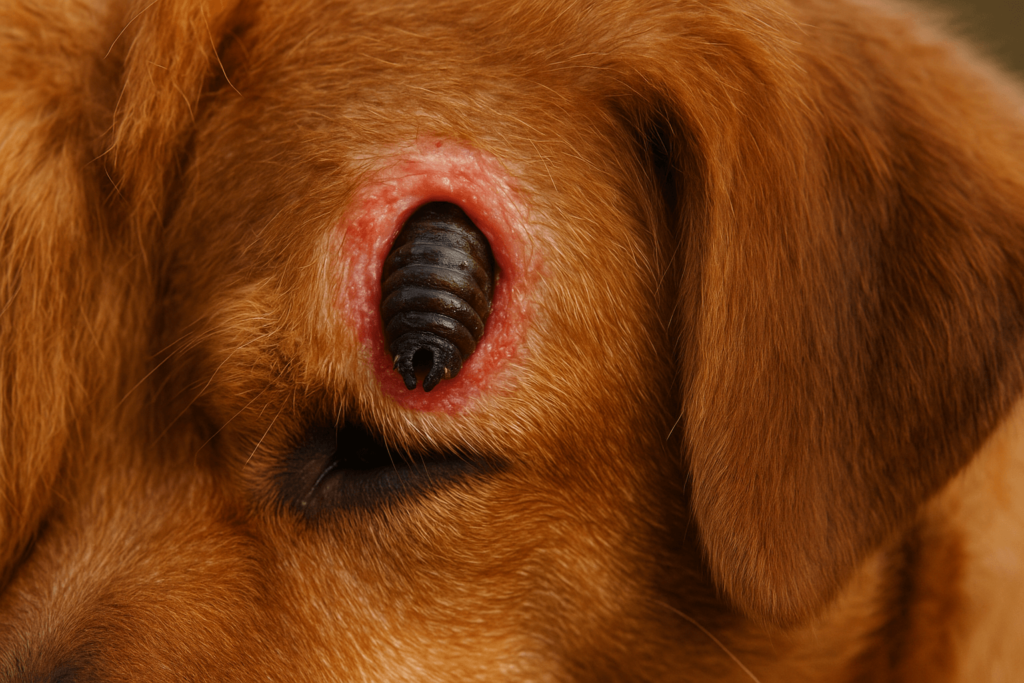

Cuterebra Larvae in Dogs: Best 7 Expert Tips!

Cuterebra Larvae in Dogs: Best 7 Expert Tips!

Cuterebra Larvae in Dogs: A Hidden Threat Beneath the Skin

Few things unsettle a dog owner more than discovering a mysterious lump that turns out to be something alive—like a Cuterebra larva. These parasitic fly larvae, commonly known as “wolf worms,” typically infect rodents and rabbits but can accidentally burrow into dogs, especially those that hunt or explore dense brush. While rare, these infestations are serious and require prompt veterinary attention. Understanding how they occur, what signs to watch for, and how to respond can protect your dog from complications. This guide delivers clear, vet-informed advice to help you act quickly and confidently.

What Is Cuterebra and How Do Dogs Get Infested?


Cuterebra is a genus of large, non-biting flies native to the Americas. Their larvae normally develop inside wild hosts—but dogs can become accidental hosts through environmental exposure. Infection isn’t from direct bites; it occurs when larvae enter through natural openings or small wounds.

 
  • Entry through nose, mouth, or open skin:
    Dogs sniffing rodent burrows may inhale or ingest larvae, which then migrate under the skin to form a warble—a breathing hole with a visible larva inside.
     
  • Not contagious between pets:
    Cuterebra infestations aren’t spread from dog to dog; each case stems from environmental exposure to fly eggs or newly hatched larvae.
     
  • Seasonal risk (summer to early fall):
    Adult flies are most active in warm months, making late spring through autumn peak risk periods—especially in rural or wooded areas.
     
  • Common in hunting or curious dogs:
    Dogs that dig, chase wildlife, or explore tall grass are at higher risk due to frequent contact with rodent habitats.
     
  • Accidental host, not ideal biology:
    Unlike in rabbits or rodents, the larva can’t complete its life cycle properly in dogs, often leading to inflammation or complications.
 

This accidental invasion is unsettling—but knowing how it happens is the first step toward prevention and timely care.

Cuterebra Larvae in Dogs: Best 7 Expert Tips!

Warning Signs Your Dog May Have a Cuterebra Larva


Early detection makes treatment safer and less invasive. Watch for these subtle but telling symptoms, especially if your dog roams outdoors.

 
  • A small, round lump with a central hole:
    Often on the head, neck, or torso—this “breathing pore” may ooze fluid and feels firm but not overly painful.
     
  • Localized swelling or redness:
    The area around the warble may appear inflamed, warm, or slightly tender to the touch.
     
  • Excessive licking or scratching at one spot:
    Your dog may fixate on the site, trying to relieve irritation or discomfort caused by the moving larva.
     
  • Sneezing, nasal discharge, or neurological signs (rare):
    If larvae migrate through sinuses or into the brain, symptoms can include head tilting, circling, or seizures—requiring emergency care.
     
  • Lethargy or reduced appetite (in severe cases):
    Systemic reaction to the parasite may cause mild illness, though many dogs seem otherwise normal.
 

If you spot a suspicious lump with a tiny opening, do not squeeze or attempt removal—this can cause anaphylaxis or infection.

What to Do If You Suspect Cuterebra What NOT to Do
Call your vet immediately Do not squeeze or poke the lump
Prevent licking with an e-collar Never apply alcohol, ointments, or tape
Keep the area clean and dry Don’t assume it’s a tick or cyst
Limit outdoor roaming during fly season Avoid home extraction attempts
Monitor for neurological changes Don’t delay—larvae can migrate dangerously

Veterinary Diagnosis and Safe Removal


Professional care is essential—improper removal can be life-threatening. Vets use specific techniques to extract the larva intact and prevent complications.

 
  • Visual confirmation through the breathing pore:
    The larva is often visible as a moving, segmented white-to-brown structure beneath the skin.
     
  • No squeezing or forceps without preparation:
    Veterinarians may widen the pore gently and use sterile tools to extract the larva whole—rupture risks anaphylactic shock.
     
  • Sedation may be needed:
    For uncooperative dogs or sensitive locations (e.g., face), light sedation ensures safe, stress-free removal.
     
  • Antibiotics or anti-inflammatories post-removal:
    Even after successful extraction, secondary infection or swelling may require medication.
     
  • Imaging if neurological signs appear:
    MRI or CT scans help locate larvae that have migrated internally—a rare but critical scenario.
 

With prompt veterinary intervention, most dogs recover fully within days.

Possible Complications of Cuterebra Infestation


While many cases resolve smoothly, complications can arise—especially if the larva migrates abnormally or is ruptured during removal.

 
  • Anaphylactic reaction:
    If the larva breaks apart under the skin, the body may mount a severe allergic response requiring emergency treatment.
     
  • Secondary bacterial infection:
    The open pore can become a gateway for bacteria, leading to abscesses or cellulitis.
     
  • Neurological damage (rare):
    Larvae migrating through the nasal passages into the brain can cause encephalitis, seizures, or permanent deficits.
     
  • Chronic inflammation or scarring:
    Even after removal, the site may take weeks to heal fully, especially if irritated by licking.
     
  • Misdiagnosis delays:
    Because it resembles a cyst or tumor, owners may wait too long—allowing the larva to grow or migrate further.
 

Early vet involvement drastically reduces these risks.

Prevention Strategies for Outdoor Dogs


You can’t eliminate all risk—but smart habits significantly lower your dog’s chance of exposure during fly season.

 
  • Avoid known rodent burrows and brush piles:
    Keep your dog on-leash in high-risk areas, especially in late summer and fall.
     
  • Use secure fencing:
    Prevent unsupervised roaming in yards adjacent to woods or fields where rabbits and rodents thrive.
     
  • Regular skin checks after outdoor time:
    Look for new lumps, especially near the head, neck, or shoulders—early detection saves lives.
     
  • Discourage hunting behavior:
    Train commands like “leave it” or “come” to interrupt digging or chasing wildlife.
     
  • Keep grass trimmed and reduce rodent activity:
    Fewer rodents mean fewer Cuterebra flies laying eggs nearby.
 

Prevention hinges on awareness—not fear. Most dogs enjoy the outdoors safely with minor adjustments.

Cuterebra vs. Other Skin Parasites: Know the Difference


Cuterebra warbles are often mistaken for ticks, botflies, or abscesses. Recognizing key distinctions helps you respond correctly.

 
  • Ticks attach externally and have legs:
    They embed mouthparts but remain visible on the skin surface—unlike Cuterebra, which live entirely under the skin.
     
  • Botfly (Cuterebra) warbles have a breathing hole:
    This central pore, often with fluid drainage, is a hallmark not seen in cysts or boils.
     
  • Abscesses are typically painful and hot:
    They lack a defined pore and usually result from bites or punctures, not parasitic larvae.
     
  • Warbles don’t move like worms on skin:
    The larva stays in one warble—it doesn’t crawl across the body like intestinal parasites might.
     
  • Seasonal timing matters:
    Cuterebra cases spike in warm months; other lumps may appear year-round.
 

When in doubt, photograph the area and consult your vet—don’t guess.


Long-Term Care After Larval Removal


Recovery is usually quick, but proper aftercare ensures complete healing and prevents recurrence.

 
  • Monitor the site for 7–10 days:
    Watch for redness, swelling, discharge, or reopening—signs of infection needing vet attention.
     
  • Use an Elizabethan collar as directed:
    Preventing licking avoids irritation and introduces bacteria into the healing wound.
     
  • Follow medication schedules exactly:
    Finish all antibiotics or anti-inflammatories, even if the site looks healed.
     
  • Schedule a follow-up if needed:
    Some vets recommend a recheck to confirm full closure, especially in sensitive areas.
     
  • Update your parasite prevention plan:
    While no product repels Cuterebra flies, integrated pest control around your property helps reduce risk.
 

With attentive care, most dogs return to normal within a week—scar-free and complication-free.

Frequently Asked Questions

Can Cuterebra larvae kill a dog?

Rarely—but yes, if the larva migrates to the brain or causes anaphylaxis from rupture. Prompt veterinary care prevents life-threatening outcomes.

No breed is immune, but hunting breeds (e.g., Beagles, Terriers) or rural dogs with outdoor access face higher exposure.

No. Humans can’t contract it from dogs—but we can become accidental hosts ourselves through environmental exposure (extremely rare).

Typically 3–6 weeks. It grows to about 1 inch before exiting—but in dogs, it often doesn’t complete its cycle and must be removed.

No commercial preventives target Cuterebra flies. Avoidance and vigilance are the best defenses.

Final Thoughts – Vigilance, Not Panic


Finding a Cuterebra larva in your dog is alarming—but with knowledge, calm action, and veterinary support, it’s a manageable condition. These parasites are uncommon, and serious complications are rare when treated early. Focus on prevention during high-risk seasons, stay observant during outdoor adventures, and never hesitate to call your vet about unusual lumps. Your attentiveness doesn’t just protect your dog’s health—it reinforces the trust and care that define your bond. After all, peace of mind starts with being prepared—not afraid.

Cuterebra Larvae in Cats: Best 7 Expert Tips!

Cuterebra Larvae in Cats: Best 7 Expert Tips! – Expert advice on signs, treatment & prevention of this rare but serious feline parasitic infestation.

Cuterebra Larvae in Dogs: Best 7 Expert Tips!

Cuterebra Larvae in Dogs: Best 7 Expert Tips! – Expert advice on signs, treatment & prevention of this rare but serious parasitic infestation.

Cat Tumor on Paw: Best 7 Expert Tips!

Cat Tumor on Paw: Best 7 Expert Tips! – Expert advice on signs, diagnosis, treatment & care for feline paw tumors.

Panacur Side Effects in Dogs: Best 7 Expert Tips!

Panacur Side Effects in Dogs: Best 7 Expert Tips! – Safe usage, common reactions & when to call the vet.

Leave a Reply

Your email address will not be published. Required fields are marked *

Post Category


