
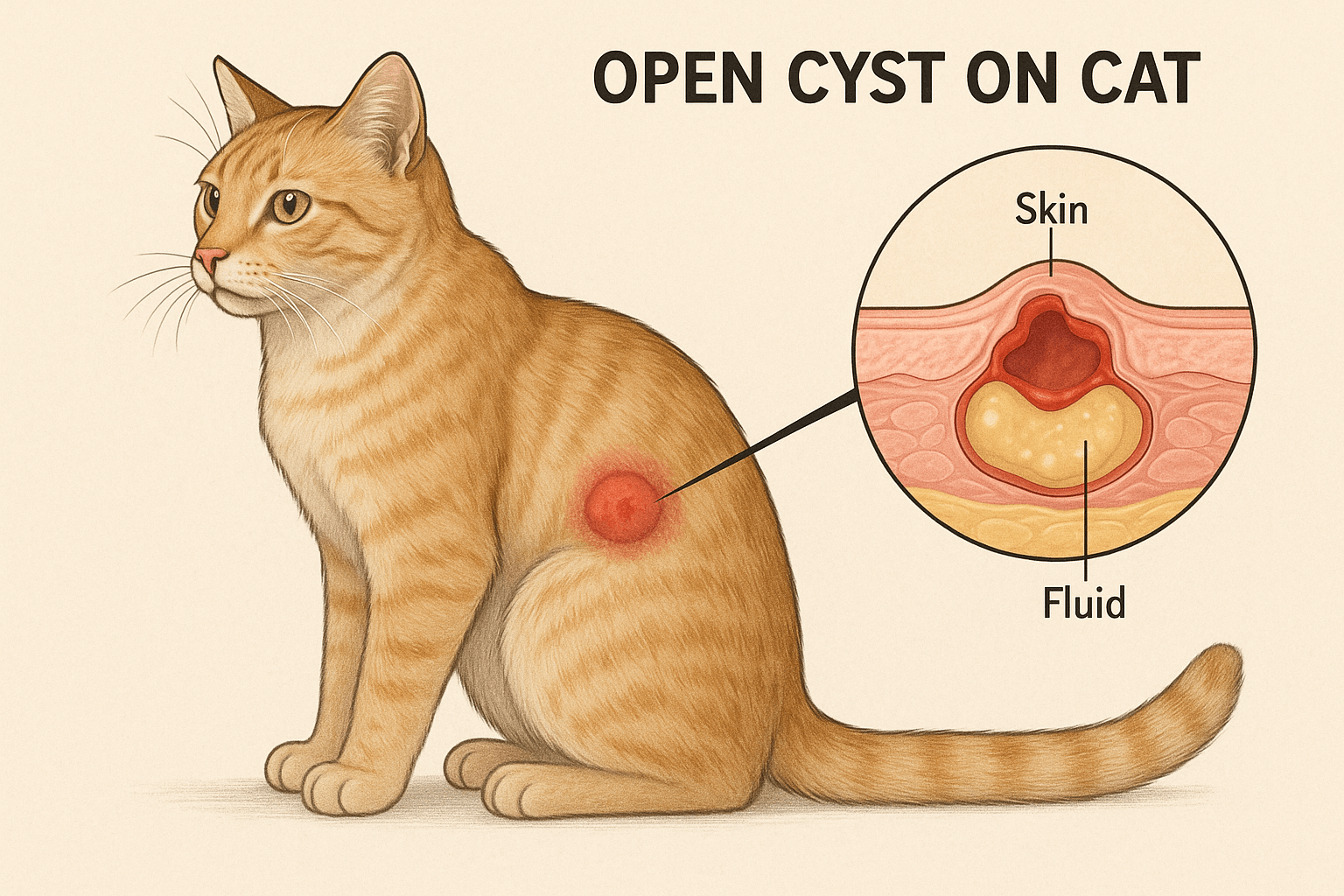
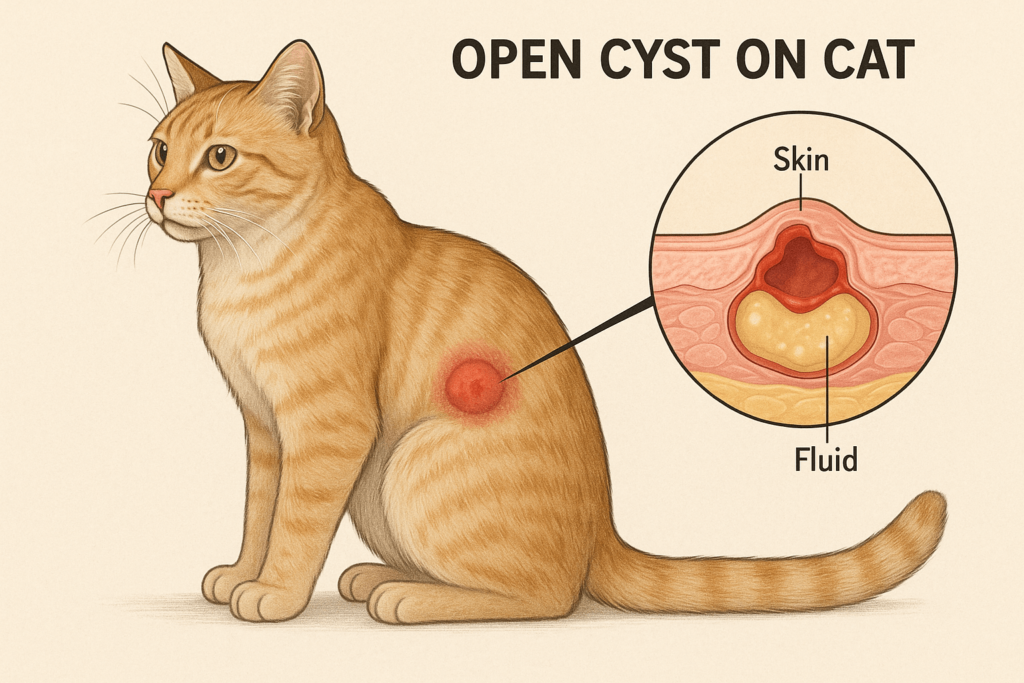

What to Do When Your Cat Has an Open Cyst
Discovering an open cyst on your cat can be alarming—especially if it’s oozing, red, or causing discomfort. While many cysts are benign and manageable, an open one requires careful attention to prevent infection and promote healing. Unlike closed cysts that may go unnoticed, an open cyst exposes delicate tissue and demands thoughtful care. In this guide, you’ll learn how to identify, respond to, and support your feline through this common but often misunderstood skin issue. Because your cat’s well-being starts with knowing exactly what to do—and what to avoid.
Common Types of Cysts in Cats
Not all lumps on cats are the same—and understanding the type of cyst your cat has is crucial for proper care. Most are harmless, but their behavior changes once they rupture.
- Sebaceous cysts:
Filled with oily sebum, these often appear on the head, neck, or back and may open spontaneously if irritated. - Epidermal inclusion cysts:
Formed when skin cells get trapped beneath the surface, these can develop after injury and may become inflamed when open. - Dermoid cysts:
Rare and present from birth, these contain skin structures like hair and can leak if traumatized. - False cysts (hematomas or seromas):
Not true cysts, but fluid-filled pockets that may look similar and can also rupture or drain. - Infected or abscessed cysts:
Often mistaken for simple cysts, these are warm, painful, and frequently result from bites or puncture wounds.
Knowing the origin helps guide treatment—but once a cyst is open, cleanliness and monitoring become top priorities.
Signs That an Open Cyst Needs Immediate Vet Attention
While some open cysts can be managed at home temporarily, others signal serious complications. Watch closely for these red flags.
- Foul-smelling discharge:
A pungent odor usually indicates bacterial infection requiring antibiotics. - Swelling, heat, or redness spreading outward:
This suggests cellulitis—a skin infection that can worsen rapidly without treatment. - Lethargy or loss of appetite:
Systemic illness may be developing, especially if the cyst is large or long-standing. - Bleeding that doesn’t stop within 5–10 minutes:
Persistent bleeding could mean deeper tissue involvement or clotting issues. - Your cat is licking or biting the area obsessively:
This delays healing and introduces more bacteria—often needing an E-collar and medical intervention.
When in doubt, err on the side of caution: a quick vet visit can prevent days of suffering or costly complications.
Check this guide 👉Keratinized Skin Cysts in Cats: Best 7 Expert Tips!
Check this guide 👉Understanding Cat Mouth Cysts: Best 7 Expert Tips!
Check this guide 👉Polycystic Kidney Disease in Cats: Best 7 Expert Tips!
| Safe Home Care Steps | Signs You Need a Vet |
|---|---|
| Gentle cleaning with warm saline | Foul odor or thick yellow/green pus |
| Preventing licking with an E-collar | Fever or warm skin around the area |
| Keeping the area dry and clean | Rapid swelling or spreading redness |
| Monitoring for changes twice daily | Your cat seems in pain or hides |
| Using vet-approved topical cleaners | No improvement after 48 hours |
How to Clean an Open Cyst Safely at Home
If your vet confirms home care is appropriate, gentle cleaning is key to preventing infection and supporting natural healing.
- Use sterile saline solution:
Mix 1 teaspoon of non-iodized salt in 1 cup of boiled, cooled water—or use pre-made saline from the pharmacy. - Soak, don’t scrub:
Apply the solution with a clean gauze pad and let it soften any crusts; avoid rubbing, which can irritate tissue. - Pat dry gently:
Use a fresh, soft cloth or paper towel to dry—never reuse materials near the wound. - Avoid hydrogen peroxide or alcohol:
These damage healthy cells and delay healing, despite common household use. - Clean 1–2 times daily:
Over-cleaning can disrupt the healing process; stick to a consistent, minimal routine.
This simple routine creates the best environment for your cat’s body to close and repair the area—naturally and safely.
What NOT to Do with an Open Cyst
Well-meaning actions can sometimes do more harm than good. Steer clear of these common mistakes.
- Squeezing or draining the cyst yourself:
This can push bacteria deeper or cause tissue trauma, leading to worse infection. - Applying human ointments (e.g., Neosporin):
Many contain ingredients toxic if licked, and cats metabolize drugs differently than people. - Covering it with bandages:
Cats remove them quickly, and trapped moisture can breed bacteria—air exposure is usually better. - Ignoring changes in behavior:
Even if the cyst looks minor, hiding, reduced purring, or appetite loss signals distress. - Assuming it’s “just a cyst” without vet input:
Some tumors mimic cysts; only a professional can confirm the diagnosis safely.
When dealing with an open cyst, less is often more—gentle observation beats aggressive intervention.
Supporting Healing Through Nutrition and Environment
Your cat’s overall health plays a big role in how quickly an open cyst heals. Support recovery from the inside out.
- High-quality protein diet:
Protein fuels tissue repair—ensure your cat is eating a complete, species-appropriate food. - Omega-3 fatty acids:
Found in fish oil (cat-safe doses), these can reduce skin inflammation and support barrier function. - Stress-free indoor space:
Stress slows healing; provide quiet, cozy areas away from loud noises or other pets. - Clean bedding and litter box:
Reduce bacterial exposure by washing fabrics frequently and scooping litter daily. - Hydration is critical:
Wet food or water fountains encourage fluid intake, essential for circulation and immune function.
Healing isn’t just about the wound—it’s about creating the best internal and external conditions for recovery.
When Surgery or Drainage Is Necessary
Some open cysts won’t heal on their own and require medical procedures to fully resolve.
- Recurrent cysts:
If the same spot keeps opening, surgical removal of the sac may be needed to prevent regrowth. - Large or deep cysts:
These often need professional drainage and possibly sutures to close properly. - Cysts near eyes, ears, or joints:
Location matters—these areas are harder to keep clean and may need vet-managed care. - Signs of malignancy:
Irregular borders, rapid growth, or bleeding without trauma warrant biopsy and possible removal. - Chronic inflammation:
Long-standing open cysts can form scar tissue or fistulas, requiring surgical correction.
While surgery sounds extreme, it’s often the kindest, most effective long-term solution for persistent cases.
Preventing Future Cysts in Cats
Though not all cysts can be prevented, proactive care reduces the likelihood of recurrence.
- Regular grooming (especially in longhairs):
Prevents clogged pores and hair follicle irritation that can lead to sebaceous cysts. - Flea and parasite control:
Bites and scratching can damage skin and create entry points for cyst formation. - Routine skin checks:
Gently examine your cat during petting—early detection means easier management. - Maintain healthy weight:
Overweight cats have more skin folds where debris and oils can accumulate. - Annual veterinary exams:
Underlying hormonal or metabolic issues (e.g., seborrhea) can predispose cats to cysts.
Prevention isn’t foolproof—but it gives your cat the best defense against future skin surprises.
Frequently Asked Questions
Can I let my cat lick an open cyst?
No. Saliva contains bacteria that can infect the wound and delay healing. Use an E-collar if needed.
Will an open cyst heal on its own?
Sometimes—especially small, clean ones. But without proper care, infection or chronic drainage is likely.
How long does it take for an open cyst to heal?
With good hygiene and no complications, 5–10 days. Infected or large cysts may take weeks or require treatment.
Are cysts painful for cats?
Closed cysts often aren’t, but once open—especially if infected—they can cause discomfort or sensitivity.
Should I pop a cyst that hasn’t opened yet?
Never. This increases infection risk and can cause deeper tissue damage. Let your vet decide if intervention is needed.
Final Thoughts – Gentle Care, Big Relief
An open cyst on your cat may seem minor, but it’s a window into their overall skin health and comfort. By responding with calm attention, avoiding common pitfalls, and knowing when to call your vet, you turn a worrying discovery into a manageable moment. Your hands, your observation, and your willingness to act wisely are among the most powerful tools in your cat’s healing journey. Remember: the goal isn’t just to close a wound—it’s to restore your feline’s peace, dignity, and quiet trust in your care.
Understanding Bone Supplement for Cats: Best 7 Expert Tips! – Safe, vet-approved guidance for strong feline bones & balanced nutrition.
Bone Supplement for Dogs: Best 7 Expert Tips! – Expert guide to calcium, collagen & bone health for every life stage.
Understanding Can Cats Get Sunburn: Best 7 Expert Tips! – Protect your feline from UV damage with vet-backed prevention strategies.
How to Train a Seizure Alert Dog: Best 7 Expert Tips! – Learn expert-backed steps to nurture natural instincts into reliable, life-saving seizure alerts.


