

How to Help a Skittish Cat: Best 7 Expert Tips!

How to Help a Skittish Cat: Best 7 Expert Tips!

How to Help a Skittish Cat: Building Trust One Gentle Step at a Time

Helping a skittish cat feel safe isn’t about changing who they are—it’s about creating a world where they can relax, explore, and eventually trust. Whether your cat was rescued from the streets, adopted as an adult, or simply born with a cautious temperament, their fear is real and valid. With patience, consistency, and empathy, you can transform anxiety into confidence. This guide offers practical, vet-backed strategies to support your sensitive feline friend without ever forcing interaction.

Why Cats Become Skittish: Understanding the Root Causes

Skittish behavior rarely appears out of nowhere. It’s almost always tied to past experiences, genetics, or environmental stressors. Recognizing these triggers is the first step toward meaningful help.

 
  • Early Socialization Gaps:
    Kittens not exposed to humans, sounds, or varied environments before 12–14 weeks often develop lifelong fearfulness.

     
  • Traumatic Experiences:
    Abuse, abandonment, or sudden rehoming can leave deep emotional scars that manifest as hypervigilance or hiding.

     
  • Genetic Predisposition:
    Some cats are simply born more sensitive. Breeds like Siamese or Russian Blues can be naturally alert or reserved.

     
  • Environmental Overstimulation:
    Loud noises, chaotic households, or unpredictable routines overwhelm a cat’s nervous system.

     
  • Medical Discomfort:
    Pain from arthritis, dental disease, or hyperthyroidism can make cats irritable or fearful of handling.


Understanding these causes shifts your perspective from frustration to compassion. A skittish cat isn’t “bad”—they’re coping the only way they know how.

How to Help a Skittish Cat: Best 7 Expert Tips!

Signs Your Cat Is Struggling with Fear

Not all fear looks like hissing or hiding. Subtle cues often go unnoticed until stress escalates. Watch for these signals.

 
  • Avoiding Eye Contact:
    A fearful cat will often look away or flatten their ears when you approach.

     
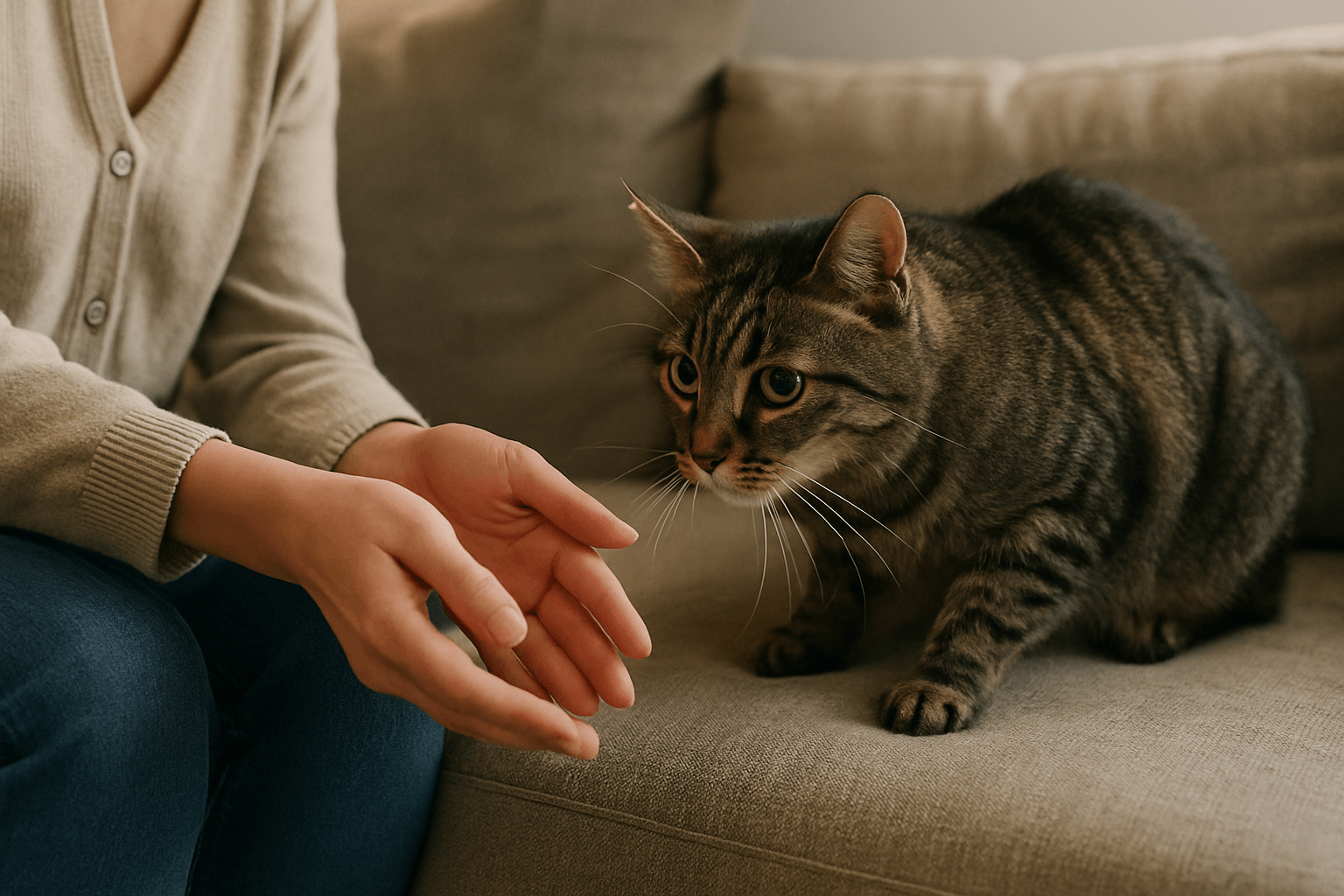
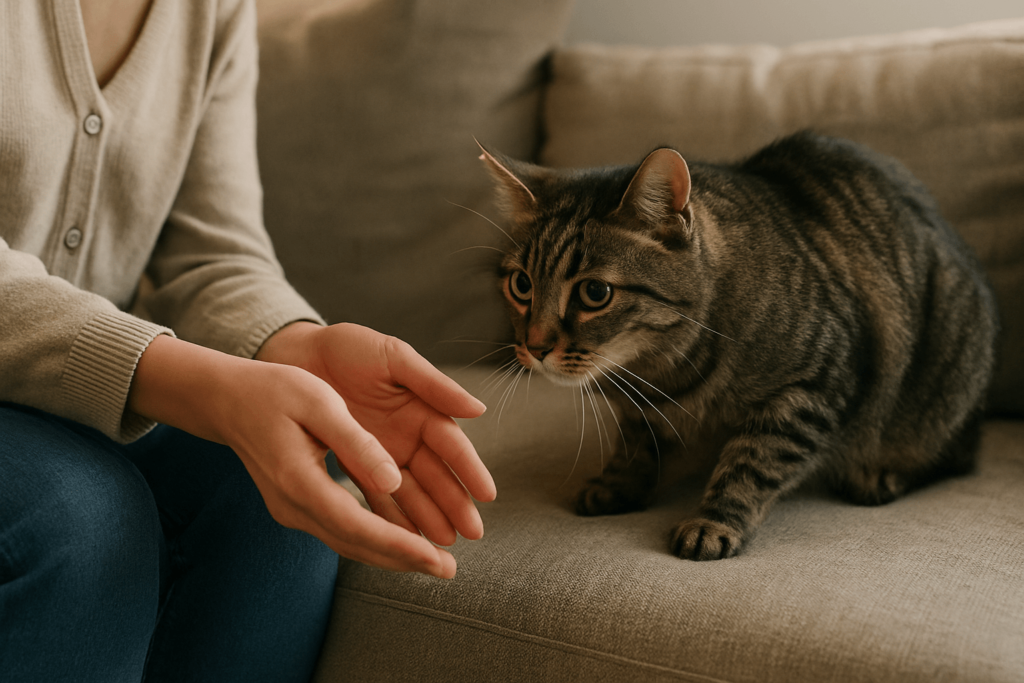
  • Crouched Body Posture:
    Low to the ground, tail tucked, muscles tense—this signals high anxiety.

     
  • Excessive Grooming or Hiding:
    Overgrooming can be a displacement behavior; hiding for days may indicate severe stress.

     
  • Dilated Pupils in Calm Settings:
    Constant wide eyes suggest a state of alertness, even when no threat is present.

     
  • Refusing Food When Observed:
    Eating only when alone is a classic sign of insecurity in a new or unsafe-feeling space.


Recognizing these behaviors early allows you to adjust your approach before fear becomes ingrained.

 
Fear Triggers Trust-Building Tools
Loud household noises Create quiet zones with white noise or soft music
Unfamiliar visitors Provide escape routes and hiding spots nearby
Sudden movements Move slowly and let the cat initiate contact
Direct staring Use slow blinks to signal safety and calm
Forced handling Offer treats from your hand without demanding touch

Creating a Safe Space for Your Anxious Cat

A dedicated safe haven gives your cat control over their environment—a critical factor in reducing anxiety.

 
  • Choose a Quiet Room:
    Set up a low-traffic area like a spare bedroom or bathroom with minimal foot traffic and noise.

     
  • Provide Elevated Hiding Spots:
    Cat trees, shelves, or covered beds allow them to observe from above—a natural feline preference.

     
  • Include Essentials Nearby:
    Keep food, water, litter box, and soft bedding within the space so they don’t need to venture out when stressed.

     
  • Use Calming Scents (Cautiously):
    Feliway diffusers mimic feline facial pheromones and can ease tension—avoid essential oils, which are toxic.

     
  • Control Light and Sound:
    Use blackout curtains for overstimulated cats or soft ambient noise (like a fan) to mask household sounds.


This sanctuary isn’t temporary—it’s their emotional anchor. Let them use it as long as they need.

Building Trust Through Gentle Interaction

Rushing trust backfires. Instead, let your cat set the pace while you create positive associations with your presence.

 
  • Sit on the Floor, Not Over Them:
    Being at eye level (or below) feels less threatening than looming overhead.

     
  • Offer Treats Without Expectation:
    Toss a treat nearby or place it on the floor and walk away—no eye contact, no pressure.

     
  • Use the “Slow Blink” Technique:
    Gently close your eyes and reopen them slowly. Repeat. Many cats respond by blinking back—a sign of trust.

     
  • Talk in Soft, High-Pitched Tones:
    Lower voices can sound aggressive; gentle cooing mimics nurturing maternal sounds.

     
  • Respect Retreat Signals:
    If your cat turns away, flattens ears, or flicks their tail, stop and give space immediately.


Trust is earned in seconds of patience, not hours of insistence. Every tiny step counts.


Enrichment That Reduces Fear, Not Increases It

Stimulation should comfort, not overwhelm. Choose enrichment that empowers your cat to engage on their terms.

 
  • Interactive Feeders at a Distance:
    Use puzzle feeders placed far from your presence so they associate food with safety, not you.

     
  • Wand Toys from Afar:
    Drag a feather toy slowly near their hiding spot—never thrust it toward them.

     
  • Window Perches with Bird Feeders Outside:
    Safe observation of the outdoors provides mental engagement without real-world risk.

     
  • Cardboard Boxes and Tunnels:
    Offer multiple escape routes so they never feel cornered during play or exploration.

     
  • Consistent Daily Routines:
    Feed, play, and clean the litter box at the same times—predictability = security.


The goal isn’t to “fix” their shyness but to give them joyful reasons to feel curious, not scared.


When to Seek Professional Help

Some fears run too deep for at-home strategies alone. Professional guidance can make all the difference.

 
  • No Improvement After 8–12 Weeks:
    If your cat still won’t leave their safe space or shows worsening anxiety, consult a vet or behaviorist.

     
  • Aggression Linked to Fear:
    Hissing, swatting, or biting when cornered may require a behavior modification plan.

     
  • Refusal to Eat or Use Litter Box:
    Prolonged stress can lead to medical issues like hepatic lipidosis or urinary blockages.

     
  • Obsessive Behaviors:
    Constant pacing, overgrooming to baldness, or vocalizing nonstop signal severe distress.

     
  • History of Trauma or Neglect:
    Cats from hoarding situations or labs often need specialized rehabilitation.


There’s no shame in asking for help—your cat’s well-being is worth it.

Long-Term Strategies for Building Confidence

Helping a skittish cat isn’t a short-term project—it’s an ongoing commitment to emotional safety and gradual growth. With consistent, low-pressure support, many fearful cats blossom over time.

 
  • Maintain Predictable Routines:
    Cats thrive on consistency; feeding, play, and quiet time at the same hours each day reduce uncertainty.

     
  • Gradually Expand Their Territory:
    Once comfortable in one room, slowly introduce adjacent spaces using treats and familiar bedding.

     
  • Introduce New People Very Slowly:
    Ask visitors to ignore the cat completely at first—no eye contact, talking, or reaching—and let curiosity lead.

     
  • Celebrate Small Wins Publicly (But Quietly):
    When your cat sits near you or accepts a treat, acknowledge it internally with joy—but stay calm outwardly.

     
  • Never Force Socialization:
    Even well-meaning handling can reset progress. Let your cat choose when, how, and if they interact.


True confidence can’t be rushed. By honoring your cat’s pace, you lay the foundation for a lifetime of quiet trust.

“You can’t rush the process but there are some things you can do to gently help a shy cat begin to trust and feel less anxious.” – Pam Johnson-Bennett, CCBC

Frequently Asked Questions About Skittish Cats

Why won’t my skittish cat let me pet them?

Your cat hasn’t yet associated touch with safety. Focus on proximity without contact—petting too soon breaks trust.

It varies: some cats adjust in weeks, others take 6–12 months. Senior or feral-rescued cats often need the most time.

Yes—but gently. Adult cats won’t become lap cats overnight, but many learn to enjoy quiet companionship.

Never. Forcing interaction increases fear. Instead, reward voluntary emergence with treats and silence.

Minimize guests initially. When necessary, keep your cat in their safe room with food, water, and a litter box.

Patience Is the Greatest Gift You Can Offer

Helping a skittish cat isn’t about speed—it’s about steadfastness. Every quiet moment you share, every treat offered without demand, every time you choose to wait instead of reach—those are the threads that weave trust. Your cat may never leap into your lap with abandon, but they might one day blink slowly from their perch, or sleep just outside your bedroom door. That’s not failure. That’s progress. And in the quiet language of cats, it’s love.

 
Is Rawhide Bad for Cats? Best 7 Expert Tips!

Is Rawhide Bad for Cats? Best 7 Expert Tips! – Discover the risks, safe alternatives, and expert advice to keep your feline friend healthy and happy.

Is Rawhide Bad for Dogs? Best 7 Expert Tips!

Is Rawhide Bad for Dogs? Best 7 Expert Tips! – Discover the risks, benefits, and safer alternatives to rawhides for your dog’s chewing needs.

Understanding Anorexia in Cats: Best 7 Expert Tips!

Understanding Anorexia in Cats: Best 7 Expert Tips! – Learn why cats stop eating, spot warning signs, and discover how to help your feline regain appetite safely.

Understanding Anorexia in Dogs: Best 7 Expert Tips!

Understanding Anorexia in Dogs: Best 7 Expert Tips! – Learn causes, symptoms, and solutions to help your dog regain appetite and stay healthy.

Leave a Reply

Your email address will not be published. Required fields are marked *