

Dirty Cat Ears vs Ear Mites: Best 7 Expert Tips!

Dirty Cat Ears vs Ear Mites: Best 7 Expert Tips!

Dirty Cat Ears vs Ear Mites: What Every Cat Owner Needs to Know

Not all ear debris is cause for alarm—but some signs point to a serious issue. Distinguishing between harmless ear wax buildup and a parasitic infestation like ear mites is crucial for your cat’s comfort and long-term health. This guide breaks down the key differences, symptoms, and solutions so you can act quickly and confidently.

Understanding Normal Ear Appearance in Cats

A healthy cat’s ears should be clean, pale pink, and nearly odor-free. A small amount of light brown wax is normal—but anything beyond that warrants closer inspection. Before assuming the worst, it helps to know what healthy looks like.

 
  • Minimal Wax Buildup:
    A light coating of amber or light brown wax is typical and part of natural ear cleaning.

  • No Foul Odor:
    Healthy ears have little to no smell. A strong, yeasty, or sour odor is a red flag.

  • No Redness or Swelling:
    Inflammation, heat, or visible irritation suggests infection or parasites.

  • Calm Behavior:
    Cats with healthy ears rarely shake their head or excessively scratch their ears.

  • Dry, Clean Outer Ear:
    The pinna (outer ear flap) should be free of crusts, scabs, or dark discharge.


If your cat’s ears align with these traits, routine gentle cleaning may be all that’s needed. But if things look or smell off, it’s time to dig deeper—literally.

Dirty Cat Ears vs Ear Mites: Best 7 Expert Tips!

Common Causes of Dirty-Looking Cat Ears

Sometimes, what appears “dirty” is just cosmetic—but other times, it’s a sign of underlying issues. Several factors can contribute to ear debris, and not all involve parasites.

 
  • Natural Wax Accumulation:
    Cats produce ear wax to trap dust and debris, which can build up over time—especially in long-haired or senior cats.

     
  • Allergies (Food or Environmental):
    Allergic reactions often manifest in the ears, causing increased wax production, itching, and secondary infections.

     
  • Bacterial or Yeast Infections:
    Warm, moist ear canals are breeding grounds for microbes, leading to dark, smelly discharge and discomfort.

     
  • Poor Grooming Habits:
    Obese, arthritic, or elderly cats may struggle to clean their own ears, resulting in buildup.

     
  • Foreign Objects or Water Trapped in Ears:
    Grass seeds, dirt, or leftover moisture from baths can irritate the ear canal and promote debris.


While these causes are treatable, they can mimic the symptoms of ear mites—making accurate identification essential before starting treatment.

Dirty Cat Ears (Non-Parasitic) Ear Mite Infestation
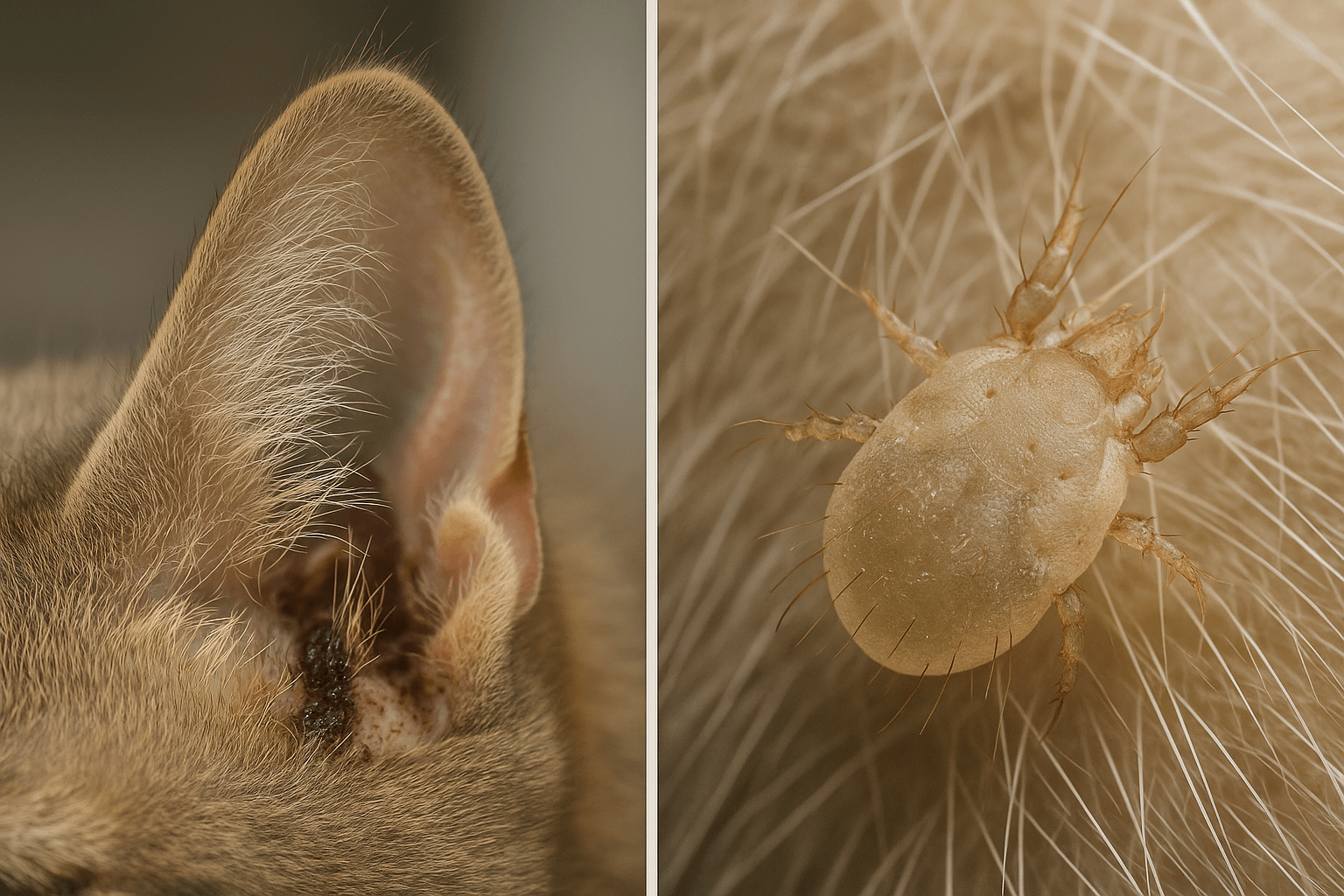
Light to moderate brown wax Dark, crumbly, coffee-ground-like debris
Mild or no odor Strong, foul or yeasty smell
Occasional head shaking Frequent, intense head shaking and ear scratching
No crusts or scabs Crusty buildup around ear base or inner flap
Usually affects one ear initially Typically affects both ears simultaneously

How to Identify an Ear Mite Infestation

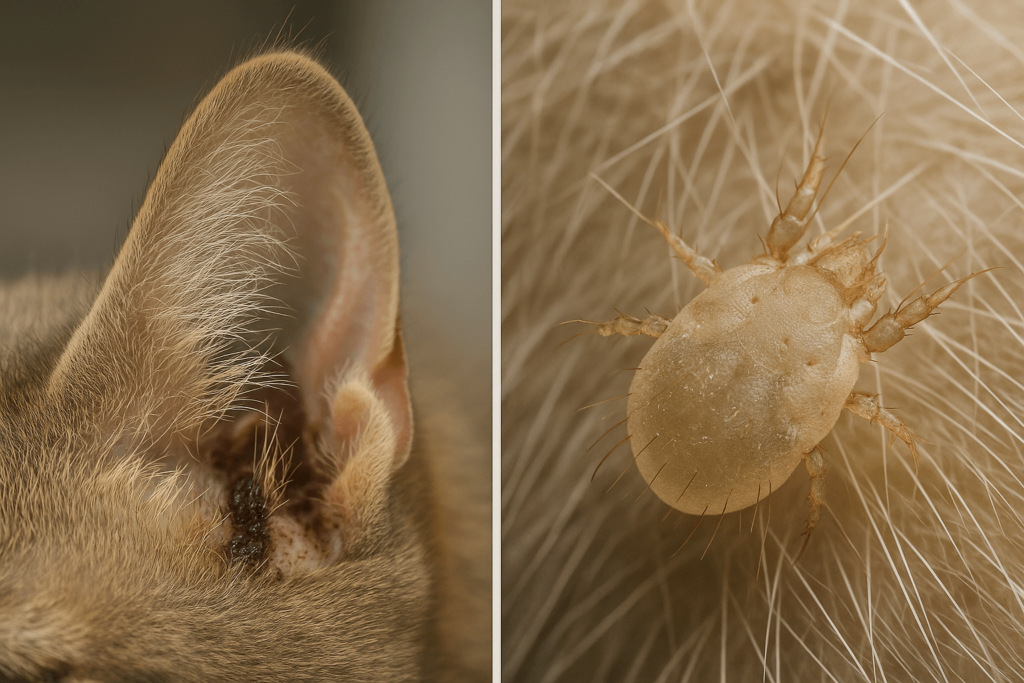
Ear mites (Otodectes cynotis) are tiny, spider-like parasites that live inside a cat’s ear canal. Highly contagious and intensely itchy, they require specific treatment—unlike simple wax buildup.

 
  • Dark, Coffee-Ground-Like Discharge:
    This is the hallmark sign—dried blood and mite waste that looks like used coffee grounds.

     
  • Intense Itching and Scratching:
    Cats may scratch so hard they cause bleeding, hair loss, or even hematomas.

     
  • Head Tilting or Shaking:
    Persistent head movements indicate discomfort or imbalance due to inner ear involvement.

     
  • Secondary Infections:
    Mite damage can lead to bacterial or yeast overgrowth, worsening inflammation and odor.

     
  • Visible Movement (Rare but Possible):
    In severe cases, you might see tiny white specks moving under a bright light—though a vet microscope is best for confirmation.


If you suspect ear mites, do not delay treatment. Left unchecked, they can cause permanent damage to the ear canal or eardrum.

Safe and Effective Cleaning Methods for Cat Ears

Never insert cotton swabs deep into your cat’s ear! Cleaning should be gentle, superficial, and vet-approved.

 
  • Use Vet-Recommended Ear Cleaners:
    Solutions designed for cats dissolve wax without irritating sensitive skin.

     
  • Apply with Cotton Balls or Gauze:
    Wipe only the outer ear and visible folds—never force anything into the canal.

     
  • Avoid Alcohol, Hydrogen Peroxide, or Home Remedies:
    These can burn, dry out, or worsen infections.

     
  • Clean After Baths or Swimming:
    Gently dry the outer ear to prevent moisture buildup that invites microbes.

     
  • Reward Calm Behavior:
    Make cleaning a positive experience with treats and soothing words to reduce stress.


Regular gentle cleaning helps monitor ear health—but if your cat resists or shows pain, stop and consult your vet.

When to See a Veterinarian

Some ear issues resolve with cleaning—but others demand professional intervention. Knowing when to seek help can prevent long-term damage.

 
  • Persistent or Worsening Discharge:
    If debris returns within days of cleaning, something deeper is wrong.

     
  • Signs of Pain:
    Flinching, hissing, or running away when you touch the ears signals discomfort.

     
  • Loss of Balance or Hearing:
    These suggest inner ear involvement—a medical emergency.

     
  • Bleeding or Open Sores:
    Self-trauma from scratching can lead to wounds that need antibiotics.

     
  • No Improvement After Home Care:
    If symptoms linger beyond 48 hours, a vet visit is essential.


A veterinarian can perform an otoscopic exam and ear cytology to confirm mites, yeast, or bacteria—and prescribe targeted treatment.

Preventing Future Ear Problems in Cats

Proactive care is the best defense against recurring ear issues—whether parasitic or not.

 
  • Routine Ear Checks:
    Weekly visual inspections help catch problems early.

     
  • Parasite Prevention:
    Many monthly flea/tick treatments (e.g., selamectin) also prevent ear mites.

     
  • Allergy Management:
    If your cat has food or environmental allergies, work with your vet on a long-term plan.

     
  • Keep Ears Dry:
    Avoid spraying water near ears during baths; dry thoroughly afterward.

     
  • Avoid Over-Cleaning:
    Too much cleaning strips natural oils and disrupts the ear’s microbiome.


Prevention isn’t about perfection—it’s about consistency. A little attention goes a long way in keeping ears healthy.


Home Care Do’s and Don’ts for Cat Ear Health

Managing your cat’s ear hygiene at home requires caution—what seems helpful can sometimes do more harm than good. Stick to vet-approved practices to keep ears clean without causing irritation or injury.

 
  • Do Use a Vet-Recommended Ear Cleaner:
    Only use products specifically formulated for cats to safely break down wax and debris without damaging delicate skin.

     
  • Don’t Insert Anything Deep Into the Ear Canal:
    Cotton swabs, fingers, or tools can push debris further in or even rupture the eardrum—never probe beyond what’s visible.

     
  • Do Monitor Both Ears Weekly:
    Regular checks help you spot changes early, especially if one ear looks cleaner than the other.

     
  • Don’t Use Human Ear Products or Essential Oils:
    Ingredients like tea tree oil or alcohol are toxic or irritating to cats and can worsen infections.

     
  • Do Keep the Area Around Ears Clean and Dry:
    Gently wipe the base of the ears and surrounding fur to prevent buildup of dirt, mites, or discharge.


While home care plays a supportive role, it should never replace professional diagnosis—especially when mites, infection, or pain are suspected.

Frequently Asked Questions About Dirty Cat Ears and Ear Mites

Can humans get ear mites from cats?

While extremely rare, ear mites can temporarily cause skin irritation in humans—but they cannot complete their life cycle on people and won’t infest human ears.

Most treatments require 2–4 weeks to fully eliminate mites and their eggs, even if symptoms improve within days.

No. Some dog products contain permethrin, which is highly toxic to cats. Always use cat-specific treatments.

Individual grooming habits, immune response, or early-stage exposure can cause asymmetry—even if mites are present in the household.

Yes. Cats with folded ears (like Scottish Folds) or dense fur (like Persians) have less airflow and may accumulate more wax or moisture.

Trust Your Instincts—and Your Vet

Ear health is a window into your cat’s overall well-being. While a little wax is normal, persistent debris, odor, or discomfort should never be ignored. By learning the difference between simple buildup and a parasitic infestation like ear mites, you empower yourself to act swiftly and compassionately. Always lean on your veterinarian for diagnosis—never guess. With the right care, your cat’s ears will stay clean, comfortable, and free from preventable suffering. After all, a happy cat starts with healthy ears.

Pandango Dog: Best 7 Expert Tips!

Pandango Dog: Best 7 Expert Tips! – Discover the perfect mix of Poodle smarts and Dachshund charm, plus care, health, and training advice for this lovable hybrid.

Why Is My Cats Skin Pink? Best 7 Expert Tips!

Why Is My Cats Skin Pink? Best 7 Expert Tips! – Discover causes, signs, and solutions for pink skin in cats. Learn when to worry and how to keep your feline healthy.

Why Is My Dogs Skin Pink? Best 7 Expert Tips!

Why Is My Dogs Skin Pink? Best 7 Expert Tips! – Discover causes, symptoms, and solutions for pink skin in dogs. Learn when to act and how to keep your pup healthy!

Understanding Cat Skin Colors: Best 7 Expert Tips!

Understanding Cat Skin Colors: Best 7 Expert Tips! – Explore the science, patterns, and care behind feline skin colors for a healthier, happier cat.

Leave a Reply

Your email address will not be published. Required fields are marked *

Recent Post

Post Category


