

Territorial Dog Behavior Towards Humans: Understanding the Root Causes and How to Respond
Dogs are loyal, loving companions — but when they growl at visitors, block doorways, or posture aggressively toward family members, it’s not just disobedience. It’s territorial behavior. This instinctive response, deeply wired into their ancestry, can turn a once-friendly pup into a source of tension in the home. Understanding why dogs display territorial behavior toward humans isn’t about blaming them — it’s about decoding their instincts and guiding them with compassion. In this guide, we’ll explore the science behind this behavior, its triggers, and how you can safely and effectively restore harmony in your household.
The Evolutionary Roots of Territorial Behavior in Dogs
Territorial behavior isn’t a flaw — it’s a survival mechanism inherited from wolves. Dogs evolved as pack animals that defended resources, space, and loved ones. When they perceive humans as part of their social group, they instinctively guard them — sometimes too fiercely.
Resource Protection: Dogs view their home, family, food, and even favorite spots as valuable resources worth defending.
Pack Hierarchy Instinct: In a dog’s mind, the household is a pack. If they sense uncertainty in leadership, they may assume the role of protector — even if it means confronting humans.
Scent Marking and Ownership: Dogs use scent to mark territory. When they rub against furniture or people, they’re leaving pheromones that say, “This is mine.”
Heightened Alertness: Dogs are natural sentinels. Their acute hearing and smell make them hyper-aware of changes — and sometimes, they interpret normal human activity as intrusion.
Lack of Socialization: Dogs raised in isolation or with limited exposure to guests often develop fear-based territorial reactions because unfamiliar people feel like threats.
This behavior is not malicious — it’s deeply biological. Recognizing its roots helps you respond with patience, not punishment.
Signs Your Dog Is Displaying Territorial Behavior Toward Humans
Not all aggression is the same. Territorial behavior has distinct cues that set it apart from fear, dominance, or playfulness. Recognizing these signs early is key to intervention.
Growling or Snarling at Visitors: Even if the person is familiar, your dog may emit low, rumbling sounds when they enter your home or approach you.
Blocking Doorways or Pathways: Your dog positions themselves between you and the door, a person, or a room — refusing to move unless they feel in control.
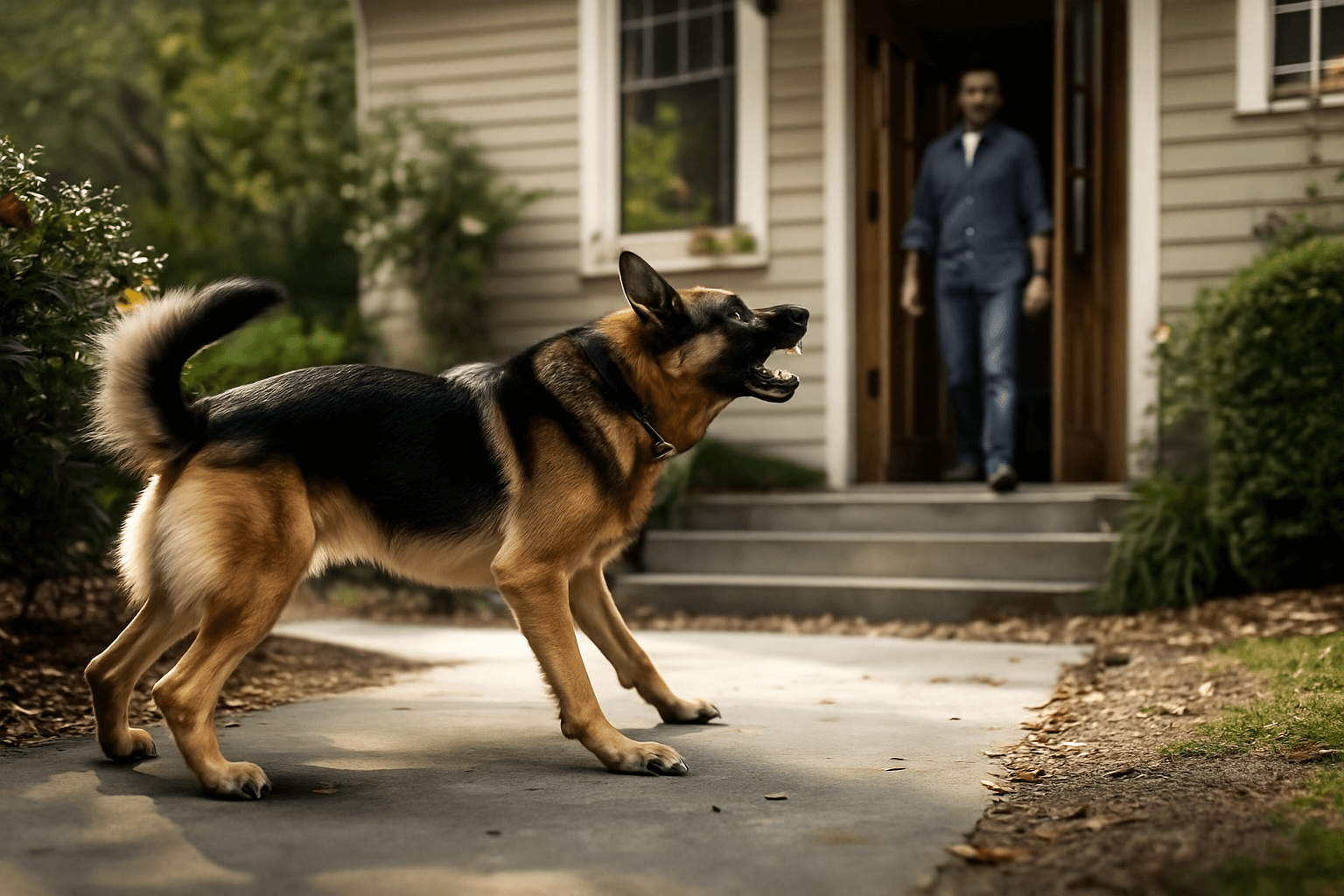
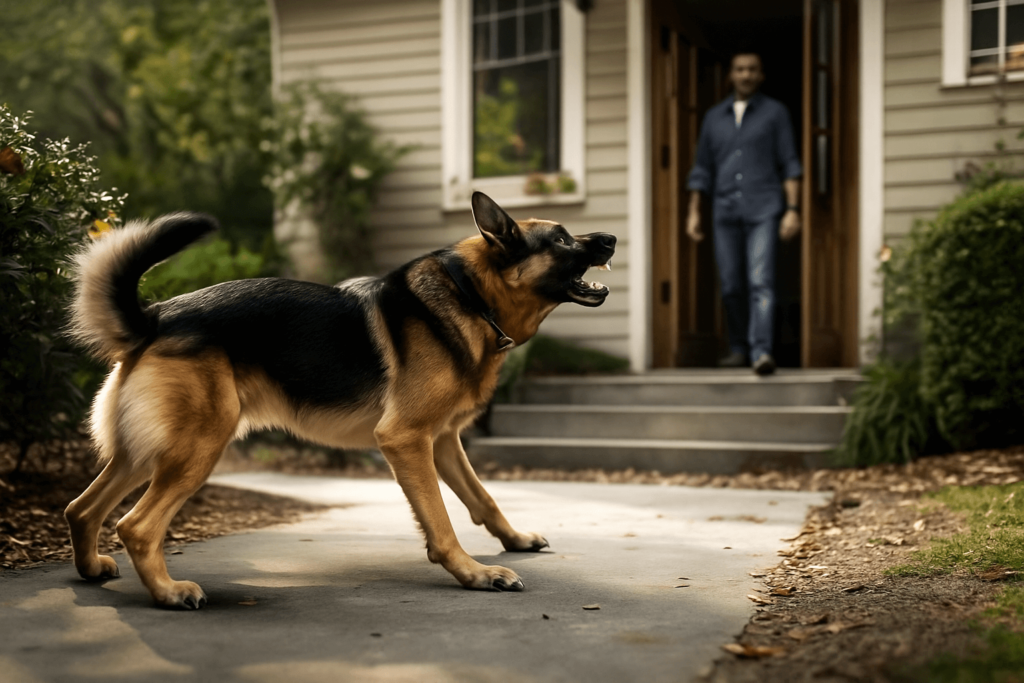
Stiff Body Language: Ears pinned back, tail held high and rigid, fur along the back raised — these are classic signs of territorial alertness.
Barking at People Near Your Property: Your dog barks relentlessly at mail carriers, delivery persons, or neighbors walking past your fence — even if they’ve never been threatened.
Lunging or Charging Toward Humans: A sudden rush forward, often accompanied by a snarl, is a clear attempt to “drive out” the perceived intruder.
These behaviors aren’t random outbursts. They’re calculated displays of control. Ignoring them only reinforces the belief that your dog must protect the territory — and you.
Check this guide 👉Dog Behavior Changes: Best 7 Expert Tips!
Check this guide 👉What Is a Dog Behaviorist? Best 7 Expert Tips!
Check this guide 👉Understanding Old Dog Behavior Before Death: Best 7 Tips!
| Triggers of Territorial Behavior | How It Manifests in Dogs |
|---|---|
| New people entering the home | Growling, barking, or hiding behind owner |
| Unfamiliar scents on clothing or skin | Sniffing intensely, then mounting or blocking |
| Changes in household routine | Increased vigilance, restlessness, or aggression |
| Lack of socialization during puppyhood | Fear-based territorial reactions to strangers |
| Inconsistent leadership from owners | Dog assumes protective role, even toward family members |
Why Territorial Behavior Often Escalates With Time
Many owners mistakenly believe that if their dog doesn’t bite, the behavior isn’t serious. But territorial aggression is rarely static — it grows with repetition and reinforcement.
Reinforced by Success: If your dog barks and the visitor leaves, your dog learns that barking works — and they’ll do it again.
Owner Reactions: Coddling, scolding, or pulling the dog away mid-incident can unintentionally validate their fear or sense of duty.
Isolation and Lack of Stimulation: Dogs left alone for long hours become hyper-focused on their territory — every sound, every movement, feels like a threat.
Age-Related Anxiety: Older dogs may develop territorial behavior as their senses decline, making them more reactive to unfamiliar stimuli.
Unresolved Trauma: Past experiences — such as being attacked or scared by a visitor — can trigger lifelong territorial defenses.
Territorial behavior doesn’t fade on its own. Left unaddressed, it becomes a learned response — and the dog’s confidence in their role as protector only strengthens.
How to Correct Territorial Behavior Without Punishment
Punishment — yelling, alpha rolls, shock collars — doesn’t fix territorial behavior. It deepens fear and erodes trust. The solution lies in retraining, not repressing.
Establish Calm Leadership: Be the steady, predictable leader. Eat first, enter rooms first, and control access to high-value resources like food and beds.
Desensitize to Triggers: Gradually introduce visitors at a distance. Reward calm behavior with treats. Slowly decrease the distance over days or weeks.
Use Positive Reinforcement: When your dog remains relaxed during a visitor’s arrival, reward immediately with praise, toys, or treats — not affection.
Create Safe Zones: Designate a quiet area (crate, room, mat) where your dog can retreat when overwhelmed — and teach them to go there on cue.
Control Greetings: Require visitors to ignore your dog until they sit calmly. No petting, no eye contact — until your dog chooses to relax.
This isn’t about dominance. It’s about building confidence — in your dog, and in your role as their guide.
The Role of Socialization in Preventing Territorial Aggression
The window for effective socialization closes around 16 weeks — but the foundation lasts a lifetime. Early exposure shapes how your dog interprets the world.
Introduce Diverse People: Invite children, elderly individuals, people in uniforms, or those using mobility aids — let your puppy observe calmly.
Controlled Visits: Arrange short, positive visits with friends. Have them toss treats, then leave — no petting unless your dog is relaxed.
Visit Public Spaces: Take your puppy to parks, cafes (with permission), and pet-friendly stores to normalize unfamiliar sights and sounds.
Avoid Forced Interactions: Never hold your dog while someone approaches. Let them choose to engage — or not.
Reward Curiosity, Not Fear: If your dog sniffs a new person without growling, reward the calm exploration — not the avoidance.
Socialization isn’t a one-time event. It’s an ongoing process that teaches your dog: “The world is safe, and I don’t need to protect you from it.”
When Territorial Behavior Becomes Dangerous
There’s a line between assertive guarding and dangerous aggression. Know when to seek professional help.
Biting Without Warning: If your dog snaps or bites without growling first, this is a red flag — it indicates suppressed fear turning into sudden violence.
Targeting Family Members: Aggression toward children, partners, or regular household members is serious and requires immediate intervention.
Chasing or Cornering: If your dog forces someone into a corner or blocks escape routes, this is predatory behavior — not just territorial.
Persistent Escalation: Behavior that worsens despite training efforts signals an underlying anxiety disorder or medical issue.
Resource Guarding of People: If your dog growls when you hug someone, or tries to separate you from a guest, this is a dangerous form of possessiveness.
In these cases, consult a certified veterinary behaviorist. Medication, behavior modification, and structured training are often necessary. You are not failing your dog — you’re advocating for their well-being.
Common Myths About Territorial Dogs — Busted
Misinformation fuels misunderstanding. Let’s clear up the biggest myths surrounding territorial dog behavior.
Myth: “They’re just protecting you.”
Truth: Dogs don’t understand human social dynamics. They’re reacting to instinct — not loyalty.Myth: “It’s a dominance issue.”
Truth: Modern behavior science rejects the outdated “alpha dog” theory. Territorial behavior stems from insecurity, not a desire to rule.Myth: “If I ignore it, they’ll grow out of it.”
Truth: Unaddressed territorial behavior becomes more ingrained — not less.Myth: “Only male dogs do this.”
Truth: Females are just as likely to display territorial aggression, especially if they’re intact or anxious.Myth: “Training won’t work on older dogs.”
Truth: Neuroplasticity exists in all dogs. With patience and consistency, even senior dogs can learn new responses.
Knowledge is your most powerful tool. Ditch the myths. Embrace the science.
Frequently Asked Questions About Territorial Dog Behavior
My dog growls at my partner but not me — why?
It varies. Mild cases may improve in 4–8 weeks. Severe cases can take 3–6 months or longer. Consistency matters more than speed.
Can I train my dog to accept strangers on my property?
It can help if hormones contribute to the behavior — especially in intact males. But it’s not a cure-all. Behavior training is still essential.
Should I use a muzzle to stop territorial barking?
This often points to past negative experiences — perhaps a loud voice, sudden movement, or unfamiliar scent. Desensitization is key.
How long does it take to fix territorial behavior?
Absolutely. Some dogs bark, stiffen, or block without growling or biting. These are still territorial behaviors that need guidance.
Is neutering or spaying helpful for territorial aggression?
No — but do manage interactions. Use training tools, safe spaces, and controlled exposure. Avoidance reinforces fear.
Embracing Your Dog’s Nature — Without Sacrificing Your Peace
Territorial behavior isn’t a sign your dog is “bad.” It’s a sign they feel responsible — and confused. They’re trying to protect you, but they don’t know how to do it safely. Your job isn’t to suppress their instincts — it’s to teach them that they don’t have to carry that weight alone. With patience, structure, and consistent guidance, you can transform a reactive dog into a calm, confident companion. You’re not changing who they are — you’re helping them feel secure enough to be themselves. And in that security, you’ll find the quiet, trusting bond you both deserve.
Pemphigus Erythematosus in Cats: Best 7 Expert Tips! – Learn to recognize symptoms, manage flare-ups, and improve your cat’s quality of life.
Pemphigus Erythematosus in Dogs: Best 7 Expert Tips! – Discover causes, symptoms, and treatment options to manage this autoimmune skin condition effectively.
Cat Tympanic Membrane: Best 7 Expert Tips! – Learn how to protect your cat’s eardrum, spot issues early, and ensure lifelong auditory health.
Dog Tympanic Membrane: Best 7 Expert Tips! – Learn how to protect your dog’s eardrum, spot issues early, and ensure lifelong ear health with expert advice.


