
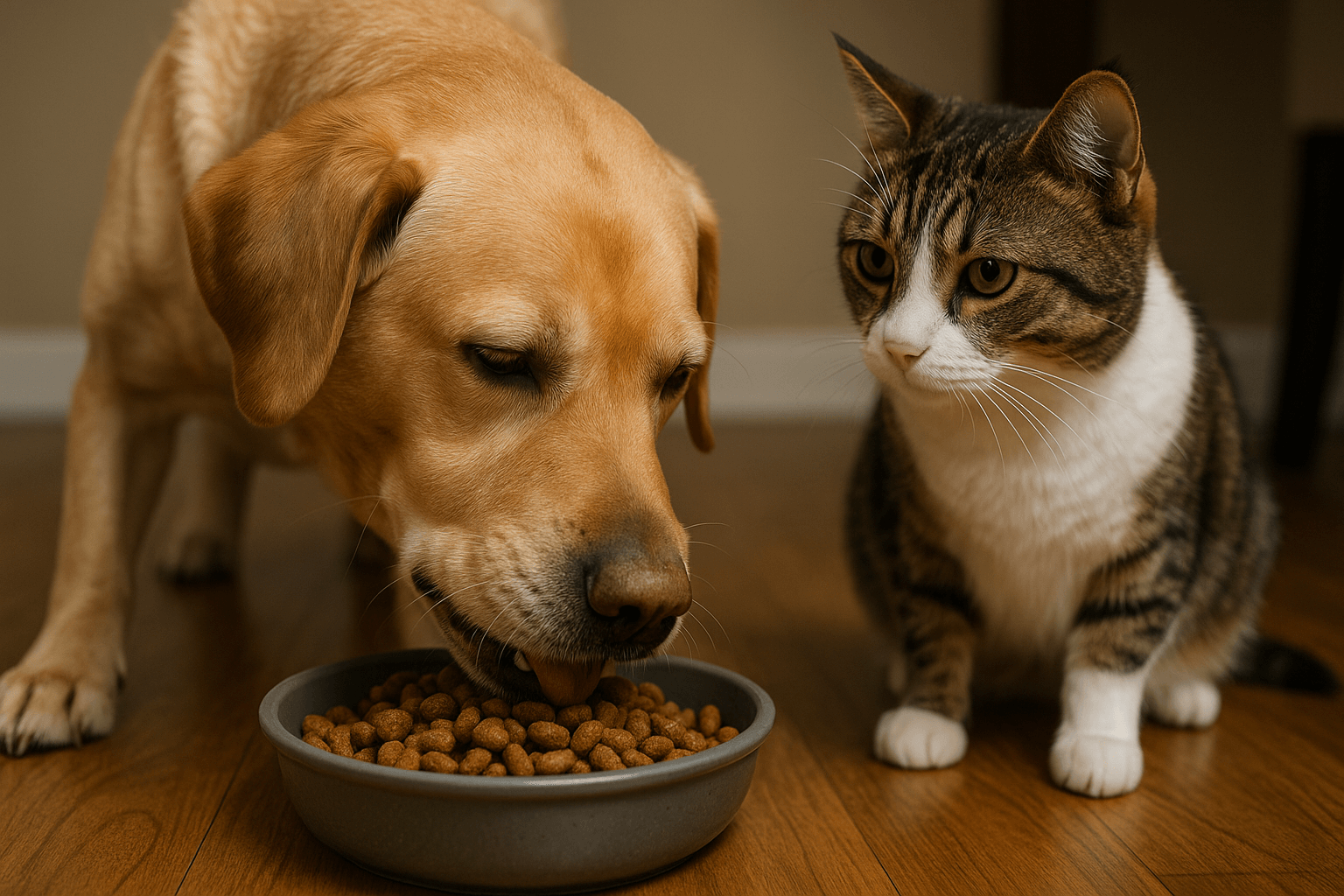
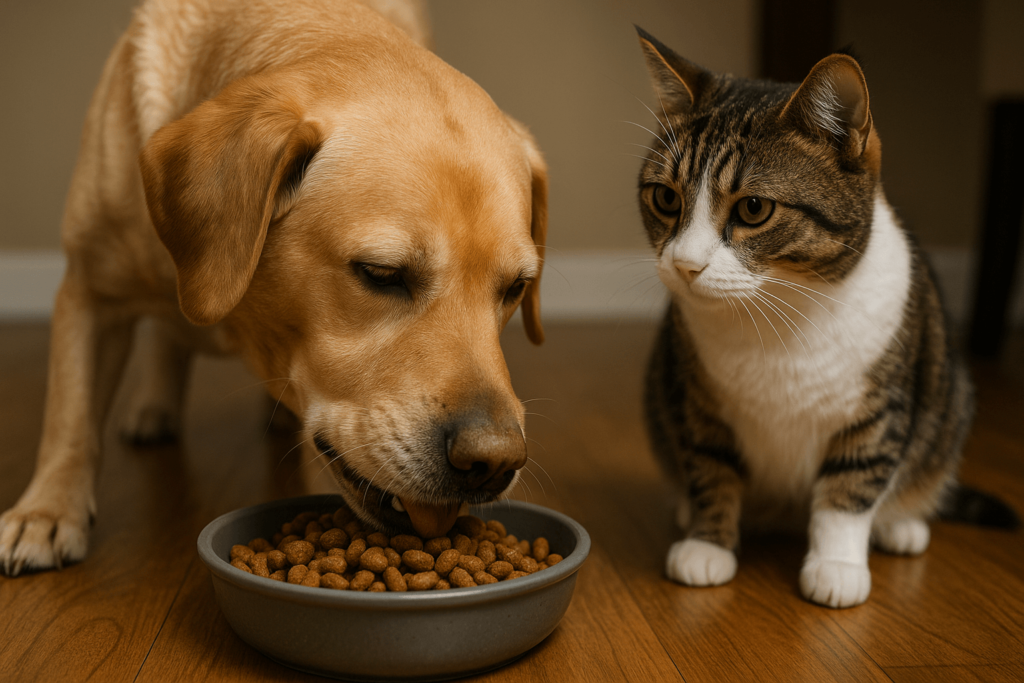

Can Dogs Eat Cat Food for One Day? The Surprising Truth Behind a Common Mistake
Accidentally feeding your dog cat food for one day might seem harmless—maybe the bowls got mixed up, or you ran out of dog food. But while a single meal won’t cause an emergency, it’s far from harmless. Cat food is formulated for obligate carnivores with radically different nutritional needs than dogs. What’s safe—or even ideal—for a cat can be risky, uncomfortable, or even dangerous for your dog. Understanding why this mismatch matters helps you avoid future slip-ups and protect your pet’s long-term health.
Why Cat Food Is Not Designed for Dogs
Cat food and dog food aren’t interchangeable—they’re engineered for two completely different biological systems. Here’s why feeding cat food to your dog, even briefly, can cause problems:
Higher Protein Levels: Cat food contains up to 30–40% protein, far exceeding a dog’s daily requirement, which can strain their kidneys and digestive system.
Elevated Fat Content: Cat food is richer in fats to support energy-dense feline metabolism, increasing the risk of pancreatitis in dogs.
Taurine Overload: Cats require supplemental taurine; dogs produce it naturally. Excess taurine isn’t harmful, but it signals a formulation mismatch.
Increased Calories per Cup: Cat food is denser in calories, meaning even a small portion can deliver more energy than your dog needs in a full day.
Different Vitamin Ratios: Cat food has higher levels of vitamin A and arachidonic acid—nutrients dogs synthesize or require in smaller amounts.
This isn’t just about “richness.” It’s about biology. A dog’s digestive tract isn’t built to process the concentrated, carnivore-specific nutrition found in cat food—even for just one meal.
Immediate Risks of Feeding Cat Food to Dogs
Even a single serving of cat food can trigger physical discomfort or health issues in dogs. These are the most common short-term consequences:
Upset Stomach: The high fat and protein content often leads to vomiting, diarrhea, or abdominal cramping within hours.
Gas and Bloating: Dogs may experience excessive flatulence or bloating due to poor digestion of cat food ingredients.
Loss of Appetite: After eating cat food, some dogs refuse their regular food, signaling digestive distress or sensory overload.
Lethargy or Restlessness: Some dogs become unusually tired or agitated as their body works overtime to process unfamiliar nutrients.
Increased Thirst and Urination: Higher sodium and protein levels can cause temporary dehydration or increased urination.
While these symptoms are usually mild and resolve within 24–48 hours, they’re your dog’s way of saying, “This isn’t right.” Ignoring them can lead to more serious complications, especially in sensitive breeds or older dogs.
Check this guide 👉Is Royal Canin Good Cat Food? Best 7 Expert Tips!
Check this guide 👉Cat Food Allergies: Best 7 Expert Tips!
Check this guide 👉Understanding Cat Food Calories: Best 7 Expert Tips!
| Cat Food Composition | Dog Nutritional Needs |
|---|---|
| Protein: 30–40% | Protein: 18–25% |
| Fat: 15–20% | Fat: 8–15% |
| Taurine: Added in high doses | Taurine: Naturally synthesized |
| Calories: 400–500 kcal/cup | Calories: 300–400 kcal/cup |
| Vitamin A: Excess levels | Vitamin A: Balanced for synthesis |
Long-Term Consequences of Repeated Exposure
While one day won’t cause lasting damage, regularly feeding cat food to your dog sets the stage for chronic health problems. Here’s what can happen over time:
Pancreatitis Risk Increases: High-fat diets are a leading cause of pancreatitis in dogs—a painful, potentially fatal inflammation of the pancreas.
Obesity Develops: Cat food’s calorie density leads to rapid weight gain, especially in less active or senior dogs.
Kidney Stress: Chronic high protein intake forces the kidneys to work harder, accelerating age-related decline.
Nutrient Imbalances: Dogs may develop deficiencies in essential nutrients like fiber, certain B-vitamins, or omega-6 fatty acids found in dog-specific formulas.
Behavioral Changes: Dogs may become picky eaters, refusing their own food and demanding cat food—making future feeding a daily battle.
Even occasional “taste tests” can rewire your dog’s preferences. Once they’ve had the richer, more aromatic cat food, their regular kibble may seem bland—and that’s when feeding problems begin.
What to Do If Your Dog Ate Cat Food Today
If your dog snuck a bowl of cat food, don’t panic—but don’t ignore it either. Here’s what to do next:
Monitor Closely: Watch for vomiting, diarrhea, lethargy, or loss of appetite over the next 24–48 hours.
Withhold Cat Food: Immediately remove access to cat food. Store it in a sealed container out of reach.
Resume Regular Diet: Offer your dog their normal food at their next scheduled mealtime. Don’t fast them unless advised by a vet.
Offer Water: Encourage hydration to help flush out excess sodium and protein.
Call Your Vet If: Symptoms persist beyond 48 hours, your dog is a puppy, senior, or has pre-existing health conditions.
Most dogs recover without intervention—but vigilance prevents minor issues from becoming emergencies.
How to Prevent Future Accidents
Prevention is far easier than cleanup. Here are five simple, effective ways to stop your dog from getting into cat food again:
Feed Separately: Feed your cat in a room your dog can’t access—use baby gates, elevated surfaces, or cat-only feeding stations.
Use Elevated Feeders: Place your cat’s food on a counter, shelf, or cat tree where your dog can’t jump.
Store Cat Food Securely: Keep dry and wet cat food in sealed containers inside cabinets or drawers—not on the floor.
Supervise Meal Times: Stay present during feeding to ensure each pet eats only their own food.
Train a “Leave It” Command: Teach your dog a solid “leave it” cue to use when they eye the cat’s bowl.
A few minutes of setup today prevents hours of vet visits tomorrow.
Signs Your Dog Needs Better Food Options
If your dog is consistently seeking out cat food, it might not just be curiosity—it could be a sign their current diet isn’t meeting their needs. Pay attention to these behavioral and physical cues:
Constantly begging at the cat’s bowl – This isn’t just pickiness; it’s a signal that their food lacks appeal or nutrition.
Losing interest in their own kibble – If they turn away from their usual meal, their diet may be bland, outdated, or poorly formulated.
Dull coat or flaky skin – Poor nutrition often shows up externally. Cat food’s high fat may temporarily improve shine, but it’s unsustainable.
Excessive licking or chewing paws – Could indicate food allergies or deficiencies your dog’s current food isn’t solving.
Unexplained weight gain or loss – A sudden change in body condition suggests their calorie or nutrient intake is off.
Recognizing these signs early lets you make informed changes before minor issues become serious health concerns.
How to Choose the Right Dog Food for Your Pet
Not all dog foods are created equal. Finding the right one means looking beyond brand names and focusing on what truly supports your dog’s health:
Look for named animal proteins first – Chicken, beef, or lamb should be the #1 ingredient, not “meat meal” or vague terms.
Avoid fillers like corn, wheat, or soy – These offer little nutrition and can trigger allergies or digestive upset.
Match the formula to life stage – Puppies, adults, and seniors have different protein, fat, and calorie needs.
Check for AAFCO statement – Ensure the food is labeled “complete and balanced” for your dog’s life stage.
Consider your dog’s activity level – Active breeds need more fat and protein; sedentary dogs need lower-calorie options.
The right food doesn’t just fill your dog’s bowl—it fuels their energy, supports their immune system, and helps them thrive for years to come.
FAQ: Can Dogs Eat Cat Food for One Day?
Can one meal of cat food kill my dog?
No, one meal won’t kill a healthy dog—but it can trigger serious illness, especially in vulnerable pets. Don’t risk it.
Why does my dog love cat food so much?
Cat food is higher in fat, protein, and flavor enhancers, making it more aromatic and palatable to dogs. It’s not a compliment—it’s a biological mismatch.
Is wet cat food worse than dry cat food for dogs?
Wet cat food is often higher in fat and protein, but dry cat food is more calorie-dense. Both are unsuitable. Neither is “safer.”
How long do symptoms last after a dog eats cat food?
Most mild symptoms (gas, loose stool) resolve in 24–48 hours. If they last longer, consult your vet.
Can I use cat food as a treat for my dog?
Never. Even as a treat, it encourages bad habits and nutritional imbalance. Use dog-safe treats instead.
Respect Their Differences—Keep Them Both Healthy
Dogs and cats may share your home, but they don’t share the same nutritional needs. Cat food isn’t “better”—it’s just different. And what’s perfect for one species can be harmful to another. A single day of cat food might seem like no big deal, but every bite reinforces a dangerous habit and puts your dog’s health at risk. By feeding each pet their own food, storing it securely, and understanding their unique biology, you’re not just preventing accidents—you’re showing them the care they deserve. A happy dog isn’t one who steals from the cat’s bowl. A happy dog is one who eats what’s meant for him—and sleeps soundly, knowing he’s well-fed, safe, and loved.
Is Rawhide Bad for Cats? Best 7 Expert Tips! – Discover the risks, safe alternatives, and expert advice to keep your feline friend healthy and happy.

Is Rawhide Bad for Dogs? Best 7 Expert Tips! – Discover the risks, benefits, and safer alternatives to rawhides for your dog’s chewing needs.

Understanding Anorexia in Cats: Best 7 Expert Tips! – Learn why cats stop eating, spot warning signs, and discover how to help your feline regain appetite safely.

Understanding Anorexia in Dogs: Best 7 Expert Tips! – Learn causes, symptoms, and solutions to help your dog regain appetite and stay healthy.