

Cat Flea vs Human Flea: The Surprising Truth About Bites, Bugs, and Your Home
Cats and humans share more than just a home—they share pests. If you’ve been bitten by tiny, jumping insects and your cat is scratching relentlessly, you’re likely dealing with fleas. But are they the same bug? Is the flea on your cat the same one biting your ankles? The answer isn’t what most people assume—and understanding the difference could save you months of frustration, itchy skin, and expensive treatments. This guide cuts through the myths to reveal the real science behind cat fleas and human fleas, how they behave, how to identify them, and how to eliminate them for good.
Why It Matters: Understanding the Flea in Your Home
Not all fleas are created equal. While they may look similar, their biology, host preferences, and behavior differ significantly. Knowing which flea you’re dealing with is the first step to effective control.
Cat fleas are specialists:
They evolved to live on cats and dogs, thriving in their warm fur and feeding on their blood with remarkable efficiency.Human fleas are rare in modern homes:
Once common, Pulex irritans is now largely confined to tropical regions and unsanitary conditions—not typical Western households.The flea on your cat is almost certainly a cat flea:
Over 95% of flea infestations in homes with pets involve Ctenocephalides felis, even if you’re being bitten.Fleas don’t stay on humans long:
Human skin lacks the dense fur fleas need to hide, lay eggs, and complete their lifecycle—so they jump off quickly.Misidentification causes failed treatments:
Many people assume “human flea” means a different species is attacking them—when in reality, it’s the same cat flea, just biting out of necessity.
Confusing these fleas leads to wasted time, ineffective products, and prolonged infestations. The truth? You’re not fighting two different bugs—you’re fighting one highly adaptable enemy.
The Biology of the Cat Flea: Nature’s Perfect Parasite
The cat flea, Ctenocephalides felis, is arguably the most successful parasite on the planet. Its biology is finely tuned for survival—and it’s not picky.
Host flexibility:
Though named for cats, cat fleas readily infest dogs, rabbits, ferrets, and even humans when their preferred host is unavailable.Rapid reproduction:
A single female can lay up to 50 eggs per day, leading to exponential infestations within weeks.Jumping power:
They can leap 150 times their body length—making them nearly impossible to catch and easy to spread.Survival in darkness:
Flea eggs, larvae, and pupae thrive in carpets, bedding, and cracks—hidden from light and most treatments.Resistance to chemicals:
Many populations have developed resistance to common over-the-counter flea treatments, making professional-grade solutions essential.
This isn’t just an annoyance—it’s a biological invasion. Cat fleas don’t just bite; they reproduce, spread disease, and trigger allergic reactions in both pets and people. Ignoring them means inviting chaos into your home.
Check this guide 👉Can You Use Cat Flea Treatment on Dogs? Best 7 Tips!
Check this guide 👉Dog Fleas vs Cat Fleas: Best 7 Health Tips!
Check this guide 👉Symptoms of Flea Treatment Poisoning in Cats: Best 7 Tips!
| Cat Flea (Ctenocephalides felis) | Human Flea (Pulex irritans) |
|---|---|
| Primary host: Cats and dogs | Primary host: Humans |
| Most common flea worldwide | Rare in North America and Europe |
| Can bite humans, but prefers animals | Specialized for human blood and skin |
| Eggs fall off host into environment | Eggs often remain in bedding or clothing |
| Resistant to many topical treatments | More susceptible to traditional insecticides |
The Myth of the “Human Flea”: Why You’re Probably Not Being Bitten by One
The term “human flea” sounds terrifying—it implies a pest designed specifically to torment you. But in reality, it’s a relic of the past.
Human fleas require close human contact:
They live in bedding, clothing, and hair—not on pets—and thrive in overcrowded, unsanitary environments.They’re nearly extinct in developed countries:
Modern hygiene, frequent laundry, and indoor living have made Pulex irritans extremely rare outside parts of Africa, Asia, and Latin America.Most “human flea” reports are misidentifications:
People see fleas biting them and assume it’s a different species—when it’s almost always the cat flea jumping from the pet.Human fleas don’t live on cats:
If you have a flea-infested cat and are getting bitten, it’s not because your cat has human fleas—it’s because your cat has cat fleas that are biting you.No need to panic about “human fleas”:
Unless you live in a developing region with poor sanitation or have recently traveled to one, you’re almost certainly dealing with Ctenocephalides felis.
The real threat isn’t a rare parasite—it’s the widespread, misunderstood cat flea that’s already in your carpet, your bed, and your pet’s fur.
How to Tell the Difference: Identifying Flea Bites and Bugs
You can’t rely on bites alone to identify the culprit. Both fleas cause similar reactions—but there are subtle clues.
Cat flea bites on humans:
Appear as small, red, itchy bumps—often in clusters or lines—around ankles, legs, or waistline where clothing fits tightly.Human flea bites:
Tend to be more random, found on torso, arms, or neck, and may have a central red dot from the flea’s mouthpart.Visual identification:
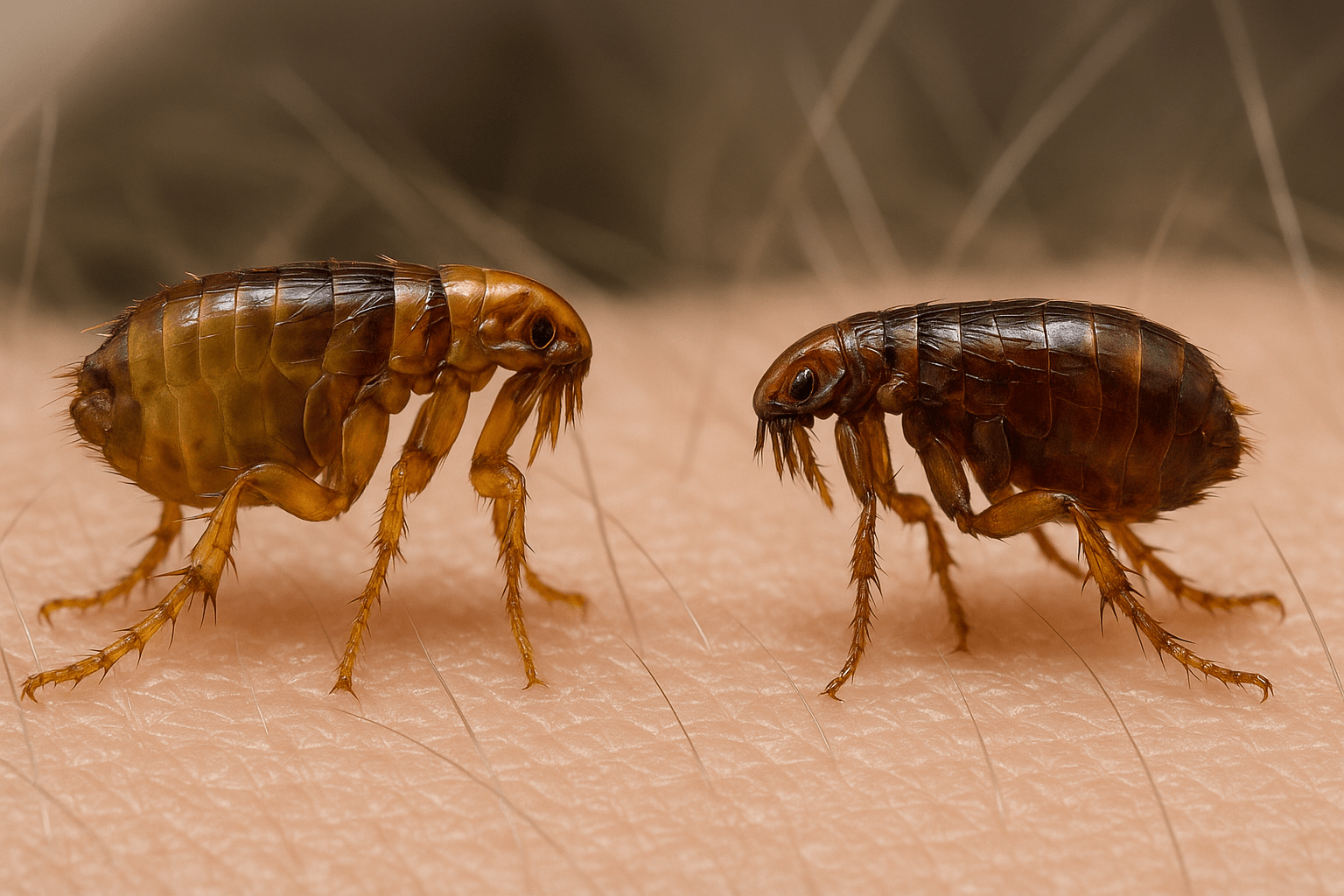
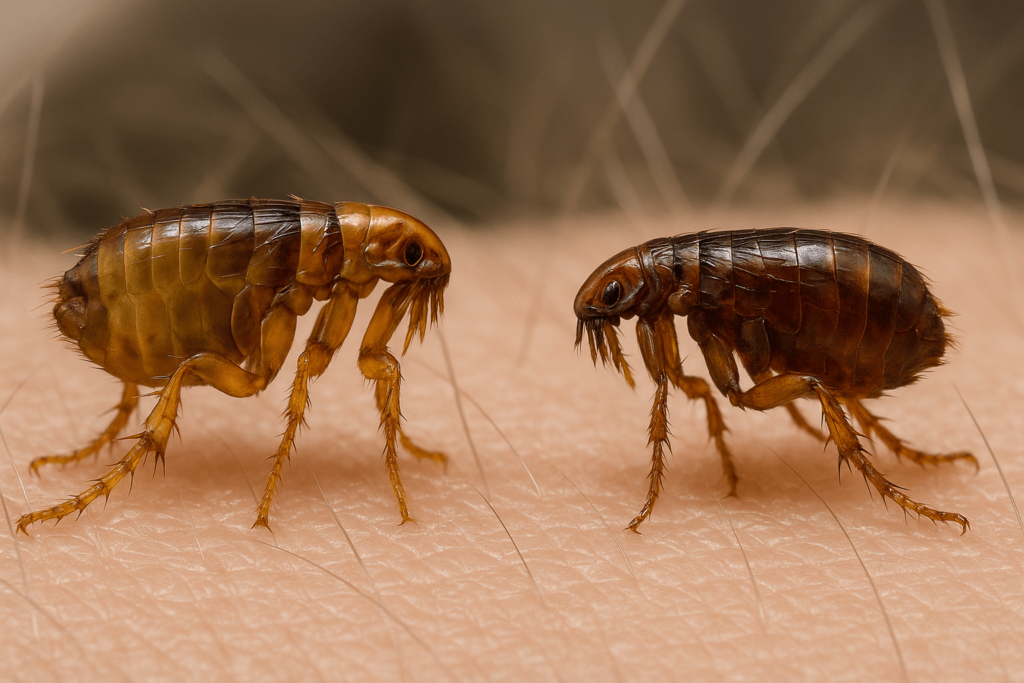
Cat fleas are smaller, darker, and have angled combs (mouthparts) visible under magnification. Human fleas lack this comb.Location matters:
If your cat is scratching and you’re being bitten, it’s cat fleas. If you have no pets and are still bitten, investigate hygiene and bedding.Flea dirt test:
Place suspected flea droppings on a damp paper towel—if it turns red-brown, it’s digested blood—confirming fleas are present.
Don’t guess. Use science. A simple test with a wet paper towel can confirm whether you’re dealing with fleas at all—and point you toward the right solution.
The Real Danger: More Than Just Itchy Bites
Fleas are more than a nuisance—they’re vectors for disease and triggers for serious health issues.
Flea allergy dermatitis (FAD):
The most common skin disease in cats. One bite can cause weeks of intense itching, hair loss, and skin infection.Tapeworm transmission:
Cats (and occasionally humans) can ingest flea larvae carrying tapeworm eggs—leading to intestinal parasites.Anemia in kittens and seniors:
Heavy infestations can cause life-threatening blood loss in small or weak animals.Bartonellosis (“cat scratch disease”):
Transmitted via flea feces, this bacterial infection can cause fever, swollen lymph nodes, and fatigue in humans.Psychological distress:
Constant itching, sleep disruption, and the fear of infestation can cause anxiety, especially in children and the elderly.
Treating fleas isn’t about saving your couch—it’s about protecting your family’s health. Ignoring them is like ignoring a leaking pipe: the damage starts small, but grows invisible until it’s catastrophic.
Effective Treatment: How to Eradicate Fleas for Good
Eliminating fleas requires a three-pronged attack: pets, home, and environment. No single step works alone.
Treat all pets with vet-approved products:
Use topical spot-ons, oral medications, or flea collars proven to kill adult fleas and prevent eggs. Avoid over-the-counter brands—they’re often ineffective.Wash all bedding and fabrics in hot water:
Launder pet bedding, blankets, and even your own sheets weekly at 60°C (140°F) to kill eggs and larvae.Vacuum daily with focus on hotspots:
Under furniture, along baseboards, and in carpet seams. Empty the vacuum immediately into a sealed bag and discard outside.Use insect growth regulators (IGRs):
Sprays or foggers containing methoprene or pyriproxyfen stop eggs from hatching—breaking the lifecycle for months.Call a professional exterminator if infestation persists:
For severe cases, licensed pest control can treat your home with targeted, safe chemicals that reach hidden pupae.
Fleas aren’t defeated by one treatment. They’re defeated by persistence. Be relentless. Be systematic. Be thorough.
Prevention: Building a Flea-Free Home Long-Term
The best way to deal with fleas? Never let them in.
Year-round flea prevention:
Even in winter, indoor heating allows fleas to survive. Use monthly preventatives on all pets, year-round.Limit outdoor exposure:
Keep cats indoors, and restrict dogs to fenced yards treated for fleas.Regular grooming and inspections:
Use a fine-toothed flea comb weekly. Check for black specks (flea dirt) and live fleas behind ears and on the belly.Clean entry points:
Seal cracks, wash shoes after walks, and avoid bringing in used furniture or bedding without inspection.Maintain a clean yard:
Trim grass, remove leaf piles, and treat outdoor areas if your pet spends time outside.
Prevention isn’t optional—it’s the only reliable defense. Once fleas establish in your home, eradication becomes a war. Don’t wait for the invasion.
FAQ: Cat Flea vs. Human Flea
Can cat fleas live on humans?
They can bite and temporarily feed on humans, but they cannot live or reproduce on human skin. They need fur to complete their lifecycle.
Can human fleas infest my cat?
Technically possible, but extremely unlikely in modern homes. Human fleas prefer human hosts and rarely switch to pets.
Do I need to treat my home if my cat has fleas?
Absolutely. Up to 95% of the flea population (eggs, larvae, pupae) lives in your environment—not on your pet.
Are flea collars enough to control an infestation?
No. Most collars only protect the neck area and don’t kill environmental stages. Use them as a supplement, not a solution.
Can I get fleas from my neighbor’s pet?
Yes. Fleas can jump onto clothing or shoes and be carried into your home. Don’t assume you’re safe just because you don’t have pets.
Your Cat’s Comfort Is Your Responsibility
Fleas don’t choose sides. They don’t care if you have a dog, a cat, or no pet at all—they only care about warmth, blood, and a place to multiply. The flea on your cat isn’t a different species from the one biting your leg. It’s the same relentless, adaptable pest—just doing what evolution designed it to do.
Your job isn’t to fight a myth.
Your job is to fight a reality.
Dog Tapeworm Life Cycle: Best 7 Expert Tips! – Learn how tapeworms infect dogs, spot symptoms, and break the cycle with expert prevention strategies.
Anxious Cat Body Language: Best 7 Expert Tips! – Learn to spot signs of stress, understand triggers, and help your cat feel safe and relaxed.
Anxious Dog Body Language: Best 7 Expert Tips! – Learn to spot signs of anxiety, respond effectively, and help your dog feel safe and secure.
Is Breeding Dogs Bad? Best 7 Expert Tips! – Explore the ethics, benefits, and risks of dog breeding to make informed decisions for a better future.


