
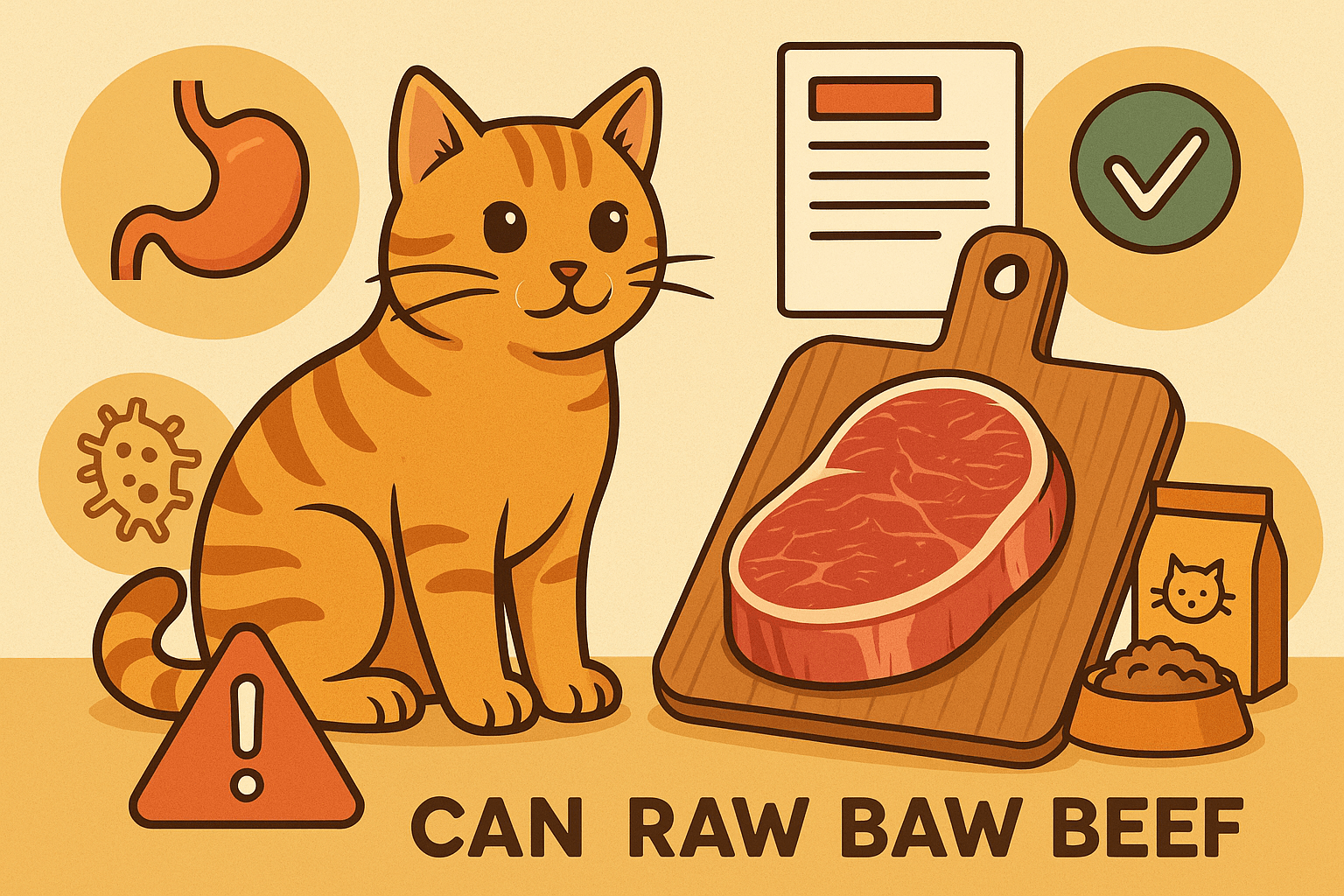

Can Cats Eat Raw Beef? Best 7 Expert Tips!

Can Cats Eat Raw Beef? Best 7 Expert Tips!

Can Cats Eat Raw Beef?


Cats are obligate carnivores, meaning their diet primarily consists of animal-based proteins. As a result, many cat owners wonder whether raw beef is a safe and nutritious option for their feline companions. While raw feeding has gained popularity among pet owners in recent years, it’s essential to weigh the potential benefits against the risks. Understanding how to safely incorporate raw beef into your cat’s diet ensures you provide optimal nutrition while minimizing health concerns. In this blog post, we’ll explore everything you need to know about feeding raw beef to cats, including safety tips, nutritional insights, and expert recommendations.

Benefits of Feeding Raw Beef to Cats


Raw beef can offer several advantages as part of a balanced diet for cats, provided it’s prepared and handled correctly. Here are some key benefits of including raw beef in your cat’s meals.

 
  • High-Quality Protein Source:
    Raw beef is packed with essential amino acids that support muscle development, energy production, and overall vitality.

  • Natural Diet Alignment:
    Cats in the wild consume raw meat, so feeding raw beef mimics their natural eating habits more closely than processed kibble.

  • Improved Coat and Skin Health:
    The fats and nutrients in raw beef can contribute to shinier fur and healthier skin, reducing issues like dryness or flakiness.

  • Enhanced Digestion:
    Many cats digest raw meat more easily than cooked or processed foods, leading to smaller, firmer stools and better nutrient absorption.

  • No Artificial Additives:
    Unlike commercial cat food, raw beef is free from artificial preservatives, fillers, and additives that may irritate sensitive stomachs.


When handled responsibly, raw beef can be a nutritious addition to your cat’s diet, supporting their overall well-being.

Can Cats Eat Raw Beef? Best 7 Expert Tips!

Potential Risks of Feeding Raw Beef to Cats


While raw beef offers nutritional benefits, it also comes with certain risks that cat owners should consider before introducing it to their pet’s diet. Awareness of these dangers helps ensure your cat’s safety.

 
  • Bacterial Contamination:
    Raw meat can harbor harmful bacteria such as Salmonella or E. coli, which pose risks to both cats and humans handling the food.

  • Parasite Exposure:
    Parasites like Toxoplasma gondii may be present in raw beef, potentially causing infections if not properly sourced or prepared.

  • Nutritional Imbalance:
    Feeding only raw beef without supplementation can lead to deficiencies in vital nutrients like taurine, vitamins, and minerals.

  • Choking Hazards:
    Large chunks of raw beef may pose choking risks, especially for eager eaters who swallow food without chewing thoroughly.

  • Allergic Reactions:
    Some cats may develop sensitivities or allergies to specific proteins, including beef, requiring careful monitoring during introduction.


Understanding these risks allows you to take precautions and make informed decisions about incorporating raw beef into your cat’s diet.

Benefits of Raw Beef for Cats
Risks of Feeding Raw Beef to Cats
High-quality protein source
Risk of bacterial contamination
Mimics a cat’s natural diet
Potential parasite exposure
Supports coat and skin health
Nutritional imbalances possible
No artificial additives or preservatives
Choking hazards with large pieces
Improved digestion
Allergic reactions in some cats

How to Safely Prepare Raw Beef for Your Cat


If you decide to feed your cat raw beef, proper preparation and handling are crucial to minimize risks and maximize benefits. Follow these guidelines to ensure safety.

 
  • Choose High-Quality Meat:
    Purchase raw beef from reputable sources, ensuring it’s fresh and free from contaminants. Look for grass-fed or organic options if possible.

  • Freeze Before Serving:
    Freeze raw beef for at least 72 hours to kill potential parasites before thawing and serving it to your cat.

  • Cut Into Small Pieces:
    Slice the beef into bite-sized portions to reduce choking hazards and make it easier for your cat to eat.

  • Avoid Seasonings and Additives:
    Never add salt, spices, garlic, onions, or other seasonings, as they can be toxic to cats. Serve the beef plain and unseasoned.

  • Supplement When Necessary:
    Consult your veterinarian about adding supplements like taurine, calcium, or vitamins to ensure a balanced diet.


By following these steps, you can safely incorporate raw beef into your cat’s meals while prioritizing their health and safety.

Signs Your Cat May Not Tolerate Raw Beef


Not all cats respond well to raw beef, and some may exhibit adverse reactions after consuming it. Watch for these signs to determine whether raw beef suits your cat’s needs.

 
  • Digestive Upset:
    Symptoms like vomiting, diarrhea, or constipation may indicate intolerance or difficulty digesting raw beef.

  • Lethargy or Weakness:
    A sudden drop in energy levels could signal an underlying issue related to the new diet.

  • Skin Irritations or Rashes:
    Allergies to beef protein might manifest as itching, redness, or inflammation on your cat’s skin.

  • Loss of Appetite:
    If your cat refuses to eat or shows disinterest in raw beef, it may not appeal to their taste preferences.

  • Weight Changes:
    Significant weight loss or gain could indicate nutritional imbalances caused by the new food.


Monitoring your cat closely helps identify any negative effects early, allowing you to adjust their diet accordingly.

Tips for Transitioning to Raw Beef

Switching your cat to a raw beef diet requires patience and planning. These tips will help ease the transition while keeping your cat comfortable.

 
  • Introduce Gradually:
    Start by mixing small amounts of raw beef with your cat’s current food, increasing the proportion over time.

  • Monitor Closely:
    Observe your cat’s behavior and digestion during the transition to catch any issues early.

  • Maintain Hydration:
    Ensure your cat drinks plenty of water, as raw diets may alter their hydration needs.

  • Stick to Plain Beef:
    Avoid combining raw beef with other novel ingredients until your cat adjusts fully.

  • Consult Your Vet:
    Seek professional guidance to tailor the transition to your cat’s age, health, and dietary requirements.


A gradual approach minimizes stress and ensures a smooth shift to raw beef.

Alternatives to Raw Beef for Cats

If raw beef doesn’t suit your cat or lifestyle, there are alternative protein sources that provide similar nutritional benefits.

 
  • Cooked Beef:
    Lightly cooked beef eliminates bacterial risks while retaining much of its nutritional value.

  • Chicken or Turkey:
    Lean poultry options offer high-quality protein and are often well-tolerated by cats.

  • Commercial Raw Diets:
    Pre-packaged raw cat foods undergo safety testing and provide balanced nutrition without DIY prep.

  • Fish (in Moderation):
    Cooked fish like salmon or sardines can be an occasional treat rich in omega-3 fatty acids.

  • Plant-Based Proteins (with Caution):
    While not ideal for obligate carnivores, small amounts of pumpkin or peas can complement meat-based diets.


Exploring alternatives ensures your cat receives variety and balance in their meals.

Signs Your Cat Loves Raw Beef

Cats often show subtle signs when they enjoy a particular food. Here’s how to tell if your cat loves raw beef.

 
  • Excited Behavior:
    Your cat may meow, purr, or pace eagerly when they see or smell raw beef.

  • Clean Plate Syndrome:
    Finishing their meal quickly indicates enthusiasm for the taste and texture of raw beef.

  • Increased Energy Levels:
    A boost in activity or playfulness after eating suggests satisfaction with the meal.

  • Seeking More Food:
    Cats may paw at empty bowls or beg for seconds if they’re fond of raw beef.

  • Shiny Coat and Healthy Skin:
    Visible improvements in coat quality reflect the nutritional benefits of raw beef.


Recognizing these signs reassures you that raw beef is a hit with your feline companion.

Frequently Asked Questions About Feeding Cats Raw Beef

 
Is raw beef safe for kittens?

Kittens have developing immune systems, making them more vulnerable to bacteria. It’s best to consult your vet before feeding raw beef to young cats.

Yes, but ensure the combination provides balanced nutrition. Avoid overfeeding raw beef to prevent dietary imbalances.

Limit raw beef to occasional treats or small portions within a balanced diet. Overfeeding can lead to nutrient deficiencies.

Contact your veterinarian immediately if you notice symptoms of illness, such as vomiting, diarrhea, or lethargy.

Freezing reduces parasite risks but doesn’t eliminate bacteria. Always handle raw meat hygienically and monitor your cat’s response.

Making Informed Choices About Raw Beef for Your Cat


Feeding raw beef to your cat can be a rewarding way to provide high-quality nutrition, but it requires careful consideration and preparation. By understanding the benefits, risks, and proper handling techniques, you can make informed decisions that prioritize your cat’s health and happiness. Whether you choose to include raw beef as an occasional treat or a regular part of their diet, always consult your veterinarian to ensure it aligns with your cat’s unique needs. With attention to detail and a focus on safety, you can confidently offer your feline friend the nourishment they deserve.

Newfoundland Dog Personality: Best 7 Expert Tips!

Newfoundland Dog Personality: Best 7 Expert Tips! – Discover the gentle, loyal, and protective nature of this giant breed perfect for families.

Can Hot Pavement Burn Your Cats Paws? Best 7 Expert Tips!

Can Hot Pavement Burn Your Cats Paws? Best 7 Expert Tips! – Learn how to protect your cat’s paws from hot surfaces and prevent painful burns this summer.

Can Hot Pavement Burn Your Dogs Paws? Best 7 Expert Tips!

Can Hot Pavement Burn Your Dogs Paws? Best 7 Expert Tips! – Learn how to protect your dog’s paws from hot surfaces and ensure safe summer walks.

Irish Wolfhound Size: Best 7 Expert Tips!

Irish Wolfhound Size: Best 7 Expert Tips! – Discover the ideal height, weight, and care tips for this majestic giant breed. Learn how to manage their impressive stature responsibly.

Leave a Reply

Your email address will not be published. Required fields are marked *


