

How Long Should Cat Nails Be? Best 7 Expert Tips!

How Long Should Cat Nails Be? Best 7 Expert Tips!

How Long Should Cat Nails Be?


Cat nails are a natural and essential part of their anatomy, serving purposes like climbing, scratching, and self-defense. However, many cat owners wonder how long their feline’s nails should ideally be to ensure comfort, safety, and harmony at home. While cats typically maintain their nails through scratching, there are times when intervention is necessary to prevent overgrowth or damage. Understanding the ideal length for your cat’s nails—and learning how to maintain it—can make a significant difference in their well-being and your household environment. Let’s explore everything you need to know about keeping your cat’s nails healthy and appropriately trimmed.

The Ideal Length for Cat Nails


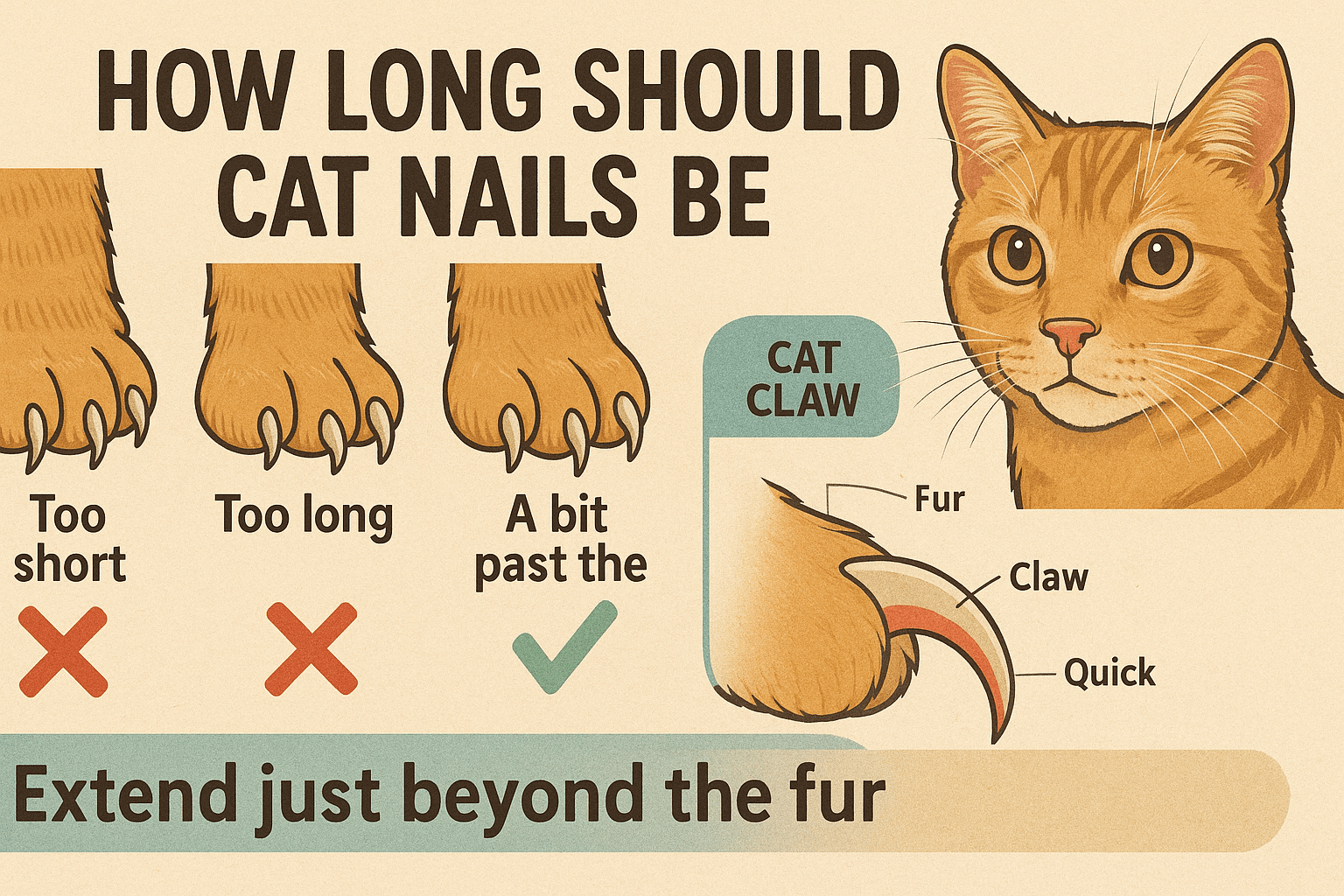
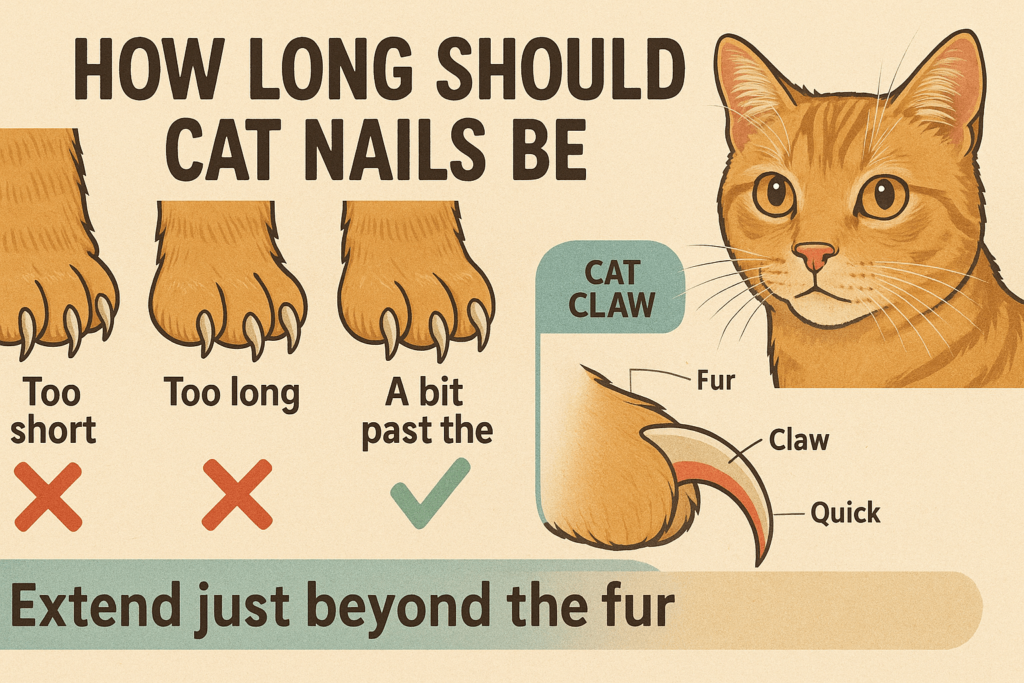
So, how long should your cat’s nails be? The answer depends on factors like their activity level, age, and lifestyle. Here are some guidelines to help you determine the right nail length for your furry friend.

 
  • Nails Should Not Extend Beyond the Paw Pad:
    When retracted, a cat’s nails should not protrude beyond the paw pad. If they do, it’s time for a trim.

  • Avoid Overgrown or Curled Nails:
    Overgrown nails can curl into the paw pad, causing pain, infection, or difficulty walking. Regular checks can prevent this issue.

  • Leave the Quick Intact:
    For light-colored nails, avoid cutting into the pink quick, which contains nerves and blood vessels. Dark nails require extra caution.

  • Consider Your Cat’s Activity Level:
    Indoor cats may need more frequent trimming since they don’t wear down their nails as naturally as outdoor cats.

  • Tailor Length to Senior Cats:
    Older cats often struggle to retract their claws fully, making regular trimming especially important for their comfort.


By following these guidelines, you can ensure your cat’s nails are neither too long nor too short, promoting their overall health and happiness.

How Long Should Cat Nails Be? Best 7 Expert Tips!

Signs Your Cat’s Nails Are Too Long


Recognizing when your cat’s nails are too long is crucial for preventing discomfort or injury. Look out for these telltale signs that indicate it’s time for a trim.

 
  • Clicking Sounds on Hard Surfaces:
    If you hear your cat’s nails clicking as they walk across tile or hardwood floors, their nails are likely too long.

  • Snagging on Fabric or Carpet:
    Overgrown nails often catch on materials, which can be painful for your cat and damaging to your belongings.

  • Difficulty Retracting Claws:
    Healthy nails should retract easily. If your cat’s claws remain extended, it could signal an issue that requires attention.

  • Visible Curling of the Nails:
    Check your cat’s paws—if their nails are starting to curl inward, immediate trimming is necessary to avoid injury.

  • Increased Scratching Behavior:
    Excessive scratching may indicate your cat is trying to file down their nails but struggling to do so effectively.


Identifying these signs early ensures your cat stays comfortable and avoids potential complications.

Healthy Nail Characteristics
Signs of Problematic Nails
Smooth, even nail surface
Rough or cracked nails
Nails retract fully into the paw
Nails remain extended or curled
No visible quick damage
Bleeding or swelling around the nails
Minimal clicking on hard surfaces
Loud clicking sounds while walking
Comfortable movement and mobility
Limping or reluctance to walk

Step-by-Step Guide to Trimming Cat Nails Safely


Trimming your cat’s nails might seem intimidating, but with the right approach, it can become a manageable task. Follow these steps to ensure a safe and stress-free experience.

 
  • Gather the Right Tools:
    Use high-quality cat nail clippers or scissors designed specifically for small animals. Avoid human nail clippers, as they can crush the nail.

  • Choose a Calm Environment:
    Find a quiet space where your cat feels relaxed. This minimizes distractions and helps keep them calm during the process.

  • Introduce the Clippers Gradually:
    Allow your cat to sniff and inspect the clippers before using them. Reward them with treats to create positive associations.

  • Identify the Quick in Light-Colored Nails:
    The quick is the pink part inside the nail containing nerves and blood vessels. Avoid cutting into it to prevent pain and bleeding.

  • Trim Small Sections at a Time:
    Cut only the tip of each nail rather than attempting large cuts. For dark nails, trim cautiously to avoid hitting the quick.


With practice, nail trimming can become a bonding experience that keeps your cat healthy and comfortable.

Tips for Handling a Reluctant Cat


Not all cats enjoy having their nails trimmed, and some may resist the process entirely. These tips can help you manage a reluctant feline with care and patience.

 
  • Start Slowly:
    Begin by gently touching your cat’s paws during playtime or cuddles. Gradually increase contact until they tolerate paw handling.

  • Use Positive Reinforcement:
    Reward your cat with treats, praise, or toys after each successful interaction. This encourages cooperation over time.

  • Keep Sessions Short:
    Limit trimming sessions to just a few nails at a time to prevent overwhelming your cat. You can finish the rest later.

  • Stay Calm and Confident:
    Cats pick up on your energy—if you’re nervous, they’ll sense it. Approach the task calmly and confidently to reassure them.

  • Ask for Assistance if Needed:
    If your cat is particularly resistant, consider asking a friend or family member to help hold them securely while you trim.


With patience and consistency, even the most stubborn cats can learn to accept nail trimming as part of their routine.

Common Mistakes to Avoid

Trimming your cat’s nails requires precision and care. Avoiding these common mistakes can help you keep the process smooth and stress-free.

 
  • Using Dull or Improper Tools:
    Dull clippers can crush the nail instead of cutting cleanly. Always use sharp, cat-specific tools for the best results.

  • Cutting Too Much at Once:
    Removing large portions of the nail increases the risk of hitting the quick. Trim small bits gradually to stay safe.

  • Ignoring Signs of Stress:
    If your cat shows signs of anxiety, such as growling or hissing, pause the session and try again later when they’re calmer.

  • Skipping Regular Maintenance:
    Waiting too long between trims makes the task harder and increases the likelihood of overgrown nails. Stick to a consistent schedule.

  • Forcing Your Cat to Stay Still:
    Forcing a struggling cat can lead to injury or reinforce negative associations with nail trimming. Take breaks if needed.


By avoiding these pitfalls, you can make nail trimming a safer and more enjoyable experience for everyone involved.

Alternative Solutions for Nail Care

If trimming your cat’s nails proves challenging, there are alternative ways to manage their claws while keeping them healthy and your home intact.

 
  • Provide Scratching Posts:
    Sturdy scratching posts help cats naturally file down their nails, reducing the need for frequent trimming.

  • Use Soft Paws Nail Caps:
    These non-toxic caps fit over your cat’s nails, preventing scratches and furniture damage without harming the nail itself.

  • Encourage Active Playtime:
    Engaging your cat in active play encourages natural behaviors like clawing and stretching, which can help wear down their nails.

  • Consult a Veterinarian:
    If you’re unsure about trimming your cat’s nails, your vet can provide guidance or perform the task for you.

  • Invest in Environmental Enrichment:
    Adding climbing trees or textured surfaces gives your cat opportunities to scratch and maintain their nails independently.


These alternatives offer flexible solutions for cat owners seeking less hands-on approaches to nail care.

How to Train Your Cat to Accept Nail Trimming

Training your cat to tolerate—and maybe even enjoy—nail trimming takes time and patience. By creating positive experiences, you can transform this chore into a bonding opportunity.

 
  • Start with Gentle Paw Touches:
    Begin by softly touching your cat’s paws during calm moments. Reward them with treats to associate paw handling with positivity.

  • Introduce the Clippers Gradually:
    Let your cat sniff and explore the clippers without using them immediately. This reduces fear of unfamiliar objects.

  • Practice Without Cutting:
    Simulate the trimming process by holding the clippers near their nails without actually cutting. Follow up with praise or treats.

  • End Sessions on a Positive Note:
    Keep sessions short and always finish with something your cat enjoys, like playtime or a favorite snack.

  • Be Consistent but Patient:
    Regular practice builds trust over time. Don’t rush the process—let your cat set the pace for progress.


With persistence and kindness, training can turn nail trimming into a stress-free routine that benefits both you and your cat.

Frequently Asked Questions About Cat Nail Length

 
How often should I check my cat’s nails?

Check your cat’s nails every 2-4 weeks to ensure they’re not overgrown or causing discomfort.

Cutting the quick can cause bleeding and pain. Apply styptic powder or cornstarch to stop the bleeding and consult your vet if needed.

Yes, indoor cats may not wear down their nails as effectively as outdoor cats, making regular trimming important.

Absolutely! Professional groomers can handle nail trimming if you’re uncomfortable doing it yourself.

Healthy nails are smooth, retract easily, and don’t cause discomfort or limping when your cat walks.

Keeping Your Cat’s Nails Healthy and Comfortable


Maintaining the proper length for your cat’s nails is an essential part of responsible pet ownership. By understanding the ideal nail length, recognizing signs of overgrowth, and following safe trimming practices, you can ensure your cat stays happy, healthy, and pain-free. With patience and consistency, nail trimming can become a simple yet meaningful way to care for your feline companion. Remember, a little effort goes a long way in keeping those tiny paws in top shape—and your home scratch-free!

Dog Tapeworm Life Cycle: Best 7 Expert Tips!

Dog Tapeworm Life Cycle: Best 7 Expert Tips! – Learn how tapeworms infect dogs, spot symptoms, and break the cycle with expert prevention strategies.

Anxious Cat Body Language: Best 7 Expert Tips!

Anxious Cat Body Language: Best 7 Expert Tips! – Learn to spot signs of stress, understand triggers, and help your cat feel safe and relaxed.

Anxious Dog Body Language: Best 7 Expert Tips!

Anxious Dog Body Language: Best 7 Expert Tips! – Learn to spot signs of anxiety, respond effectively, and help your dog feel safe and secure.

Is Breeding Dogs Bad? Best 7 Expert Tips!

Is Breeding Dogs Bad? Best 7 Expert Tips! – Explore the ethics, benefits, and risks of dog breeding to make informed decisions for a better future.

Leave a Reply

Your email address will not be published. Required fields are marked *

Post Category


