

Cat Mite Treatment: How to Protect Your Feline Friend
Mites are tiny parasites that can wreak havoc on your cat’s skin and overall well-being. These microscopic pests often cause discomfort, irritation, and even more serious health issues if left untreated. Whether your cat is dealing with ear mites, mange mites, or other types of infestations, understanding how to identify and treat the problem is crucial for their comfort and recovery. In this blog post, we’ll explore everything you need to know about cat mite treatment—from recognizing symptoms to effective remedies and preventive measures. Let’s dive in and ensure your furry companion stays happy, healthy, and itch-free.
Expert Insight: Managing Fur Mites in Cats
“Most routine flea and tick medications should be effective against fur mites. All pets that have come into contact with an affected cat should be treated. Fur mites are not known to affect humans. The environment may be treated with products approved for flea control. However, that step may not be necessary if your cat will be treated over 6-8 weeks.”
Common Types of Mites That Affect Cats
Different types of mites can infest cats, each causing unique symptoms and requiring specific treatments. Knowing which type of mite your cat may be dealing with is the first step toward effective care.
Ear Mites (Otodectes cynotis):
Ear mites are highly contagious and live inside the ear canal, causing intense itching and dark, waxy discharge.Sarcoptic Mites (Sarcoptes scabiei):
These mites burrow into the skin, leading to severe itching, hair loss, and scabby lesions. They are less common but highly uncomfortable for cats.Demodex Mites (Demodex cati):
Demodex mites typically affect cats with weakened immune systems, causing patchy hair loss and inflamed skin.Cheyletiella Mites (Walking Dandruff):
These mites create a “walking dandruff” effect due to their movement under the fur, often accompanied by itching and flaky skin.Notoedres Mites (Feline Scabies):
Similar to sarcoptic mites, these parasites cause extreme itching and crusting, especially around the face, ears, and neck.
Identifying the type of mite is essential for tailoring the right treatment plan and ensuring your cat gets the relief they need.
Signs and Symptoms of Mite Infestations in Cats
Recognizing the signs of mites early can help you address the issue before it worsens. Keep an eye out for these common symptoms that indicate your cat may be suffering from a mite infestation.
Excessive Scratching or Biting:
Persistent scratching or biting at the skin is one of the most obvious signs of mite-related irritation.Hair Loss:
Patchy bald spots or thinning fur can result from constant scratching or direct damage caused by burrowing mites.Skin Redness and Inflammation:
Infested areas often appear red, swollen, or irritated, signaling an allergic reaction to the mites.Waxy or Crusty Buildup in Ears:
For ear mites, look for dark, coffee-ground-like debris inside the ear canal.Behavioral Changes:
Cats with mites may become irritable, lethargic, or avoid being touched due to discomfort.
If you notice any of these symptoms, it’s important to consult a veterinarian promptly for proper diagnosis and treatment.
Check this guide 👉How Do Indoor Cats Get Ear Mites? Best 7 Expert Tips!
Check this guide 👉Understanding Cat Chin Mites vs Acne: Best 7 Expert Tips!
Check this guide 👉Cat Ear Mites vs Wax: Best 7 Expert Tips!
Symptoms of Mite Infestations | Recommended Treatments |
|---|---|
Excessive scratching | Prescription topical medications |
Hair loss | Medicated shampoos and dips |
Ear discharge | Ear drops and cleaning solutions |
Skin inflammation | Anti-inflammatory medications |
Behavioral changes | Environmental flea and mite control |
Effective Cat Mite Treatment Options
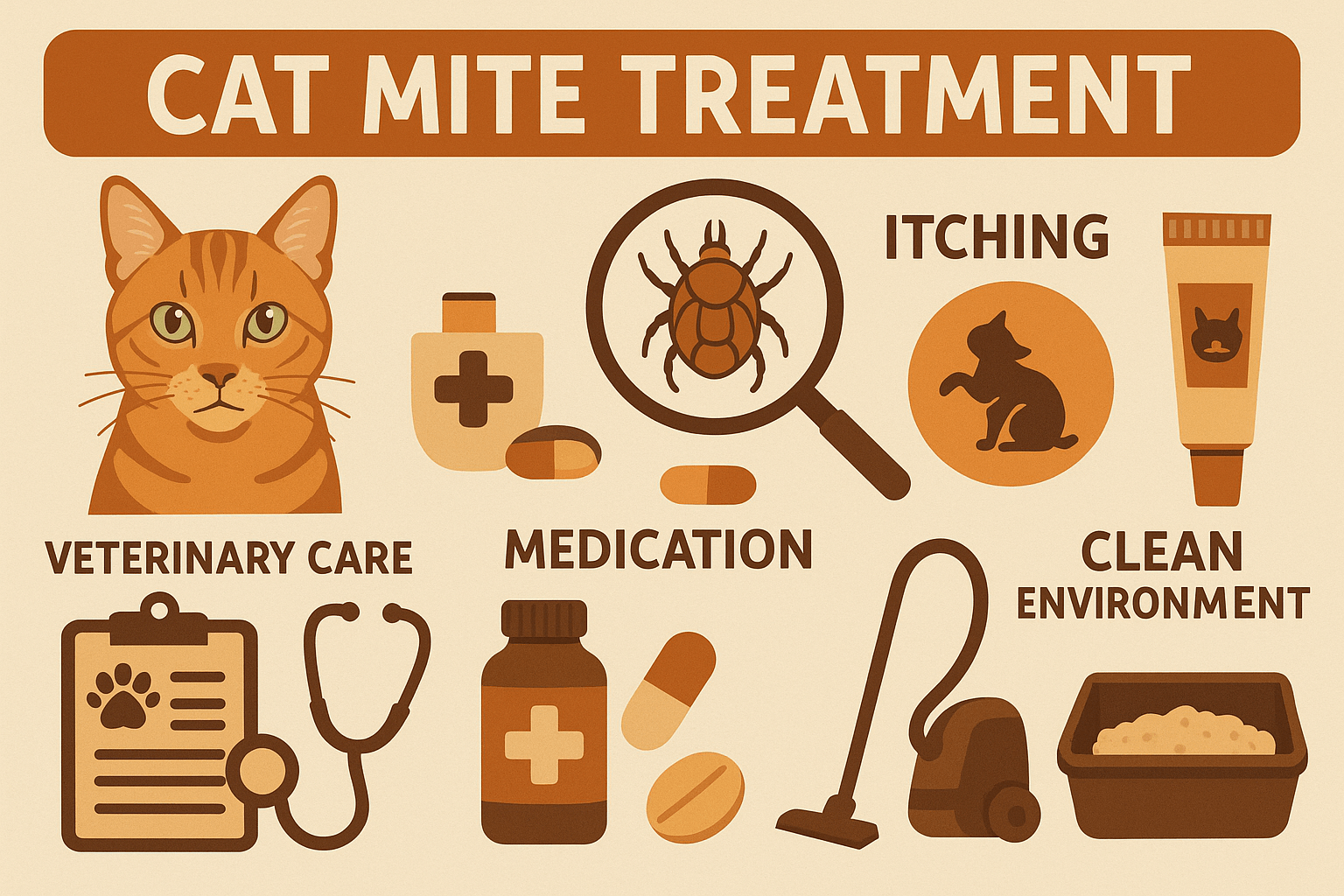
Treating mites requires a combination of veterinary guidance and diligent home care. Here are some of the most effective treatment options available for managing mite infestations in cats.
Topical Medications:
Products like selamectin or moxidectin are applied directly to the skin and target mites effectively while also preventing future infestations.Oral Medications:
In some cases, veterinarians may prescribe oral medications to kill mites internally and reduce inflammation.Medicated Shampoos and Dips:
Specialized shampoos containing ingredients like lime sulfur or pyrethrin help cleanse the skin and eliminate mites.Ear Drops:
For ear mites, medicated ear drops clear up infections and soothe irritation within the ear canal.Environmental Cleaning:
Wash bedding, vacuum carpets, and disinfect living spaces to remove mites from your cat’s surroundings and prevent reinfestation.
With consistent treatment and follow-up care, most mite infestations can be resolved successfully, restoring your cat’s comfort and health.
Preventive Measures to Keep Mites Away
Prevention is always better than cure when it comes to protecting your cat from mites. Implementing these proactive steps can minimize the risk of infestations.
Regular Grooming:
Brushing your cat’s fur regularly helps detect early signs of mites and keeps their coat clean and healthy.Routine Vet Checkups:
Schedule regular veterinary visits to monitor your cat’s skin and overall health, catching potential issues early.Clean Living Spaces:
Frequently wash your cat’s bedding and vacuum your home to eliminate mites or eggs that may linger in the environment.Avoid Contact with Infested Animals:
Keep your cat away from stray or infected animals, as mites are highly contagious.Use Preventive Parasite Control:
Monthly flea and tick treatments often provide additional protection against mites and other parasites.
By adopting these preventive habits, you can significantly reduce the likelihood of mite infestations and keep your cat thriving.
Common Misconceptions About Mites
There are many myths surrounding mites and their impact on cats. Addressing these misconceptions helps cat owners make informed decisions about treatment and prevention.
Mites Only Affect Dirty Cats:
Even clean, well-groomed cats can contract mites through contact with infected animals or environments.Over-the-Counter Solutions Are Always Effective:
Many OTC treatments lack the potency needed to eliminate mites completely, making veterinary care essential.Mites Go Away on Their Own:
Without treatment, mite infestations can worsen and lead to secondary infections or long-term skin damage.Indoor Cats Can’t Get Mites:
Indoor cats can still be exposed to mites brought in by humans, other pets, or contaminated items.All Mites Cause Visible Symptoms:
Some mites, like demodex, may remain dormant until triggered by stress or illness, delaying detection.
Understanding the truth behind these misconceptions empowers you to take the right steps for your cat’s health.
Natural Remedies for Mild Mite Infestations
For mild cases or as complementary care, some natural remedies can help alleviate mite-related symptoms. However, always consult your vet before trying these options.
Apple Cider Vinegar Rinse:
Diluted apple cider vinegar can soothe irritated skin and deter mites, but avoid applying it near sensitive areas like eyes or ears.Coconut Oil:
Applying small amounts of coconut oil to affected areas may moisturize the skin and suffocate mites.Herbal Teas for Soothing Baths:
Chamomile or calendula tea baths can calm inflammation and reduce itching caused by mites.Diatomaceous Earth (Food Grade):
Sprinkling food-grade diatomaceous earth on bedding or carpets can kill mites without harming your cat.Aloe Vera Gel:
Pure aloe vera gel can relieve itching and promote healing of damaged skin.
While natural remedies can provide temporary relief, they should never replace professional treatment for severe infestations.
When to Seek Immediate Veterinary Care
Some mite infestations require urgent attention to prevent complications. Be aware of these scenarios that warrant immediate veterinary intervention.
Severe Skin Lesions or Bleeding:
Open wounds or bleeding caused by excessive scratching can lead to infections if not treated promptly.Lethargy or Loss of Appetite:
If your cat seems unusually weak or refuses to eat, it could indicate a more serious underlying issue.Swollen or Painful Ears:
Advanced ear mite infestations can cause painful swelling or blockages that require professional cleaning.Secondary Infections:
Signs of bacterial or fungal infections, such as pus or foul odors, need antibiotic treatment from a vet.No Improvement After Treatment:
If symptoms persist despite following prescribed treatments, further evaluation is necessary to rule out resistant strains or misdiagnosis.
Knowing when to act quickly ensures your cat receives the care they need to recover fully.
Frequently Asked Questions About Cat Mite Treatment
How do I know if my cat has mites?
Look for signs like excessive scratching, hair loss, redness, or ear discharge, and consult a vet for a definitive diagnosis.
Can humans catch mites from cats?
Some mites, like sarcoptic and cheyletiella, can temporarily affect humans, causing mild itching or rashes.
How long does mite treatment take to work?
Most treatments show improvement within 1-2 weeks, but full recovery may take several weeks depending on the severity.
Are over-the-counter treatments safe for cats?
Always consult a vet before using OTC products, as some may not be safe or effective for felines.
Can mites come back after treatment?
Yes, reinfection can occur if environmental cleaning isn’t thorough or if exposure to infected animals continues.
Restoring Comfort and Health for Your Cat
Dealing with mites can be stressful for both you and your feline friend, but with prompt action and proper care, the problem can be resolved effectively. From identifying symptoms to choosing the right treatment and implementing preventive measures, every step you take contributes to your cat’s well-being. Remember, your veterinarian is your best ally in managing mite infestations, so don’t hesitate to seek professional advice when needed. By staying vigilant and proactive, you can ensure your cat remains happy, healthy, and free from the discomfort of mites.
Is Rawhide Bad for Cats? Best 7 Expert Tips! – Discover the risks, safe alternatives, and expert advice to keep your feline friend healthy and happy.

Is Rawhide Bad for Dogs? Best 7 Expert Tips! – Discover the risks, benefits, and safer alternatives to rawhides for your dog’s chewing needs.

Understanding Anorexia in Cats: Best 7 Expert Tips! – Learn why cats stop eating, spot warning signs, and discover how to help your feline regain appetite safely.

Understanding Anorexia in Dogs: Best 7 Expert Tips! – Learn causes, symptoms, and solutions to help your dog regain appetite and stay healthy.