

Cat Arthritis Treatment: Best 7 Expert Tips!

Cat Arthritis Treatment: Best 7 Expert Tips!

Cat Arthritis Treatment: Helping Your Feline Feel Their Best


Arthritis is a common yet often overlooked condition in cats, particularly as they age. While it’s more commonly associated with dogs or humans, feline arthritis can significantly impact your cat’s mobility, comfort, and overall quality of life. The good news is that with proper care and treatment, you can help manage the symptoms and ensure your furry friend remains happy and active. From understanding the signs to exploring effective treatment options, this guide will walk you through everything you need to know about cat arthritis treatment so you can provide the best possible care for your beloved companion.

Expert Insight on Feline Arthritis

“Arthritis (also called degenerative joint disease or osteoarthritis) is a chronic, painful, progressive condition involving the joints of cats. As in people, this is commonly associated with aging, and likely impacts between 70% and 90% of cats over 12 years old.”

Lauren Jones, VMD

Signs Your Cat May Have Arthritis


Recognizing the early signs of arthritis in cats is crucial for timely intervention. Cats are masters at hiding pain, so these subtle changes in behavior may indicate an underlying issue.

 
  • Reduced Activity Levels:
    If your cat seems less interested in playing or exploring, it could be a sign of joint discomfort.

  • Difficulty Jumping or Climbing:
    Cats with arthritis often struggle to jump onto furniture or climb stairs due to stiff or painful joints.

  • Changes in Grooming Habits:
    Over-grooming certain areas or neglecting grooming altogether can signal discomfort or limited mobility.

  • Irritability or Aggression:
    Pain from arthritis may cause your cat to become more irritable, especially when touched in sensitive areas.

  • Limping or Stiff Movements:
    Noticeable limping or stiffness, particularly after resting, is a clear indicator of joint issues.


By paying attention to these signs, you can identify arthritis early and take steps to alleviate your cat’s discomfort.

Cat Arthritis Treatment: Best 7 Expert Tips!

Treatment Options for Cat Arthritis


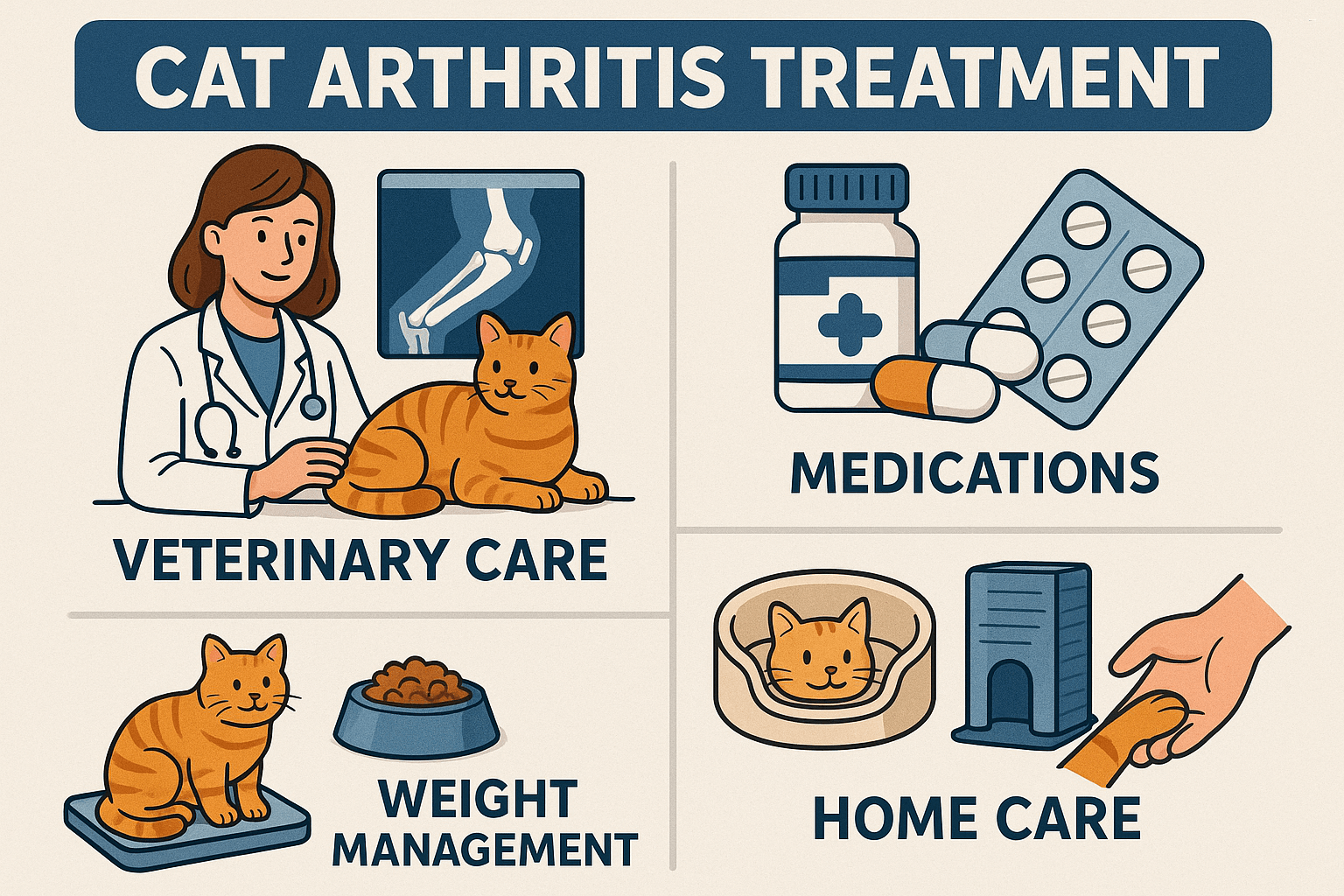
Managing feline arthritis involves a combination of medical, environmental, and lifestyle adjustments. Here are some effective treatment strategies to consider.

 
  • Veterinary Prescriptions:
    Non-steroidal anti-inflammatory drugs (NSAIDs) or other medications can help reduce pain and inflammation. Always consult your vet before starting any medication.

  • Supplements and Nutraceuticals:
    Glucosamine, chondroitin, and omega-3 fatty acids support joint health and can slow the progression of arthritis.

  • Weight Management:
    Maintaining a healthy weight reduces stress on your cat’s joints, making movement easier and less painful.

  • Physical Therapy Exercises:
    Gentle exercises or massage therapy can improve flexibility and strengthen muscles around affected joints.

  • Environmental Modifications:
    Adding ramps, soft bedding, and easily accessible food/water stations minimizes strain on arthritic joints.


These treatment options, when combined, offer a holistic approach to managing your cat’s arthritis and improving their quality of life.

Medical Treatments for Arthritis
Lifestyle Adjustments for Comfort
NSAIDs and pain-relief medications
Providing soft, supportive bedding
Joint supplements (glucosamine, etc.)
Installing ramps for easy access
Prescription diets
Keeping food/water bowls at ground level
Physical therapy sessions
Reducing slippery surfaces at home
Regular veterinary check-ups
Encouraging gentle play and movement

How to Support Your Cat at Home


Creating a supportive environment at home plays a key role in managing your cat’s arthritis. Small changes can make a big difference in their daily comfort.

 
  • Provide Orthopedic Beds:
    Soft, cushioned beds relieve pressure on sore joints and encourage restful sleep.

  • Adjust Litter Box Placement:
    Place litter boxes in easily accessible locations to prevent unnecessary strain during bathroom trips.

  • Use Non-Slip Mats:
    Adding rugs or mats on slippery floors helps your cat maintain balance while walking.

  • Offer Low-Impact Playtime:
    Engage your cat with toys that don’t require jumping or excessive movement, such as feather wands or laser pointers.

  • Monitor Temperature Changes:
    Ensure your home stays warm, as cold weather can worsen joint stiffness and discomfort.


With thoughtful adjustments, you can create a safe and comfortable space that supports your cat’s needs.

Preventive Measures to Reduce Arthritis Risk


While arthritis is often age-related, there are steps you can take to minimize the risk or delay its onset in your cat. Prevention starts with proactive care.

 
  • Maintain a Healthy Diet:
    A balanced diet rich in nutrients supports overall health and prevents obesity, which is a major risk factor for arthritis.

  • Encourage Regular Exercise:
    Daily playtime keeps your cat active and strengthens their muscles, reducing strain on joints.

  • Schedule Routine Vet Visits:
    Early detection of joint issues allows for prompt treatment and better outcomes.

  • Avoid High-Impact Activities:
    Discourage behaviors like leaping from high surfaces, which can put unnecessary stress on joints.

  • Provide Joint-Friendly Surfaces:
    Carpets or padded flooring reduce the impact on joints compared to hard, slippery surfaces.


By focusing on prevention, you can help your cat enjoy a longer, healthier, and more active life.

Common Misconceptions About Cat Arthritis

There are many myths surrounding feline arthritis that can lead to misunderstandings about the condition. Clearing up these misconceptions ensures better care for your cat.

 
  • Myth: Only Older Cats Get Arthritis:
    While arthritis is more common in seniors, younger cats can develop it due to injuries or genetic predispositions.

  • Myth: Cats Don’t Show Pain:
    Cats are experts at masking discomfort, but subtle behavioral changes often reveal underlying pain.

  • Myth: Arthritis Is Untreatable:
    While there’s no cure, many treatments can significantly improve your cat’s quality of life.

  • Myth: Medication Is the Only Solution:
    Lifestyle changes, supplements, and environmental modifications are equally important in managing arthritis.

  • Myth: Indoor Cats Are Immune to Arthritis:
    Even indoor cats are susceptible to arthritis, especially if they’re overweight or inactive.


Understanding the truth behind these myths empowers you to provide better care for your cat.

Foods That Support Joint Health

Nutrition plays a vital role in managing arthritis symptoms and promoting joint health. Incorporating these foods into your cat’s diet can make a noticeable difference.

 
  • Omega-3 Fatty Acids:
    Found in fish oil, omega-3s reduce inflammation and support joint lubrication.

  • Glucosamine-Rich Foods:
    Ingredients like chicken cartilage or bone broth contain glucosamine, which aids in cartilage repair.

  • Antioxidant-Rich Vegetables:
    Spinach and kale neutralize free radicals that contribute to joint damage.

  • Lean Proteins:
    High-quality proteins like turkey or salmon provide essential nutrients without adding extra weight.

  • Hydration-Promoting Foods:
    Wet food or broths keep joints hydrated and functioning smoothly.


A balanced diet tailored to joint health can complement other treatments and improve your cat’s well-being.

Signs Your Cat’s Arthritis Is Improving

Tracking progress is essential to ensure your cat’s treatment plan is working. Look for these positive changes that indicate improvement.

 
  • Increased Activity Levels:
    If your cat starts playing or exploring more, it’s a sign their pain is decreasing.

  • Improved Mobility:
    Easier jumping, climbing, or walking suggests their joints are becoming stronger and less inflamed.

  • Better Grooming Habits:
    Returning to regular self-grooming indicates reduced discomfort and improved flexibility.

  • Less Irritability:
    A calmer demeanor and willingness to interact reflect reduced pain and stress.

  • Weight Maintenance:
    Achieving or maintaining a healthy weight shows that dietary and exercise efforts are paying off.


Monitoring these improvements helps you gauge the effectiveness of your cat’s arthritis management plan.

Frequently Asked Questions About Cat Arthritis Treatment

 
Can arthritis be cured in cats?

Unfortunately, arthritis cannot be cured, but its symptoms can be managed effectively with proper care and treatment.

Arthritis is most common in senior cats (10+ years), but younger cats can also develop the condition due to injury or genetics.

Yes, supplements like glucosamine and omega-3 fatty acids, along with acupuncture, can provide relief without harsh chemicals.

Look for signs like reduced activity, irritability, difficulty moving, or changes in grooming habits.

Surgery is rare and typically reserved for severe cases where other treatments have failed. Consult your vet for personalized advice.

Empowering Your Cat to Live Comfortably with Arthritis


While arthritis is a challenging condition, it doesn’t have to define your cat’s life. With early detection, proper treatment, and a supportive home environment, you can help your feline companion live comfortably and happily. Remember, every small step you take—whether it’s adjusting their diet, modifying their space, or simply spending quality time together—makes a meaningful difference. By staying informed and attentive to your cat’s needs, you’re not just treating arthritis; you’re nurturing a bond that enriches both your lives.

How Cats Develop Lymphoma: Best 7 Expert Tips!

How Cats Develop Lymphoma: Best 7 Expert Tips! – Learn about causes, symptoms, and prevention to protect your cat from this common cancer.

How Dogs Develop Lymphoma: Best 7 Expert Tips!

How Dogs Develop Lymphoma: Best 7 Expert Tips! – Learn causes, symptoms, and prevention strategies to protect your dog from this common cancer.

Diphenhydramine Safe for Dogs? Best 7 Expert Tips!

Diphenhydramine Safe for Dogs? Best 7 Expert Tips! – Learn proper dosing, uses, and precautions to keep your dog safe while using Benadryl.

Is Milk in Cat Food Safe? Best 7 Expert Tips!

Is Milk in Cat Food Safe? Best 7 Expert Tips! – Discover the truth about milk in cat food, its risks, and how to keep your feline healthy and happy.

Leave a Reply

Your email address will not be published. Required fields are marked *

Post Category


