

How to Play with Your Cat: Best 7 Expert Tips!

How to Play with Your Cat: Best 7 Expert Tips!

How to Play with Your Cat


Playing with your cat is more than just a fun activity—it’s an essential part of their physical and mental well-being. Cats are natural hunters, and playtime allows them to express their instincts while strengthening the bond between you and your feline friend. However, not all play is created equal. Understanding how to engage your cat in meaningful and stimulating ways can make a world of difference in their happiness and health. Whether you’re a new cat owner or looking to refresh your play routine, this guide will provide expert tips and creative ideas to keep your kitty entertained, active, and content.

Expert Insight on Playing Hide-and-Seek with Your Cat

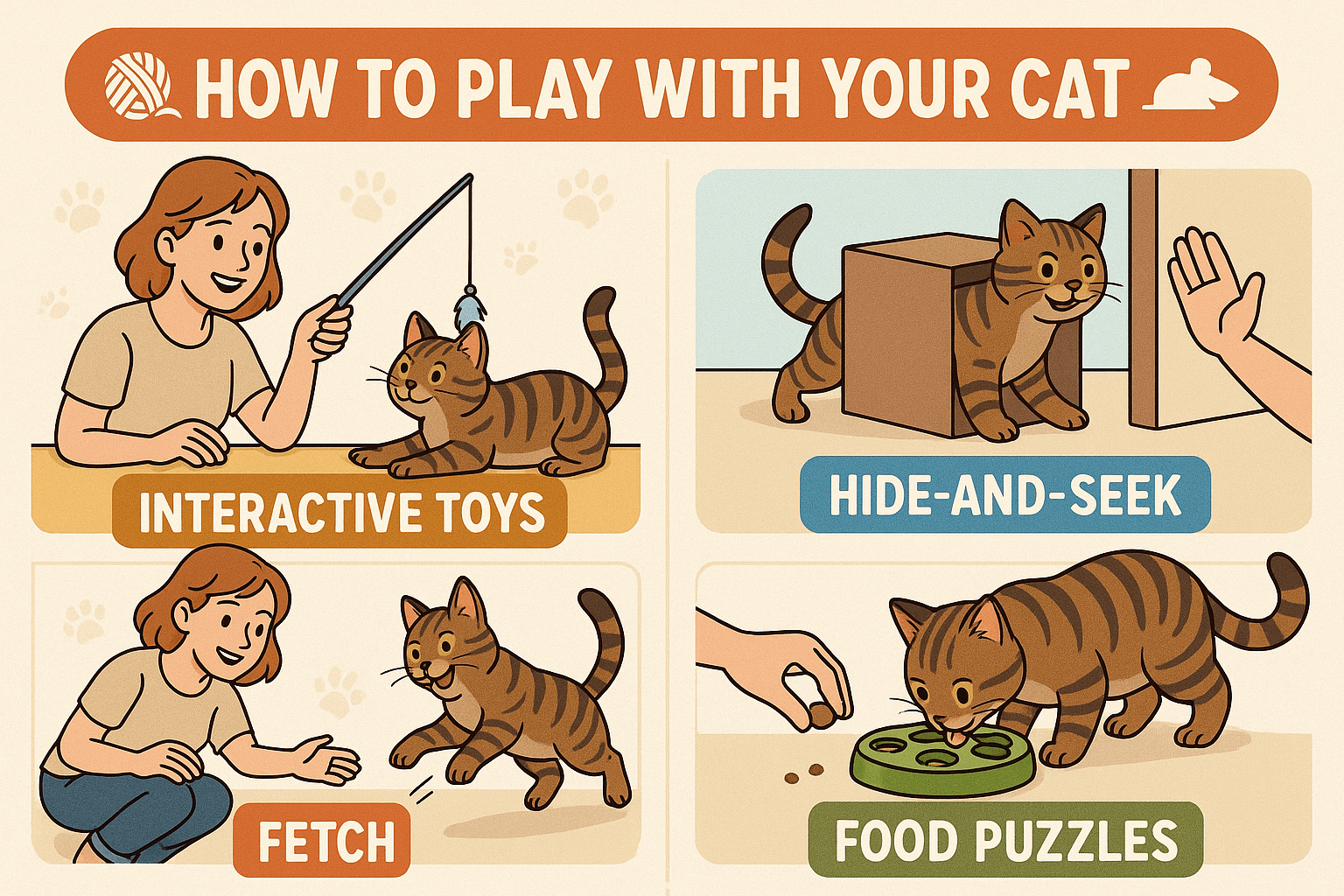
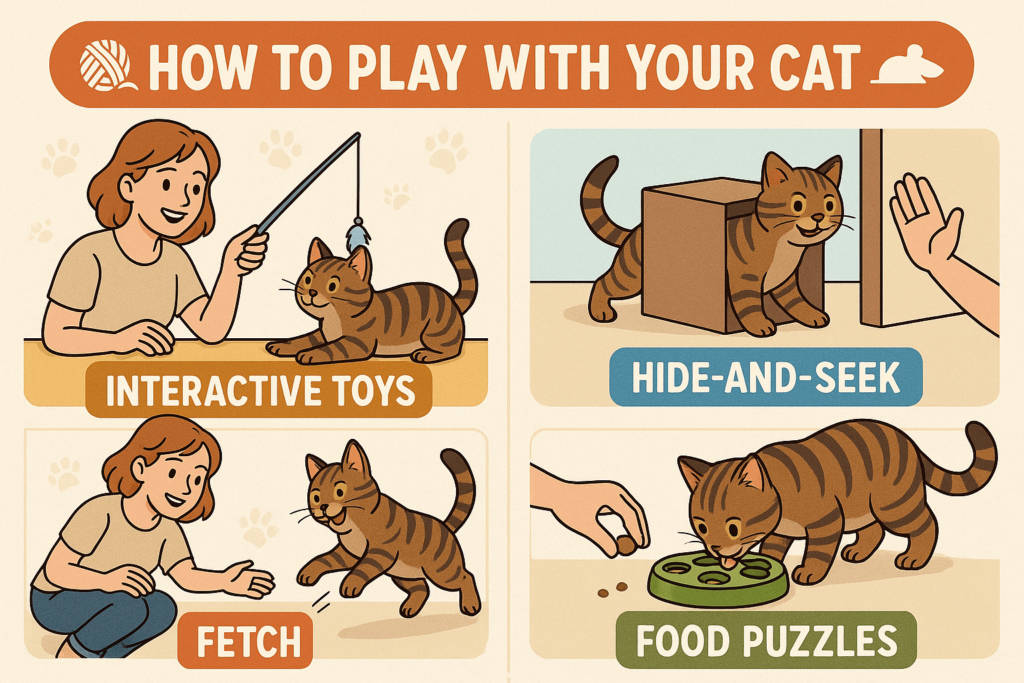
“There are several different ways to play hide-and-seek with your cat. You can hide and have them find you, or you can hide a few of their favorite toys or treats. It’s all about finding the best option for you and your cat.”


Dr. Lauren Demos (DVM)

The Benefits of Playing with Your Cat


Engaging your cat in regular play offers numerous benefits that go beyond keeping them entertained. From improving their physical health to enhancing their emotional well-being, playtime is a vital part of responsible pet ownership.

 
  • Promotes Physical Fitness:
    Active play helps cats burn off excess energy, maintain a healthy weight, and improve muscle tone.

  • Prevents Boredom and Behavioral Issues:
    A bored cat may resort to destructive behaviors like scratching furniture or excessive meowing. Playtime keeps them mentally stimulated.

  • Strengthens the Human-Feline Bond:
    Interactive play builds trust and deepens the connection between you and your cat.

  • Encourages Natural Hunting Instincts:
    Toys that mimic prey allow cats to practice stalking, pouncing, and capturing—behaviors they’re naturally inclined to perform.

  • Reduces Stress and Anxiety:
    Play provides a healthy outlet for stress, helping shy or anxious cats feel more confident and relaxed.


By incorporating regular play into your cat’s routine, you’re investing in their long-term happiness and fostering a harmonious home environment.

How to Play with Your Cat: Best 7 Expert Tips!

Best Toys for Engaging Your Cat


Choosing the right toys can make playtime more exciting and effective for your cat. With so many options available, it’s important to select toys that cater to your cat’s unique personality and preferences.

 
  • Feather Wands:
    These mimic birds in flight, encouraging your cat to leap, chase, and pounce.

  • Interactive Puzzle Toys:
    These challenge your cat’s problem-solving skills by hiding treats or requiring manipulation to release rewards.

  • Balls with Bells:
    Rolling balls with bells inside stimulate auditory and visual senses, enticing your cat to chase and bat them around.

  • Catnip Mice:
    Soft plush toys infused with catnip appeal to your cat’s sense of smell and encourage playful hunting behaviors.

  • Laser Pointers:
    The elusive red dot sparks your cat’s curiosity, prompting high-energy chases across the room.


With the right mix of toys, you can create a dynamic and engaging play experience that keeps your cat entertained for hours.

Types of Play
Benefits for Your Cat
Chasing Feather Wands
Improves agility and coordination
Solving Puzzle Toys
Enhances cognitive function and focus
Pouncing on Catnip Toys
Stimulates natural hunting instincts
Running After Laser Pointers
Provides cardiovascular exercise
Batting Around Balls
Encourages independent play and curiosity

Tips for Making Playtime Fun and Effective


To get the most out of playtime, it’s important to tailor your approach to your cat’s preferences and energy levels. These tips will help you create a playful and enriching experience for your furry companion.

 
  • Follow Your Cat’s Lead:
    Observe what types of toys or movements excite your cat the most and focus on those activities.

  • Keep Sessions Short but Frequent:
    Cats have short attention spans, so aim for multiple 10-15 minute play sessions throughout the day.

  • Mimic Prey Movements:
    Move toys unpredictably, like darting under furniture or zigzagging across the floor, to simulate real-life prey.

  • Reward Participation:
    Offer treats or praise after play sessions to reinforce positive behavior and build enthusiasm.

  • Rotate Toys Regularly:
    Switch out toys every few days to keep your cat’s interest fresh and prevent boredom.


By following these strategies, you’ll ensure playtime remains exciting and fulfilling for both you and your cat.

Signs Your Cat Is Enjoying Playtime


It’s important to recognize whether your cat is truly enjoying play or feeling overwhelmed. Look for these signs to gauge their level of engagement and satisfaction.

 
  • Dilated Pupils and Alert Ears:
    Wide eyes and forward-facing ears indicate excitement and focus during play.

  • Pouncing and Stalking Behaviors:
    If your cat crouches low, wiggles their hindquarters, and leaps at toys, they’re fully immersed in the activity.

  • Happy Vocalizations:
    Some cats chirp, chatter, or purr when they’re having fun, signaling their enjoyment.

  • Energetic Movements:
    Running, jumping, and batting at toys shows your cat is physically engaged and entertained.

  • Relaxed Posture After Play:
    A calm demeanor with slow blinks or grooming indicates contentment once the session ends.


Understanding these cues helps you adjust your approach to ensure playtime is always a positive experience for your cat.

Creative Ways to Make Play More Exciting

If your cat seems disinterested in traditional toys, try these creative approaches to reignite their enthusiasm for play.

 
  • DIY Toys:
    Create simple toys using household items like crumpled paper balls, empty toilet paper rolls, or fabric scraps.

  • Hide-and-Seek Games:
    Hide treats or toys around the house and encourage your cat to “hunt” for them.

  • Obstacle Courses:
    Set up tunnels, boxes, or furniture arrangements for your cat to explore and navigate.

  • Window Perch Play:
    Place toys near windows with bird feeders outside to combine indoor play with outdoor observation.

  • Interactive Apps:
    Download apps designed for cats featuring moving fish or bugs on your tablet screen.


These innovative ideas add variety to playtime, keeping your cat engaged and curious.


How to Handle Play Aggression

Play aggression is common in cats but can become problematic if not addressed properly. Here’s how to manage it effectively.

 
  • Avoid Using Hands as Toys:
    Never let your cat bite or scratch your hands during play, as this reinforces aggressive behavior.

  • Redirect Energy to Toys:
    Immediately offer a toy whenever your cat starts to nip or claw at inappropriate targets.

  • Use Time-Outs:
    If play becomes too rough, calmly walk away to signal that play stops when aggression occurs.

  • Provide Plenty of Outlets for Energy:
    Ensure your cat has access to climbing structures, scratching posts, and other outlets for pent-up energy.

  • Consult a Veterinarian if Needed:
    Persistent aggression may indicate underlying health issues, so seek professional advice if necessary.


By addressing play aggression early, you can maintain a safe and enjoyable play environment.

Seasonal Play Ideas for Your Cat

Switch up your cat’s play routine with seasonal activities that align with holidays or weather changes.

 
  • Winter Indoor Adventures:
    Build blanket forts or set up cozy hideaways for your cat to explore during colder months.

  • Spring Flower Hunts:
    Scatter small toys among piles of blankets or towels to mimic digging through grass.

  • Summer Water Play (Optional):
    Introduce shallow bowls of water with floating ping pong balls for curious cats who enjoy splashing.

  • Fall Leaf Fun:
    Crinkle paper or fabric to mimic rustling leaves, sparking your cat’s natural curiosity.

  • Holiday-Themed Activities:
    Use festive decorations like ribbons (supervised) or jingle bells to create holiday-inspired play setups.


Seasonal play ideas keep your cat’s routine fresh and exciting year-round.

Frequently Asked Questions About Playing with Your Cat

 
How often should I play with my cat?

Aim for at least two 10-15 minute play sessions daily to keep your cat physically and mentally stimulated.

Experiment with different types of toys or try interactive play to spark their curiosity.

Absolutely! Adjust the intensity to suit their energy levels, focusing on gentle activities like batting soft toys.

Yes, as long as you end the session by letting your cat “catch” something tangible, like a treat or toy, to avoid frustration.

Redirect their attention to a toy instead of hands or feet, and pause play if biting occurs to discourage the behavior.


Building a Lifelong Love for Play


Playing with your cat isn’t just about having fun—it’s an opportunity to nurture their physical health, mental sharpness, and emotional well-being. By understanding their instincts, choosing the right toys, and tailoring playtime to their needs, you can create experiences that bring joy to both you and your feline companion. Remember, every cat is unique, so be patient and observant as you discover what works best for yours. With consistency and creativity, you’ll foster a lifelong love for play that strengthens your bond and enriches your cat’s life.

Is Rawhide Bad for Cats? Best 7 Expert Tips!

Is Rawhide Bad for Cats? Best 7 Expert Tips! – Discover the risks, safe alternatives, and expert advice to keep your feline friend healthy and happy.

Is Rawhide Bad for Dogs? Best 7 Expert Tips!

Is Rawhide Bad for Dogs? Best 7 Expert Tips! – Discover the risks, benefits, and safer alternatives to rawhides for your dog’s chewing needs.

Understanding Anorexia in Cats: Best 7 Expert Tips!

Understanding Anorexia in Cats: Best 7 Expert Tips! – Learn why cats stop eating, spot warning signs, and discover how to help your feline regain appetite safely.

Understanding Anorexia in Dogs: Best 7 Expert Tips!

Understanding Anorexia in Dogs: Best 7 Expert Tips! – Learn causes, symptoms, and solutions to help your dog regain appetite and stay healthy.

Leave a Reply

Your email address will not be published. Required fields are marked *