

Raw Cat Food Recipe: A Nutritious Option for Your Feline Friend
Feeding your cat a raw food diet has gained popularity among pet owners seeking a natural and biologically appropriate way to nourish their feline companions. Cats are obligate carnivores, meaning their bodies thrive on a diet rich in animal protein and minimal carbohydrates. Preparing homemade raw cat food allows you to control the ingredients, ensuring your cat receives fresh, high-quality nutrients. However, it’s essential to understand the fundamentals of feline nutrition before diving into meal preparation. In this guide, we’ll explore how to create a balanced raw cat food recipe, discuss its benefits, and provide practical tips for getting started.
Key Ingredients for a Balanced Raw Cat Food Recipe
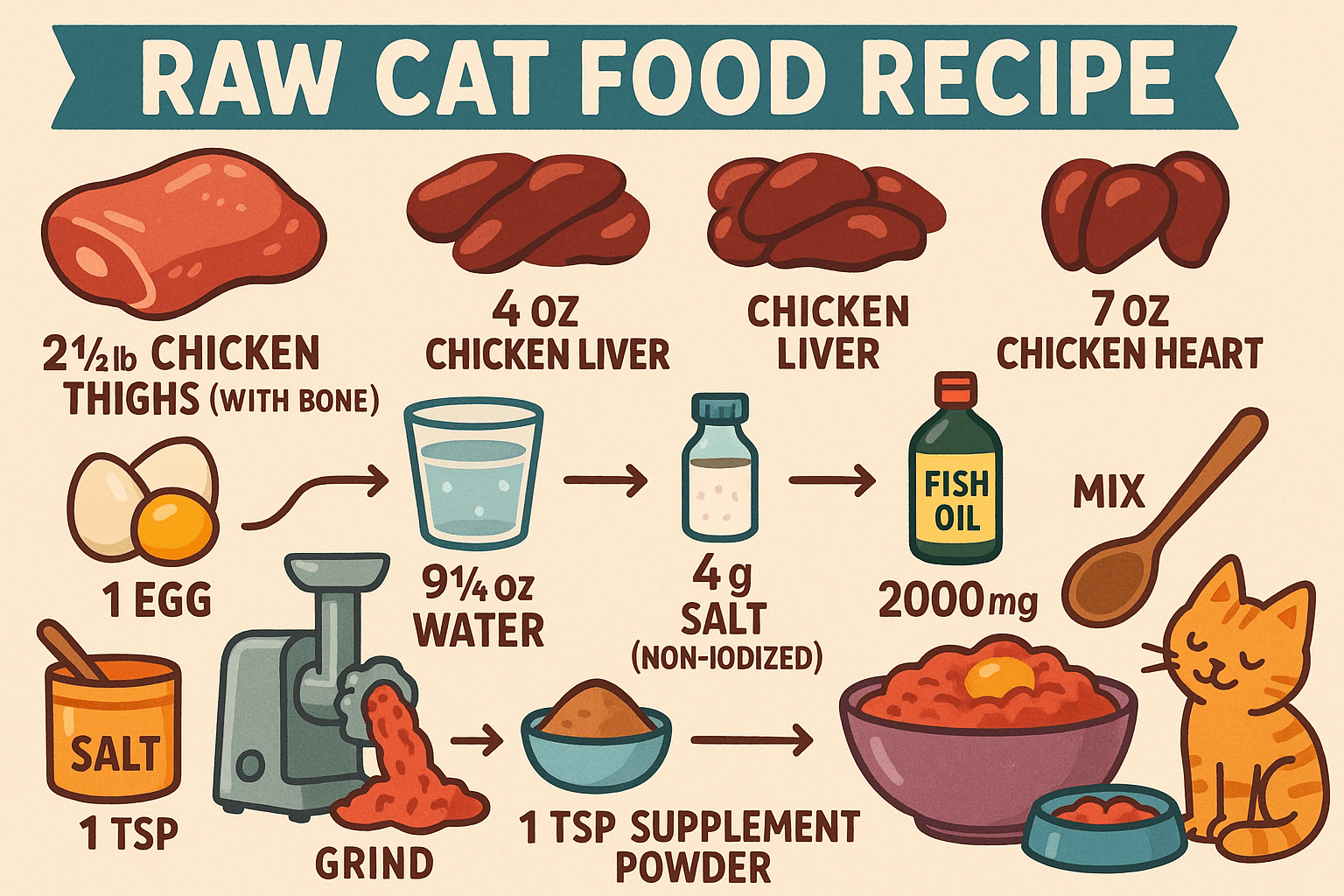
Creating a nutritious raw cat food recipe requires careful attention to the essential nutrients cats need to thrive. Here’s a breakdown of the key components to include in your homemade meals.
High-Quality Protein Sources:
Use lean meats like chicken, turkey, beef, or rabbit as the primary ingredient. These provide the amino acids necessary for muscle development and overall health.Organ Meats for Vital Nutrients:
Incorporate organ meats such as liver, kidney, or heart, which are rich in vitamins A, D, and B-complex, as well as essential minerals like iron.Bone Content for Calcium and Phosphorus:
Ground bones or bone meal supply calcium and phosphorus, crucial for maintaining strong teeth and bones. Ensure bones are finely ground to prevent choking hazards.Healthy Fats for Energy:
Add small amounts of fish oil, salmon oil, or chicken fat to provide omega-3 and omega-6 fatty acids, supporting skin, coat, and immune health.Optional Supplements for Balance:
Consider adding taurine (critical for heart and eye health), vitamin E, and a balanced mineral mix to ensure all nutritional needs are met.
By including these ingredients in the right proportions, you can create a raw cat food recipe that mimics what your cat would eat in the wild, promoting optimal health.
Step-by-Step Guide to Preparing Raw Cat Food
Preparing raw cat food at home may seem intimidating, but with a clear plan and proper tools, it’s entirely manageable. Follow these steps to create a safe and nutritious meal for your cat.
Gather High-Quality Ingredients:
Source fresh, human-grade meats and organs from reputable suppliers to ensure safety and quality. Avoid processed or low-quality meats.Use a Meat Grinder or Food Processor:
Grind meat, bones, and organs together to achieve a consistent texture that’s easy for your cat to eat.Mix in Supplements Carefully:
Measure and blend supplements like taurine and vitamins evenly throughout the mixture to avoid nutrient imbalances.Portion Into Meal-Sized Batches:
Divide the prepared food into daily portions and store them in airtight containers or freezer-safe bags for convenience.Thaw Safely Before Serving:
Always thaw frozen portions in the refrigerator overnight to maintain freshness and prevent bacterial growth.
With these steps, you can prepare raw cat food safely and efficiently, ensuring your cat enjoys a wholesome and balanced diet.
Check this guide 👉Wet Food vs Dry Cat Food: Best 7 Expert Tips!
Check this guide 👉Are Dented Cat Food Cans Safe? Best 7 Expert Tips!
Check this guide 👉What Cat Food Makes Cats Poop Smell Less? Best 7 Tips!
Benefits of Raw Cat Food | Potential Challenges to Consider |
|---|---|
Mimics a cat’s natural diet | Requires careful planning and prep time |
Supports healthier skin and coat | Risk of nutrient imbalances if not done correctly |
May improve digestion and energy | Can be more expensive than commercial food |
Reduces exposure to artificial additives | Storage and hygiene require attention |
Customizable to your cat’s preferences | Not suitable for all cats (e.g., medical conditions) |
Tips for Transitioning Your Cat to Raw Food
Switching your cat to a raw food diet should be done gradually to avoid digestive upset and resistance. These tips will help make the transition smoother.
Start with Small Portions:
Mix a small amount of raw food with your cat’s current diet, gradually increasing the raw portion over 7-10 days.Monitor Digestive Health:
Watch for signs of diarrhea, constipation, or vomiting during the transition. Adjust portions or consult your vet if issues arise.Offer Variety Early On:
Introduce different protein sources to prevent boredom and ensure a wide range of nutrients.Be Patient with Picky Eaters:
Some cats may take time to adjust to the new taste and texture. Experiment with flavors and textures to find what they prefer.Consult Your Veterinarian:
Before making any dietary changes, seek professional advice to ensure the raw diet meets your cat’s specific needs.
A thoughtful approach to transitioning ensures your cat adapts well to their new raw food routine.
Common Mistakes to Avoid When Feeding Raw Cat Food
While raw cat food offers many benefits, there are pitfalls to avoid to keep your cat safe and healthy. Being aware of these mistakes can help you provide the best care possible.
Skipping Essential Nutrients:
Forgetting to include vital nutrients like taurine or calcium can lead to serious health issues over time.Using Poor-Quality Ingredients:
Low-grade or spoiled meats can introduce harmful bacteria or toxins into your cat’s diet.Overfeeding or Underfeeding:
Incorrect portion sizes can lead to weight gain or malnutrition. Consult feeding guidelines based on your cat’s age and activity level.Neglecting Hygiene Practices:
Improper handling or storage of raw food increases the risk of bacterial contamination for both pets and humans.Assuming All Cats Thrive on Raw Diets:
Cats with certain medical conditions may not tolerate raw food well. Always prioritize individual health needs.
Avoiding these mistakes ensures your raw cat food recipe is safe, balanced, and beneficial for your furry friend.
Benefits of Homemade Raw Cat Food
Homemade raw cat food offers numerous advantages over commercial alternatives, especially when tailored to your cat’s specific needs. Consider these benefits of preparing meals at home.
Control Over Ingredients:
You decide exactly what goes into your cat’s food, avoiding fillers, preservatives, and artificial additives.Freshness and Quality Assurance:
Homemade meals ensure your cat eats fresh, high-quality ingredients free from processing.Customization for Allergies or Sensitivities:
Easily adjust recipes to exclude allergens or accommodate dietary restrictions.Improved Coat and Skin Health:
Many cats experience shinier coats and reduced shedding when fed a raw diet.Cost-Effectiveness in Bulk:
Buying ingredients in bulk can save money compared to premium commercial foods.
By preparing homemade raw cat food, you take an active role in promoting your cat’s long-term health and vitality.
Safety Tips for Handling Raw Cat Food
Handling raw food requires strict hygiene practices to protect both your cat and your household. Follow these safety tips to minimize risks.
Wash Hands Thoroughly:
Always wash your hands with soap and water after handling raw ingredients or preparing meals.Clean Utensils and Surfaces:
Disinfect cutting boards, knives, and countertops after use to prevent cross-contamination.Store Food Properly:
Keep raw food refrigerated or frozen to maintain freshness and prevent spoilage.Discard Uneaten Portions:
Remove any uneaten food within 30 minutes to reduce the risk of bacterial growth.Educate Family Members:
Ensure everyone in the household understands safe handling practices to maintain consistency.
Prioritizing safety ensures your raw cat food preparation remains a healthy and enjoyable experience.
Signs Your Cat Is Thriving on a Raw Diet
When your cat adjusts to a raw food diet, you’ll likely notice positive changes in their behavior and appearance. Look for these signs that indicate your cat is thriving.
Increased Energy Levels:
A balanced raw diet often boosts energy, making your cat more playful and active.Shinier Coat and Healthier Skin:
Improved coat quality and reduced dandruff are common benefits of raw feeding.Better Dental Health:
Chewing on raw meat and bones can help reduce tartar buildup and improve breath odor.Healthier Digestion:
Smaller, firmer stools and less frequent bowel movements suggest efficient nutrient absorption.Weight Management:
Many cats achieve and maintain a healthy weight thanks to the high-protein, low-carb nature of raw diets.
These indicators show that your efforts in preparing raw cat food are paying off, contributing to your cat’s overall well-being.
Frequently Asked Questions About Raw Cat Food Recipes
Is raw food safe for my cat?
Yes, when prepared and handled properly, raw food can be a safe and nutritious option for most healthy cats.
Can I use pre-ground meat from the store?
While convenient, store-bought ground meat often lacks the bone content needed for a balanced diet. Opt for grinding your own or adding bone meal.
How often should I feed my cat raw food?
Most adult cats do well with two meals per day, spaced evenly apart. Adjust portions based on your cat’s weight and activity level.
What if my cat refuses to eat raw food?
Try warming the food slightly, mixing it with their current food, or experimenting with different proteins to encourage acceptance.
Do I need to add supplements?
Yes, certain supplements like taurine and vitamin E are essential to ensure a complete and balanced diet.
Empowering Your Cat with a Raw Food Diet
Feeding your cat a raw food diet can be a rewarding way to provide them with the nutrients they need to thrive. By understanding the basics of feline nutrition, preparing meals carefully, and monitoring your cat’s response, you can create a diet that supports their health and happiness. While raw feeding requires effort and attention to detail, the potential benefits make it a worthwhile choice for many pet owners. Remember, every cat is unique, so tailor your approach to suit their individual needs and consult your veterinarian for guidance. With love and care, you can give your feline companion the gift of a nutritious and satisfying diet.
Do Cats Have Taste Buds? Best 7 Expert Tips! – Discover how cats experience flavors and why their taste is so unique.
Do Dogs Have Taste Buds? Best 7 Expert Tips! – Discover how dogs experience taste, their preferences, and what it means for their diet and health.
Can Cats Taste Sweet? Best 7 Expert Tips! – Discover why cats can’t taste sweetness, how it affects their diet, and tips to keep them healthy and happy.
Can Dogs Taste Sweet? Best 7 Expert Tips! – Discover how dogs perceive sweetness, which foods are safe, and tips to manage their sweet cravings responsibly.


