
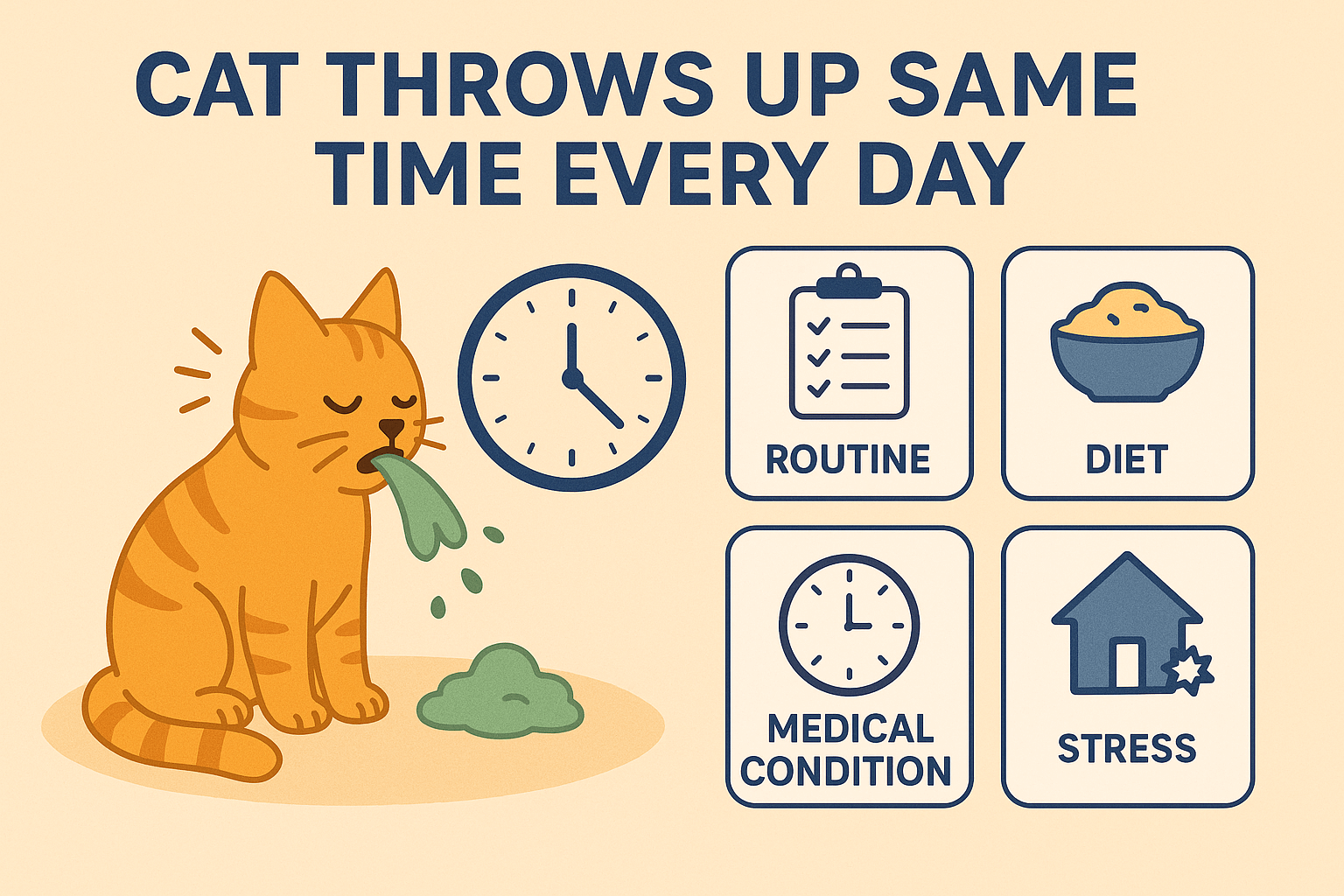

Why Does My Cat Throw Up at the Same Time Every Day? Best 7 Tips!

Why Does My Cat Throw Up at the Same Time Every Day? Best 7 Tips!

Why Does My Cat Throw Up at the Same Time Every Day?


If your cat is throwing up at the same time every day, it’s natural to feel concerned. While occasional vomiting can be normal for cats, a consistent pattern may indicate an underlying issue that needs attention. Whether it’s related to their diet, habits, or health, understanding the cause is key to ensuring your feline friend stays happy and healthy. In this blog post, we’ll explore the potential reasons behind this behavior, provide actionable tips to address it, and help you determine when it’s time to consult a veterinarian. Let’s dive in and uncover what might be triggering your cat’s daily upset stomach.

Expert Insight on Cat Vomiting

“Vomiting in cats can be due to many underlying health issues, so it’s important to make note of what additional symptoms your cat is showing, the cat vomit color, and when it’s time to call your veterinarian.”

Cathy Meeks, MS, DVM, DACVIM

Common Reasons Why Cats Vomit Daily


Cats vomit for a variety of reasons, and pinpointing the exact cause can help you address the issue effectively. Here are some common explanations for why your cat might throw up at the same time every day.

 
  • Hairballs:
    Frequent grooming can lead to hair accumulation in your cat’s stomach, which they expel by vomiting. Hairballs are most common in long-haired breeds.

  • Eating Too Quickly:
    Cats that eat their food too fast may regurgitate shortly after meals due to overloading their stomachs.

  • Food Intolerances:
    Certain ingredients in your cat’s food may not agree with them, leading to digestive upset and vomiting.

  • Routine Feeding Times:
    If your cat eats at the same time each day, their body may develop a pattern of vomiting shortly afterward, especially if they have a sensitive stomach.

  • Underlying Health Issues:
    Conditions like inflammatory bowel disease (IBD), kidney problems, or hyperthyroidism can cause chronic vomiting in cats.


Understanding these potential causes is the first step toward addressing your cat’s discomfort and finding a solution.

Why Does My Cat Throw Up at the Same Time Every Day? Best 7 Tips!

Signs That Your Cat’s Vomiting Is Serious


While occasional vomiting isn’t always a cause for alarm, certain signs indicate that your cat’s behavior may point to a more serious health issue. Watch for these red flags to determine whether veterinary intervention is necessary.

 
  • Frequent Vomiting Episodes:
    If your cat vomits multiple times a day or several days in a row, it could signal an underlying medical condition.

  • Blood in Vomit:
    The presence of blood in your cat’s vomit is a sign of gastrointestinal distress or injury and requires immediate attention.

  • Lethargy or Weakness:
    A normally active cat that becomes unusually lethargic or weak after vomiting may be experiencing complications.

  • Loss of Appetite:
    Refusal to eat or drink for more than 24 hours can lead to dehydration and malnutrition, worsening their condition.

  • Changes in Behavior:
    Increased aggression, hiding, or other behavioral changes alongside vomiting may indicate pain or discomfort.


If you notice any of these symptoms, it’s crucial to seek professional advice to rule out serious health concerns.

Possible Causes of Daily Vomiting
Ways to Address the Issue
Hairballs
Regular brushing and hairball remedies
Eating too quickly
Use slow-feed bowls or smaller portions
Food intolerances
Switch to hypoallergenic or bland diets
Routine feeding times
Adjust meal schedules or portion sizes
Underlying health issues
Consult a veterinarian for diagnosis

Tips for Preventing Daily Vomiting in Cats


Preventing your cat from throwing up regularly involves making adjustments to their environment, diet, and routine. These practical tips can help reduce the frequency of vomiting episodes.

 
  • Brush Your Cat Regularly:
    Removing loose fur through daily brushing reduces the amount of hair your cat ingests during grooming sessions.

  • Monitor Meal Portions:
    Divide your cat’s daily food intake into smaller, more frequent meals to prevent overeating and digestive strain.

  • Choose High-Quality Food:
    Opt for premium cat food free from artificial additives or fillers that could irritate your cat’s stomach.

  • Introduce Changes Gradually:
    When switching foods, transition slowly over 7-10 days to avoid upsetting your cat’s digestive system.

  • Provide Plenty of Water:
    Ensure your cat has access to fresh water at all times to stay hydrated and support digestion.


By implementing these strategies, you can create a healthier lifestyle for your cat and minimize the likelihood of daily vomiting.

How to Help Your Cat After Vomiting


When your cat throws up, it’s important to take steps to comfort them and prevent further episodes. Here’s how you can care for your cat after a vomiting incident.

 
  • Remove Access to Food Temporarily:
    Withhold food for 12-24 hours to give your cat’s stomach time to settle, but ensure they have access to water.

  • Offer Bland Foods:
    Once their stomach has settled, reintroduce bland foods like boiled chicken or plain pumpkin puree mixed with rice.

  • Clean the Area Thoroughly:
    Remove any traces of vomit immediately to prevent your cat from re-ingesting harmful substances or bacteria.

  • Monitor Their Condition:
    Keep an eye on your cat’s behavior and appetite to ensure they recover fully without additional symptoms.

  • Avoid Stressful Situations:
    Minimize stressors in your cat’s environment, as anxiety can exacerbate digestive issues and trigger vomiting.


Taking these steps ensures your cat feels supported and comfortable while recovering from an episode of vomiting.

Common Dietary Triggers for Vomiting

Certain foods or eating habits can trigger vomiting in cats. Identifying these triggers is essential for preventing future episodes.

 
  • Rich or Fatty Foods:
    Foods high in fat can overwhelm your cat’s digestive system, leading to vomiting.

  • Sudden Diet Changes:
    Abruptly switching your cat’s food can upset their stomach and cause digestive distress.

  • Spoiled or Contaminated Food:
    Consuming old or spoiled food introduces harmful bacteria that may result in vomiting.

  • Human Foods:
    Many human foods, such as onions, garlic, or dairy products, are toxic or difficult for cats to digest.

  • Overfeeding Treats:
    Excessive treats can disrupt your cat’s regular diet and lead to gastrointestinal upset.


Eliminating these dietary triggers can significantly reduce the frequency of vomiting episodes.

Environmental Factors That Contribute to Vomiting

Your cat’s surroundings play a role in their overall health and can influence their tendency to vomit. Here’s how environmental factors might affect your cat.

 
  • Stressful Changes:
    Moving homes, introducing new pets, or loud noises can stress your cat and trigger vomiting.

  • Boredom or Lack of Stimulation:
    A lack of mental and physical stimulation may lead to overeating or excessive grooming, both of which contribute to vomiting.

  • Toxic Plants or Substances:
    Exposure to toxic plants or household chemicals can irritate your cat’s stomach and cause vomiting.

  • Dirty Litter Boxes:
    An unclean litter box can cause stress, indirectly affecting your cat’s digestive health.

  • Temperature Extremes:
    Extreme heat or cold can impact your cat’s overall well-being and digestive function.


Addressing these environmental factors creates a safer and more comfortable space for your cat.

When to Visit the Vet for Chronic Vomiting

Knowing when to seek veterinary care is critical for protecting your cat’s health. Here’s a guide to help you decide when it’s time to visit the vet.

 
  • Persistent Vomiting Despite Changes:
    If vomiting continues despite dietary or environmental adjustments, it’s time to consult a professional.

  • Weight Loss or Dehydration:
    Significant weight loss or signs of dehydration, such as sunken eyes or dry gums, warrant immediate attention.

  • Unexplained Behavioral Changes:
    Sudden shifts in your cat’s personality or habits may indicate an underlying illness.

  • Chronic Diarrhea or Constipation:
    Digestive irregularities combined with vomiting suggest a deeper issue requiring diagnosis.

  • Age-Related Concerns:
    Senior cats are more prone to health problems, so any vomiting in older cats should be evaluated promptly.


Recognizing these warning signs ensures your cat receives timely care and treatment.

Frequently Asked Questions About Cats Throwing Up

 
Is it normal for cats to vomit occasionally?

Yes, occasional vomiting can be normal, especially if it’s related to hairballs or mild indigestion. However, persistent vomiting requires attention.

Seek emergency veterinary care immediately, as blood in vomit indicates a potentially serious condition.

Yes, stress or anxiety can disrupt your cat’s digestive system and lead to vomiting episodes.

If your cat vomits more than once a week or shows other concerning symptoms, consult your vet promptly.

Switching to a high-quality, easily digestible diet may help, but always consult your vet before making dietary changes.

Supporting Your Cat’s Digestive Health


While it’s not uncommon for cats to throw up occasionally, a pattern of daily vomiting should never be ignored. By identifying potential triggers, making thoughtful adjustments to their diet and routine, and seeking professional guidance when needed, you can help your cat feel better and enjoy a healthier life. Remember, your cat relies on you to advocate for their well-being—so don’t hesitate to reach out to your veterinarian if you’re unsure about their symptoms. With patience and care, you can address the root cause of their discomfort and restore harmony to your home.

Is Rawhide Bad for Cats? Best 7 Expert Tips!

Is Rawhide Bad for Cats? Best 7 Expert Tips! – Discover the risks, safe alternatives, and expert advice to keep your feline friend healthy and happy.

Is Rawhide Bad for Dogs? Best 7 Expert Tips!

Is Rawhide Bad for Dogs? Best 7 Expert Tips! – Discover the risks, benefits, and safer alternatives to rawhides for your dog’s chewing needs.

Understanding Anorexia in Cats: Best 7 Expert Tips!

Understanding Anorexia in Cats: Best 7 Expert Tips! – Learn why cats stop eating, spot warning signs, and discover how to help your feline regain appetite safely.

Understanding Anorexia in Dogs: Best 7 Expert Tips!

Understanding Anorexia in Dogs: Best 7 Expert Tips! – Learn causes, symptoms, and solutions to help your dog regain appetite and stay healthy.

Leave a Reply

Your email address will not be published. Required fields are marked *