
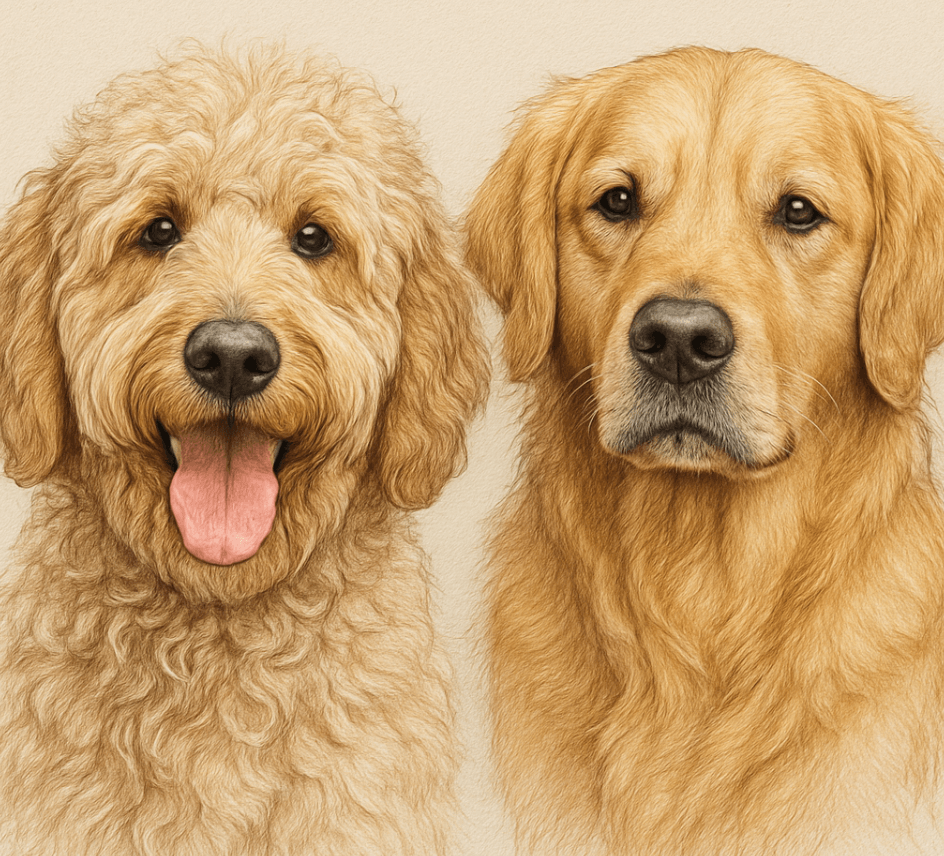

Goldendoodle vs Golden Retriever: Which Is the Right Fit for You?
When it comes to choosing a furry companion, both the Goldendoodle and the Golden Retriever are beloved options known for their friendly personalities and loyalty. However, these two breeds have distinct differences that cater to different lifestyles and preferences. The Golden Retriever is a classic, purebred favorite, while the Goldendoodle—a mix between a Golden Retriever and a Poodle—offers a unique blend of traits from both parent breeds.
Understanding their characteristics, care requirements, and temperaments can help you decide which dog will best suit your home and family. In this blog post, we’ll compare the Goldendoodle vs Golden Retriever in detail, covering everything from grooming needs to energy levels, so you can make an informed decision.
Key Differences Between Goldendoodles and Golden Retrievers
While both breeds share similarities, such as their affectionate nature and trainability, there are notable differences that set them apart. These distinctions can influence your choice depending on your lifestyle and priorities.
Coat Type and Shedding:
Golden Retrievers have a dense double coat that sheds heavily, while Goldendoodles often inherit a curly or wavy coat that sheds minimally, making them a better choice for allergy sufferers.Size Variations:
Golden Retrievers typically fall into one standard size, while Goldendoodles come in multiple sizes (standard, medium, and miniature) due to their Poodle heritage.Lifespan Expectancy:
Goldendoodles generally live slightly longer than Golden Retrievers, thanks to hybrid vigor, which can reduce the risk of certain genetic health issues.Temperament Nuances:
Both breeds are friendly, but Goldendoodles may exhibit a bit more variability in temperament due to their mixed-breed genetics.Exercise Needs:
Golden Retrievers tend to have high energy levels, requiring plenty of physical activity, while Goldendoodles’ exercise needs vary based on their size and coat type.
These differences highlight the importance of considering your personal preferences and circumstances when choosing between the two breeds.
Grooming Requirements: Goldendoodle vs Golden Retriever
Grooming plays a significant role in maintaining the health and appearance of both breeds. However, their differing coat types mean their grooming routines will look quite different.
Golden Retriever Grooming:
Their thick double coat requires regular brushing—at least once a week—to prevent matting and manage shedding.Goldendoodle Grooming:
Depending on their coat type (curly, wavy, or straight), Goldendoodles may need professional grooming every 6-8 weeks to keep their fur tidy.Bathing Frequency:
Golden Retrievers can be bathed every 1-2 months, while Goldendoodles may require more frequent baths to maintain their coat’s condition.Ear Care:
Both breeds are prone to ear infections, but Goldendoodles, especially those with floppy ears, may need extra attention to keep their ears clean and dry.Nail Trimming:
Regular nail trimming is essential for both breeds, though Goldendoodles may need it slightly less often due to their lighter build.
Understanding these grooming needs ensures you’re prepared to keep your dog looking and feeling their best.
Check this guide 👉Border Collie vs Golden Retriever: Best 7 Expert Tips!
Check this guide 👉American vs English Golden Retriever: Best 7 Expert Tips!
Check this guide 👉Great Pyrenees vs Golden Retriever: Best 7 Expert Tips!
Goldendoodle Traits | Golden Retriever Traits |
|---|---|
Minimal shedding (hypoallergenic) | Heavy shedding |
Comes in multiple sizes | Standard size only |
Curly, wavy, or straight coat | Dense double coat |
Lifespan: 10-15 years | Lifespan: 10-12 years |
Variable temperament | Consistent, friendly temperament |
Training and Intelligence: Goldendoodle vs Golden Retriever
Both breeds are highly intelligent and eager to please, making them excellent candidates for training. However, there are subtle differences in how they approach learning.
Trainability of Golden Retrievers:
Known for their consistent temperament, Golden Retrievers excel in obedience training and are often used as service dogs.Trainability of Goldendoodles:
Goldendoodles inherit intelligence from both parent breeds, but their mixed genetics can lead to slight variations in focus and behavior.Socialization Needs:
Both breeds benefit from early socialization, but Goldendoodles may adapt more quickly to new environments due to their adaptable nature.Energy During Training:
Golden Retrievers have boundless energy, which can sometimes lead to distractions during sessions, while Goldendoodles may have slightly calmer dispositions.Problem-Solving Skills:
Both breeds are quick learners, but Goldendoodles may exhibit a bit more creativity in solving challenges, thanks to their Poodle lineage.
With patience and consistency, both breeds can thrive in training and become well-behaved companions.
Health Considerations for Goldendoodles and Golden Retrievers
Both breeds are prone to certain health issues, but their genetic makeup influences the likelihood and severity of these conditions.
Hip Dysplasia:
Both breeds are at risk for hip dysplasia, but Goldendoodles may have a lower incidence due to hybrid vigor.Allergies and Skin Conditions:
Golden Retrievers are more prone to skin allergies, while Goldendoodles may inherit fewer skin issues from their Poodle genes.Eye Disorders:
Progressive retinal atrophy (PRA) and cataracts can affect both breeds, but regular vet check-ups can help detect problems early.Heart Conditions:
Subvalvular aortic stenosis (SAS) is more common in Golden Retrievers, while Goldendoodles may inherit heart health from their Poodle parentage.Obesity Risk:
Both breeds can gain weight easily if overfed, but Golden Retrievers are particularly prone to obesity without proper diet and exercise.
Being aware of these potential health concerns allows you to provide proactive care and ensure a long, healthy life for your dog.
Common Misconceptions About Goldendoodles and Golden Retrievers
Several myths surround these popular breeds, leading to misunderstandings among potential owners. Clarifying these misconceptions helps set realistic expectations.
“Goldendoodles Are Always Hypoallergenic”:
While many Goldendoodles shed less, their hypoallergenic status varies depending on their coat type and genetics.“Golden Retrievers Don’t Need Much Grooming”:
Despite their shorter coat compared to some Goldendoodles, Golden Retrievers require regular brushing to manage shedding.“Goldendoodles Are Smaller Than Golden Retrievers”:
This isn’t always true; standard Goldendoodles can be similar in size to Golden Retrievers.“Golden Retrievers Are Calmer Than Goldendoodles”:
Temperament depends on individual dogs, and some Goldendoodles can be just as calm or even calmer.“One Breed Is Better Than the Other”:
Both breeds have unique strengths, and the “better” choice depends on your personal preferences and lifestyle.
Dispelling these myths ensures a deeper understanding of both breeds.
Activity Ideas for Goldendoodles and Golden Retrievers
Both breeds thrive on physical and mental stimulation, making them perfect partners for active families. Here are some fun activities to enjoy together.
Long Walks and Hikes:
Both breeds love exploring trails and burning off energy in natural settings.Fetch Games:
A game of fetch is ideal for channeling their high energy and reinforcing bonding.Agility Training:
Setting up obstacle courses challenges their intelligence and athleticism.Swimming Sessions:
Many Goldendoodles and Golden Retrievers enjoy water, making swimming a great low-impact exercise.Interactive Toys:
Puzzle feeders and treat-dispensing toys keep them entertained and mentally engaged.
Engaging in these activities ensures a happy and well-rounded companion.
Living Arrangements for Goldendoodles and Golden Retrievers
Your living space plays a role in determining which breed will thrive in your home. Consider these factors when deciding between the two.
Apartment Living:
Goldendoodles, especially miniatures, adapt better to smaller spaces due to their size and lower shedding.Yard Requirements:
Golden Retrievers benefit from larger yards where they can run and play freely.Noise Levels:
Both breeds are relatively quiet, but Goldendoodles may bark less frequently than Golden Retrievers.Family Dynamics:
Golden Retrievers excel in homes with structured routines, while Goldendoodles are adaptable to various household setups.Travel Companionship:
Goldendoodles’ smaller size makes them easier to travel with, while Golden Retrievers may require more space in vehicles.
Considering your living situation ensures a seamless integration of your new pet into your home.
Frequently Asked Questions About Goldendoodles and Golden Retrievers
Which breed is better for families with kids?
Both breeds are great with children, but Golden Retrievers are often considered slightly more predictable due to their consistent temperament.
Are Goldendoodles hypoallergenic?
While no dog is completely hypoallergenic, Goldendoodles shed less and produce fewer allergens compared to Golden Retrievers.
Do Goldendoodles require more grooming than Golden Retrievers?
Yes, Goldendoodles typically need more frequent grooming, especially if they have curly coats, while Golden Retrievers require regular brushing.
Which breed is easier to train?
Both breeds are highly trainable, but Golden Retrievers may have a slight edge in consistency, while Goldendoodles offer more variety in personality.
How much exercise do these breeds need?
Golden Retrievers need at least 1-2 hours of vigorous exercise daily, while Goldendoodles’ exercise needs depend on their size and coat type.
Choosing Between a Goldendoodle and a Golden Retriever
Both the Goldendoodle and the Golden Retriever are wonderful companions, each with its own unique qualities. The decision ultimately depends on your lifestyle, grooming preferences, and what traits matter most to you in a pet. Whether you choose the low-shedding, versatile Goldendoodle or the loyal, classic Golden Retriever, you’re sure to gain a loving and devoted friend. By understanding their differences and preparing for their specific needs, you can create a harmonious and fulfilling relationship with your new furry family member.
Spleen Cancer in Cats: Best 7 Expert Tips! – Expert insights on symptoms, care, treatment & quality of life for feline spleen cancer.
Dog Mastitis Treatment: Best 7 Expert Tips! – Safe, vet-approved care for nursing moms & prevention strategies.
The Shikoku Ken Dog: Best 7 Expert Tips! – Discover expert care, training & health advice for this rare, loyal Japanese mountain breed.
The Cairn Terrier Dog Breed: Best 7 Expert Tips! – Discover care, training & health advice for this spirited, loyal Scottish terrier.


