
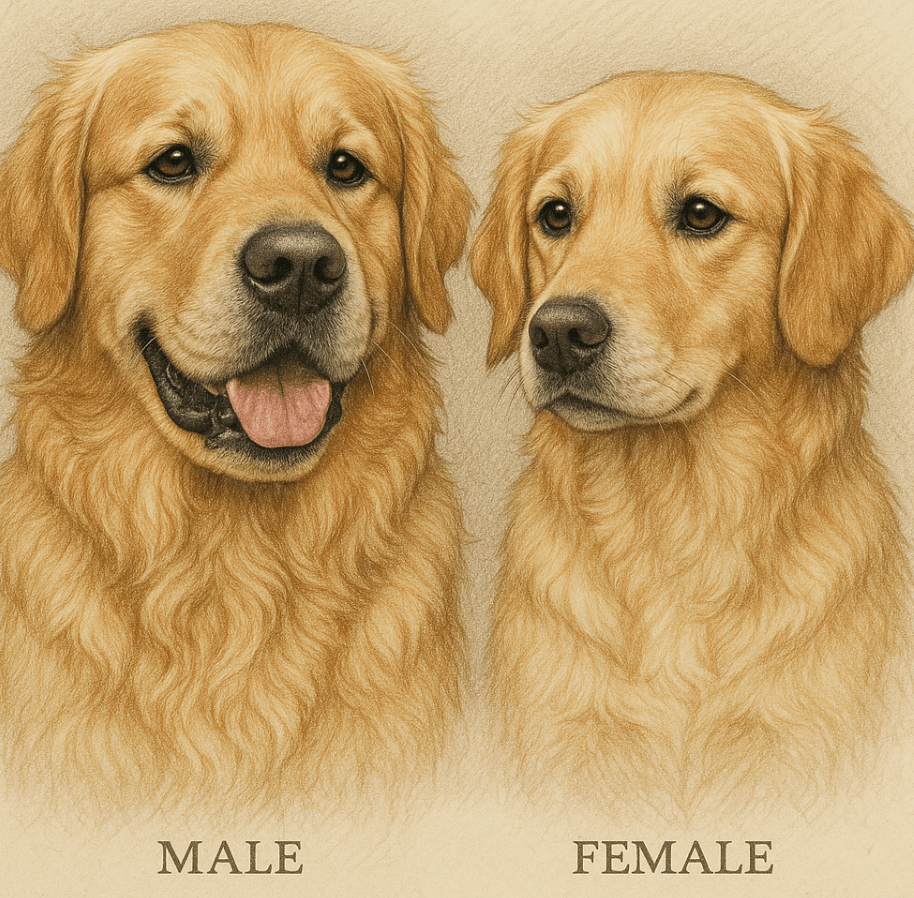

Male vs Female Golden Retriever: What’s the Difference?
Golden Retrievers are one of the most beloved dog breeds worldwide, known for their friendly personalities, intelligence, and loyalty. However, when choosing a Golden Retriever as your new furry companion, you may wonder whether to adopt a male or female. While both genders share many of the same wonderful traits, there are subtle differences in size, temperament, and behavior that can influence your decision. In this blog post, we’ll explore the key distinctions between male and female Golden Retrievers, helping you determine which might be the best fit for your lifestyle and preferences.
Key Differences Between Male and Female Golden Retrievers
While male and female Golden Retrievers are similar in many ways, understanding their differences can help you make an informed choice. These variations often stem from biological and hormonal factors.
Size and Weight:
Male Golden Retrievers are typically larger, standing 23-24 inches tall and weighing 65-75 pounds, while females are slightly smaller at 21.5-22.5 inches and 55-65 pounds.Temperament Variations:
Males tend to be more affectionate and playful, often seeking attention and bonding closely with their owners. Females are generally more independent and task-oriented.Training Responsiveness:
Both genders are highly trainable, but males may take longer to mature mentally, requiring patience during training. Females often focus better and learn commands quickly.Energy Levels:
Males are known for their boundless energy and love for playtime, while females may have a calmer demeanor after reaching maturity.Marking Behavior:
Unneutered males are more likely to mark territory, whereas females are less prone to this behavior unless they’re in heat.
These differences highlight the unique qualities of each gender, allowing you to choose based on your household dynamics and personal preferences.
Behavioral Traits of Male Golden Retrievers
Male Golden Retrievers are known for their outgoing and affectionate nature, making them a joy to have around. Here’s what to expect if you bring home a male pup.
Affectionate Companionship:
Males often form strong bonds with their owners, frequently seeking cuddles and attention throughout the day.Playful Energy:
Their high energy levels make them perfect companions for active families who enjoy outdoor activities like hiking or playing fetch.Delayed Maturity:
Male Golden Retrievers take longer to reach emotional maturity, meaning they may exhibit puppy-like behaviors well into adulthood.Territorial Tendencies:
Unneutered males may display territorial behaviors, such as marking or asserting dominance, which can be mitigated by neutering.Social Butterflies:
Males are typically very social and get along well with other pets, children, and strangers, thanks to their friendly disposition.
If you’re looking for a loyal and energetic companion, a male Golden Retriever might be the ideal choice for your family.
Check this guide 👉Saint Bernard Golden Retriever Mix: Best 7 Expert Tips!
Check this guide 👉Golden Retriever Poodle Mix: Best 7 Expert Tips!
Check this guide 👉Samoyed Golden Retriever Mix: Best 7 Expert Tips!
Male Golden Retriever Traits | Female Golden Retriever Traits |
|---|---|
Larger size (65-75 pounds) | Smaller size (55-65 pounds) |
More affectionate and playful | More independent and focused |
Takes longer to mature emotionally | Reaches maturity faster |
Prone to marking territory (unneutered) | Less likely to mark |
Highly social and people-oriented | Calmer and task-oriented |
Behavioral Traits of Female Golden Retrievers
Female Golden Retrievers are cherished for their calm and nurturing personalities, making them excellent companions for families and individuals alike. Here’s what sets them apart.
Calm Demeanor:
Once mature, females tend to be calmer and more composed, making them great for households seeking a relaxed atmosphere.Task-Oriented Nature:
Females often excel in obedience training and tasks, focusing intently on commands and routines.Faster Emotional Maturity:
Unlike males, females reach emotional maturity sooner, displaying more consistent behavior at an earlier age.Seasonal Heat Cycles:
Unspayed females experience heat cycles twice a year, which can attract male dogs and require extra care during this time.Maternal Instincts:
Many female Golden Retrievers exhibit strong maternal instincts, making them gentle protectors of children and other pets.
With their balanced temperament and reliability, female Golden Retrievers are a fantastic choice for those seeking a steady and loving companion.
Factors to Consider When Choosing Between Male and Female Golden Retrievers
Deciding between a male and female Golden Retriever depends on your lifestyle, preferences, and expectations. Consider these factors to make the best choice for your home.
Household Dynamics:
If you have young children or multiple pets, a male’s playful and social nature might blend well with your family.Space Availability:
Larger homes with plenty of room may suit the bigger size of males, while smaller spaces might accommodate females better.Activity Level:
Active individuals or families may prefer a male’s high energy, while those seeking a calmer companion might lean toward a female.Training Goals:
If you’re focused on competitive training or agility sports, a female’s focus and maturity could give her an edge.Health Considerations:
Neutering or spaying can reduce gender-specific behaviors like marking or heat cycles, so factor in veterinary care costs and timing.
By evaluating these aspects, you can select the gender that aligns best with your needs and ensures a harmonious relationship with your Golden Retriever.
Common Misconceptions About Male vs Female Golden Retrievers
Several myths circulate about the differences between male and female Golden Retrievers. Clearing up these misconceptions helps set realistic expectations.
“Males Are Always Aggressive”:
This isn’t true; male Golden Retrievers are generally friendly and non-aggressive unless improperly trained.“Females Are Always Calm”:
While females tend to be calmer, individual temperament varies widely based on genetics and upbringing.“Only Males Make Good Guard Dogs”:
Both genders are protective of their families, though neither is naturally aggressive without provocation.“Size Doesn’t Matter”:
While minor, size differences do exist; males are noticeably larger, which may matter depending on your living situation.“One Gender Is Smarter Than the Other”:
Intelligence is comparable between genders; success in training depends more on consistency and reinforcement.
Dispelling these myths ensures a clearer understanding of what to expect from your Golden Retriever.
Tips for Raising a Happy and Healthy Golden Retriever
Regardless of gender, raising a Golden Retriever requires dedication and care. Follow these tips to ensure your pup thrives physically and emotionally.
Provide Plenty of Exercise:
Golden Retrievers need at least 1-2 hours of physical activity daily to stay healthy and burn off excess energy.Focus on Nutrition:
Feed a high-quality diet tailored to their age, size, and activity level to support growth and overall health.Prioritize Grooming:
Regular brushing reduces shedding and keeps their luxurious coat shiny and tangle-free.Invest in Training:
Start obedience training early to establish good habits and strengthen your bond with your dog.Schedule Routine Vet Visits:
Preventive care, including vaccinations and dental check-ups, ensures a long and healthy life for your pup.
Following these guidelines sets the foundation for a happy and fulfilling relationship with your Golden Retriever.
Fun Activities to Enjoy with Your Golden Retriever
Golden Retrievers thrive on interaction and play, regardless of gender. Engaging in fun activities strengthens your bond and keeps them mentally stimulated.
Fetch Games:
Their natural retrieving instinct makes fetch a favorite pastime for exercise and bonding.Swimming Adventures:
Most Golden Retrievers love water; swimming provides excellent low-impact exercise and cooling relief.Agility Training:
Set up obstacle courses in your backyard to challenge their physical and mental abilities.Interactive Toys:
Puzzle feeders and treat-dispensing toys keep them entertained and reward problem-solving skills.Long Walks or Hikes:
Exploring new trails together satisfies their curiosity and burns off energy simultaneously.
Incorporating these activities into your routine ensures your Golden Retriever stays active, engaged, and content.
Frequently Asked Questions About Male vs Female Golden Retrievers
Are male or female Golden Retrievers friendlier?
Both are friendly, but males tend to be more affectionate and clingy, while females are warm yet slightly more reserved.
Do male Golden Retrievers shed more than females?
Shedding is similar between genders; it’s more influenced by coat type and grooming habits.
Which gender is easier to train?
Females often focus better and mature faster, making them slightly easier to train in some cases.
Can I keep two Golden Retrievers of the same gender?
Yes, but early socialization and training are essential to prevent dominance issues.
Does neutering/spaying affect their personality?
It can reduce certain behaviors like marking or roaming, but their core personality will remain intact.
Choosing the Perfect Golden Retriever Companion
Whether you opt for a male or female Golden Retriever, you’re sure to gain a loyal, loving, and intelligent friend who will brighten your life. Understanding the subtle differences between the two genders allows you to make a decision that suits your lifestyle and preferences. Remember, every Golden Retriever—regardless of gender—is unique, and the bond you build with your dog will ultimately depend on love, care, and mutual respect. With proper training, attention, and affection, your Golden Retriever will become an irreplaceable part of your family for years to come.
English Pitbull Dog: Best 7 Expert Tips! – Discover the breed’s history, temperament, and care needs to build a strong bond with this loyal companion.
When Is a Cat Fully Vaccinated? Best 7 Expert Tips! – Learn the vaccination timeline, core vaccines, and how to keep your cat protected for life.
Prebiotics for Dogs: Best 7 Expert Tips! – Discover how prebiotics boost digestion, immunity, and overall health in dogs. Learn sources, benefits, and more!
Prebiotics for Cats: Best 7 Expert Tips! – Discover how prebiotics boost digestion, immunity, and overall health in cats. Learn safe sources, benefits, and more!


