
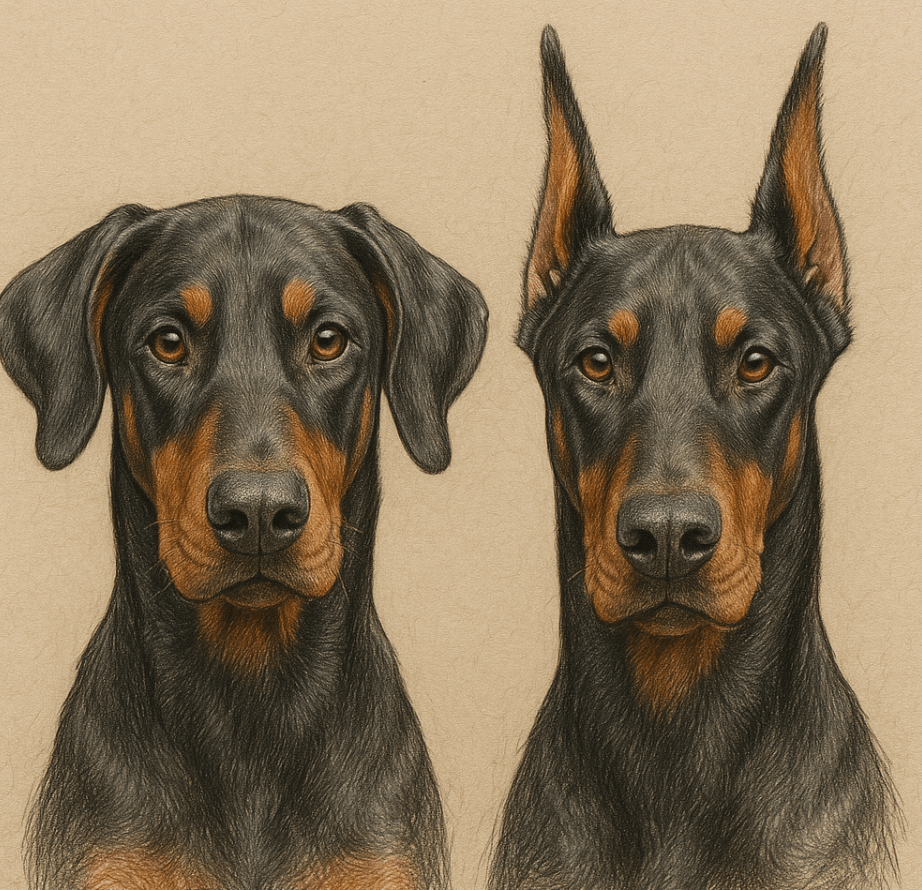

Doberman Natural Ears vs Cropped: Best 7 Expert Tips!

Doberman Natural Ears vs Cropped: Best 7 Expert Tips!

Doberman Natural Ears vs Cropped: What’s Best for Your Dog?


The Doberman Pinscher is a breed celebrated for its elegance, intelligence, and loyalty. One of the most debated topics among Doberman enthusiasts revolves around their ears—whether to leave them natural or opt for ear cropping. Ear cropping is a cosmetic procedure that has been practiced for decades, often associated with the breed’s iconic appearance. However, as awareness of animal welfare grows, many pet owners are reconsidering this practice. In this blog post, we’ll explore the differences between natural and cropped ears, discuss the pros and cons of each, and help you make an informed decision about what’s best for your Doberman.

Understanding Natural vs Cropped Ears in Dobermans


Before diving into the debate, it’s important to understand what natural and cropped ears entail and how they differ in terms of appearance, care, and function.

 
  • Natural Ears:
    Dobermans with natural ears have soft, floppy ears that fold over and rest close to their head. This look is becoming increasingly popular as more owners embrace the breed’s natural state.

  • Cropped Ears:
    Ear cropping involves surgically altering the ears to make them stand upright, creating the alert, sharp appearance traditionally associated with Dobermans.

  • Historical Context:
    Ear cropping dates back to when Dobermans were bred for guarding and protection work, as standing ears were thought to improve hearing and prevent injuries.

  • Modern Trends:
    Today, many countries have banned or heavily regulated ear cropping due to ethical concerns, leading to a rise in appreciation for natural ears.

  • Aesthetic Preferences:
    Some owners prefer the sleek, regal look of cropped ears, while others admire the softer, more approachable appearance of natural ears.


Whether you choose natural or cropped ears, understanding these distinctions will help you appreciate the unique qualities of your Doberman.

Pros and Cons of Natural Ears in Dobermans


Leaving a Doberman’s ears natural comes with its own set of advantages and disadvantages. Here’s what you need to know before deciding against ear cropping.

 
  • Low Maintenance:
    Natural ears require minimal upkeep compared to cropped ears, which need taping and training during recovery.

  • Reduced Risk of Complications:
    No surgery means no risk of infection, scarring, or other complications associated with ear cropping.

  • Softer Appearance:
    Floppy ears give Dobermans a gentler, friendlier look that may appeal to families and those seeking a less intimidating dog.

  • Ethical Considerations:
    Many people view natural ears as a more humane choice, avoiding unnecessary cosmetic procedures.

  • Potential for Ear Infections:
    Natural ears can trap moisture and debris, increasing the likelihood of infections if not cleaned regularly.


While natural ears come with fewer risks, proper care is still essential to ensure your Doberman stays healthy and comfortable.

Doberman Natural Ears vs Cropped: Best 7 Expert Tips!
Natural Ears
Cropped Ears
Low maintenance
Requires post-surgery care
No surgical risks
Potential for infection or scarring
Gentler, friendlier appearance
Sleek, alert, and traditional look
Ethically preferred by many
Often criticized for being cosmetic
Prone to ear infections if neglected
Less prone to trapping moisture

Pros and Cons of Cropped Ears in Dobermans


Ear cropping remains a popular choice for some Doberman owners, but it’s not without its drawbacks. Here’s a breakdown of the benefits and challenges associated with this procedure.

 
  • Traditional Aesthetic:
    Cropped ears align with the classic Doberman look, often seen in show rings and media representations of the breed.

  • Perceived Alertness:
    Standing ears give the impression of heightened attentiveness and readiness, which some owners find appealing.

  • Reduced Moisture Trapping:
    Upright ears allow air circulation, reducing the risk of moisture buildup and potential infections.

  • Surgical Risks:
    The procedure carries risks such as pain, infection, and improper healing, which can affect your dog’s well-being.

  • Legal Restrictions:
    Many countries and regions have banned or restricted ear cropping, making it inaccessible or controversial in certain areas.


Cropped ears offer a distinctive appearance, but the decision should be made carefully, considering both ethics and practicality.

How to Care for Natural and Cropped Ears


Proper ear care is crucial for maintaining your Doberman’s health and comfort, regardless of whether their ears are natural or cropped. Here’s how to care for each type effectively.

 
  • Cleaning Natural Ears:
    Use a damp cloth or vet-approved ear cleaner to gently remove dirt and debris from inside the ear folds.

  • Preventing Infections in Natural Ears:
    Dry your Doberman’s ears thoroughly after baths or swims to prevent moisture buildup.

  • Post-Surgery Care for Cropped Ears:
    Follow your veterinarian’s instructions for cleaning and taping the ears during the healing process to ensure they stand upright.

  • Monitoring for Signs of Trouble:
    Watch for redness, swelling, or unusual odors, which could indicate an infection requiring veterinary attention.

  • Regular Check-Ups:
    Schedule routine vet visits to assess ear health and address any concerns early.


With attentive care, you can keep your Doberman’s ears healthy and comfortable, no matter their shape.

Common Misconceptions About Ear Cropping


There are several myths surrounding ear cropping in Dobermans. Clearing up these misconceptions helps foster a better understanding of the topic.

 
  • Myth: Cropped Ears Are Healthier:
    In reality, cropped ears don’t inherently reduce the risk of ear infections; proper hygiene is key regardless of ear type.

  • Myth: All Show Dogs Must Have Cropped Ears:
    While cropping is common in show dogs, many organizations now accept natural ears in competitions.

  • Myth: Ear Cropping Is Pain-Free:
    The procedure involves surgery and recovery, which can be painful and stressful for the dog.

  • Myth: Cropping Enhances Hearing:
    There’s no scientific evidence to support claims that cropped ears improve a dog’s auditory abilities.

  • Myth: Natural Ears Make Dobermans Look Weak:
    Many people find natural ears endearing and believe they highlight the breed’s versatility and adaptability.


Separating fact from fiction ensures a more informed perspective on ear cropping.

Alternatives to Traditional Ear Cropping


If you’re drawn to the aesthetic of cropped ears but want to avoid surgery, consider these alternatives that enhance your Doberman’s appearance without compromising their health.

 
  • Grooming Techniques:
    Regular grooming can accentuate your Doberman’s facial features, giving them a polished and refined look.

  • Training for Alertness:
    Teaching your dog commands and behaviors that showcase their attentiveness can create the illusion of heightened alertness.

  • Choosing Accessories:
    Collars, bandanas, or harnesses can draw attention away from their ears and highlight other aspects of their physique.

  • Embracing Natural Beauty:
    Celebrate the uniqueness of natural ears by focusing on the breed’s overall elegance and personality.

  • Consulting Breed Experts:
    Speak with experienced breeders or trainers for advice on enhancing your dog’s appearance naturally.


These alternatives provide creative ways to achieve your desired look without resorting to surgery.

The Role of Ethics in the Ear Cropping Debate


The growing movement against ear cropping reflects broader societal shifts toward prioritizing animal welfare and ethical treatment. Here’s how ethics play a role in this ongoing discussion.

 
  • Animal Rights Advocacy:
    Organizations like PETA and the ASPCA oppose ear cropping, arguing that it causes unnecessary suffering for cosmetic purposes.

  • Veterinary Stance:
    Many veterinarians discourage ear cropping unless medically necessary, emphasizing the importance of humane practices.

  • Public Perception Shifts:
    As awareness spreads, public opinion increasingly favors leaving dogs’ ears natural rather than altering them for aesthetics.

  • Legal Implications:
    Countries banning ear cropping reflect a global trend toward stricter animal protection laws and ethical standards.

  • Personal Responsibility:
    As a dog owner, you have the power to make compassionate choices that prioritize your pet’s well-being over societal expectations.


Considering these ethical dimensions ensures that your decisions align with modern values of kindness and respect for animals.

Frequently Asked Questions About Doberman Ears

 
Is ear cropping painful for Dobermans?

Yes, the procedure requires anesthesia and can cause discomfort during recovery.

Ear cropping is usually performed between 7 and 12 weeks of age.

While possible, it’s challenging and rarely achieves the same results as cropping.

Yes, many countries, including parts of Europe, have banned or regulated the practice.

Natural ears generally pose fewer health risks, but both options require proper care.

Making the Right Choice for Your Doberman


The decision between natural and cropped ears ultimately depends on your values, lifestyle, and preferences as a dog owner. Whether you choose to embrace your Doberman’s natural beauty or opt for the traditional cropped look, what matters most is ensuring their health, comfort, and happiness. By weighing the pros and cons, staying informed about legal regulations, and prioritizing your dog’s well-being, you can make a choice that aligns with your goals as a responsible pet owner. Remember, your Doberman’s personality and bond with you are far more important than the shape of their ears.

Is Rawhide Bad for Cats? Best 7 Expert Tips!

Is Rawhide Bad for Cats? Best 7 Expert Tips! – Discover the risks, safe alternatives, and expert advice to keep your feline friend healthy and happy.

Is Rawhide Bad for Dogs? Best 7 Expert Tips!

Is Rawhide Bad for Dogs? Best 7 Expert Tips! – Discover the risks, benefits, and safer alternatives to rawhides for your dog’s chewing needs.

Understanding Anorexia in Cats: Best 7 Expert Tips!

Understanding Anorexia in Cats: Best 7 Expert Tips! – Learn why cats stop eating, spot warning signs, and discover how to help your feline regain appetite safely.

Understanding Anorexia in Dogs: Best 7 Expert Tips!

Understanding Anorexia in Dogs: Best 7 Expert Tips! – Learn causes, symptoms, and solutions to help your dog regain appetite and stay healthy.

Leave a Reply

Your email address will not be published. Required fields are marked *