
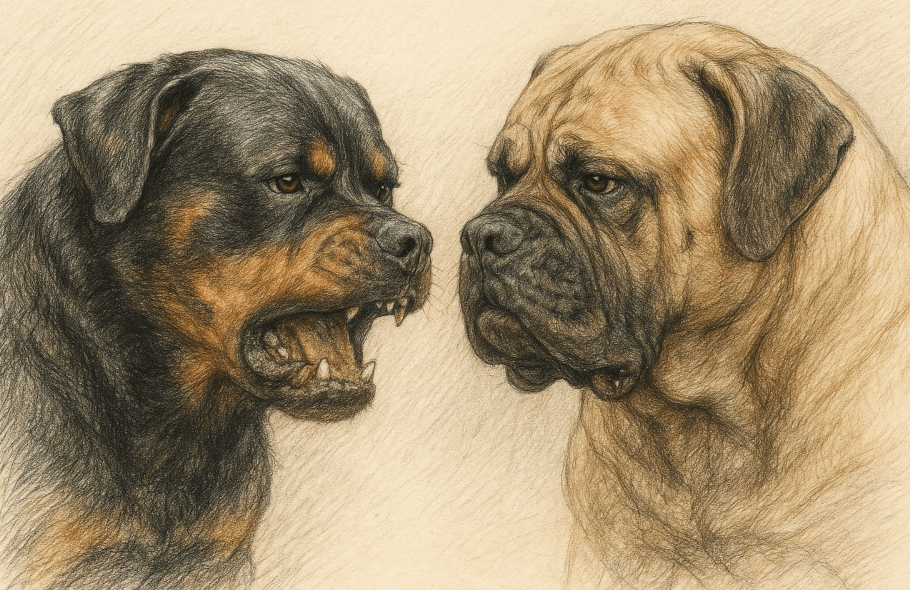

Rottweiler vs Mastiff: Best 7 Expert Tips!

Rottweiler vs Mastiff: Best 7 Expert Tips!

Rottweiler vs Mastiff: Which Giant Breed Is Right for You?


When it comes to choosing a large and loyal companion, the Rottweiler and the Mastiff often top the list of contenders. Both breeds are known for their imposing size, protective instincts, and unwavering loyalty, but they differ significantly in temperament, energy levels, and care requirements. Whether you’re looking for a vigilant guardian, a gentle giant, or an active family member, understanding the key differences between these two breeds is essential. In this blog post, we’ll compare the Rottweiler and the Mastiff across various aspects—temperament, exercise needs, grooming, and more—to help you make an informed decision about which breed suits your lifestyle best.

Temperament Differences Between Rottweilers and Mastiffs


While both breeds share a reputation for being protective and devoted, their temperaments vary in subtle yet important ways. Understanding these differences can help you determine which dog aligns better with your personality and household dynamics.

 
  • Rottweilers Are Energetic and Confident:
    Known for their boldness, Rottweilers are highly intelligent and thrive in active environments where they can channel their energy constructively.

  • Mastiffs Are Calm and Gentle Giants:
    Mastiffs tend to be more laid-back and affectionate, preferring to lounge around the house rather than engage in high-energy activities.

  • Rottweilers Are Natural Protectors:
    With a strong guarding instinct, Rottweilers are quick to alert their owners of potential threats, making them excellent watchdogs.

  • Mastiffs Are Soothing Companions:
    Despite their size, Mastiffs are known for their calm demeanor and patience, especially with children and other pets.

  • Training Needs Differ Significantly:
    Rottweilers require consistent training due to their assertiveness, while Mastiffs are easier to manage but may need encouragement to stay active.


These temperament traits highlight the unique qualities each breed brings to a home, helping you decide which one fits your family’s needs.

Physical Characteristics of Rottweilers and Mastiffs


The physical appearance of these breeds is as striking as their personalities. Here’s how they compare in terms of size, coat type, and overall build.

 
  • Size and Weight:
    Mastiffs are among the largest dog breeds, weighing up to 230 pounds, while Rottweilers typically weigh between 80-135 pounds and are more athletic in build.

  • Coat Type and Maintenance:
    Rottweilers have short, dense coats that shed moderately and require occasional brushing, whereas Mastiffs have a similar coat but drool significantly more.

  • Height Comparison:
    Rottweilers stand about 22-27 inches tall at the shoulder, while Mastiffs tower over them at 27.5-30 inches.

  • Distinctive Markings:
    Rottweilers are famous for their black-and-tan coloring, while Mastiffs come in shades of fawn, brindle, or apricot with a dark mask.

  • Lifespan Expectancy:
    Rottweilers generally live 9-10 years, while Mastiffs have a slightly shorter lifespan of 6-10 years due to their massive size.


Understanding these physical differences ensures you’re prepared for the demands of owning either breed.

Rottweiler vs Mastiff: Best 7 Expert Tips!
Rottweiler Traits
Mastiff Traits
Highly energetic and trainable
Calm and easygoing nature
Requires daily exercise and mental work
Prefers lounging and minimal activity
Strong guarding instincts
Gentle and patient with family
Short coat with moderate shedding
Drools heavily; requires cleanup
Lives 9-10 years on average
Shorter lifespan (6-10 years)

Exercise and Activity Needs of Rottweilers vs Mastiffs


Both breeds are large, but their exercise requirements couldn’t be more different. Matching their activity level to your lifestyle is crucial for a harmonious relationship.

 
  • Rottweilers Need Daily Exercise:
    These dogs require at least 1-2 hours of vigorous activity daily, including walks, runs, or playtime, to stay physically and mentally fit.

  • Mastiffs Prefer Low-Impact Activities:
    A short walk or light play session is sufficient for Mastiffs, who are prone to overheating and joint issues due to their size.

  • Mental Stimulation Matters:
    Rottweilers benefit from puzzle toys, obedience training, and interactive games to keep their sharp minds engaged.

  • Avoid Overexertion with Mastiffs:
    Due to their heavy build, Mastiffs should avoid strenuous exercise, especially in hot weather, to prevent health complications.

  • Socialization Is Key for Both Breeds:
    Early exposure to people, animals, and environments helps both Rottweilers and Mastiffs develop into well-rounded adults.


Tailoring their exercise routines ensures a happy, healthy life for your chosen breed.

Grooming Requirements for Rottweilers and Mastiffs


Proper grooming is essential for maintaining the health and appearance of both breeds, though their needs differ slightly.

 
  • Rottweilers Have Minimal Grooming Needs:
    Their short coats require weekly brushing and occasional baths to remove loose hair and maintain shine.

  • Mastiffs Require Extra Attention for Drooling:
    Frequent wiping around the mouth and regular cleaning of surfaces are necessary to manage their excessive drooling.

  • Nail Trimming Is Essential:
    Both breeds need regular nail trims to prevent discomfort and mobility issues caused by overgrown nails.

  • Ear Care Prevents Infections:
    Check and clean their ears regularly to avoid infections, particularly in Rottweilers with floppy ears.

  • Dental Hygiene Is Important:
    Brushing their teeth several times a week reduces the risk of dental disease, which is common in large breeds.


By staying on top of grooming tasks, you ensure your dog remains comfortable and healthy.

Common Misconceptions About Rottweilers and Mastiffs


Several myths surround these breeds, often leading to misunderstandings. Clarifying these misconceptions helps set realistic expectations for potential owners.

 
  • Rottweilers Are Aggressive by Nature:
    While protective, they are not inherently aggressive when properly trained and socialized.

  • Mastiffs Are Lazy Couch Potatoes:
    Though calm indoors, they still need some exercise to maintain their health and happiness.

  • Both Breeds Are Too Large for Families:
    With proper training and supervision, both breeds can thrive in family settings.

  • Rottweilers Don’t Get Along with Other Pets:
    Early socialization ensures harmonious relationships with other animals in the household.

  • Mastiffs Are Easy to Handle Due to Their Size:
    Their immense strength requires careful handling and consistent leadership.


Dispelling these myths ensures a deeper appreciation for what each breed brings to the table.

Health Considerations for Rottweilers and Mastiffs


Large breeds like Rottweilers and Mastiffs are prone to specific health issues. Being aware of these risks allows you to take preventive measures and provide the best care.

 
  • Hip Dysplasia:
    Common in both breeds, this condition causes joint pain and mobility issues; maintaining a healthy weight reduces risk.

  • Bloat (Gastric Torsion):
    Both breeds are susceptible to bloat; feeding smaller meals and avoiding vigorous exercise after eating helps prevent it.

  • Heart Conditions:
    Rottweilers are prone to cardiomyopathy, while Mastiffs may suffer from congenital heart defects; regular vet check-ups are vital.

  • Joint Problems:
    Arthritis and ligament injuries are common in large breeds; joint supplements and controlled exercise can help.

  • Skin Allergies:
    Some individuals may develop sensitivities; hypoallergenic diets and regular grooming alleviate symptoms.


Proactive healthcare ensures a longer, healthier life for your beloved pet.

Fun Activities to Enjoy with Your Rottweiler or Mastiff


Engaging in fun activities strengthens your bond and keeps your dog physically and mentally stimulated. Here are some ideas tailored to each breed.

 
  • Agility Training for Rottweilers:
    Set up obstacle courses to challenge their athleticism and intelligence.

  • Tug-of-War Games:
    Both breeds enjoy this classic game, which also reinforces bonding and trust.

  • Leisurely Walks for Mastiffs:
    Explore scenic routes at a slow pace, allowing your Mastiff to enjoy the outdoors comfortably.

  • Interactive Toys:
    Puzzle feeders and treat-dispensing toys keep both breeds entertained during downtime.

  • Swimming Sessions:
    Many Rottweilers and Mastiffs love water; swimming provides low-impact exercise and cools them off in warm weather.


Incorporating these activities ensures a fulfilling and joyful life for your furry friend.

Frequently Asked Questions About Rottweilers and Mastiffs

 
Are Rottweilers good with kids?

Yes, Rottweilers are great with children when properly trained and socialized, thanks to their protective nature.

Yes, Mastiffs are notorious for drooling, especially after eating or drinking.

Rottweilers are generally easier to train due to their intelligence and eagerness to please, while Mastiffs may take longer to motivate.

While possible, both breeds are better suited for homes with space; however, Mastiffs adapt better to smaller spaces due to their calm nature.

Rottweilers are prone to hip dysplasia and heart conditions, while Mastiffs face risks like bloat and joint problems.


Choosing Between a Rottweiler and a Mastiff


Deciding between a Rottweiler and a Mastiff ultimately comes down to your lifestyle, preferences, and ability to meet their unique needs. Whether you opt for the energetic and protective Rottweiler or the gentle and serene Mastiff, both breeds offer boundless love and loyalty to their families. By carefully considering factors like temperament, exercise requirements, and grooming, you can find the perfect match for your home. Remember, owning a giant breed is a lifelong commitment, so choose wisely and prepare to welcome a loving, four-legged addition to your family.

 
Newfoundland Dog Personality: Best 7 Expert Tips!

Newfoundland Dog Personality: Best 7 Expert Tips! – Discover the gentle, loyal, and protective nature of this giant breed perfect for families.

Can Hot Pavement Burn Your Cats Paws? Best 7 Expert Tips!

Can Hot Pavement Burn Your Cats Paws? Best 7 Expert Tips! – Learn how to protect your cat’s paws from hot surfaces and prevent painful burns this summer.

Can Hot Pavement Burn Your Dogs Paws? Best 7 Expert Tips!

Can Hot Pavement Burn Your Dogs Paws? Best 7 Expert Tips! – Learn how to protect your dog’s paws from hot surfaces and ensure safe summer walks.

Irish Wolfhound Size: Best 7 Expert Tips!

Irish Wolfhound Size: Best 7 Expert Tips! – Discover the ideal height, weight, and care tips for this majestic giant breed. Learn how to manage their impressive stature responsibly.

Leave a Reply

Your email address will not be published. Required fields are marked *


